



Stud Welding Torch vs Stud Welding Gun What's the Real Difference
 Sep 11, 2026|
 View:
View:Many buyers confuse a stud welding torch with a stud welding gun. The distinction matters. A stud welding torch handles drawn arc stud welding, often with ceramic ferrules. A gun suits capacitor discharge stud welding. The global stud welding equipment market reached US$ 2.0 billion in 2026 and should hit US$ 2.6 billion by 2033, growing at 3.8% annually[1]. Drawn arc systems hold roughly 60% of total market revenue share, reflecting their dominance in heavy-duty applications. So, which one do you actually need? The answer depends on material thickness, stud diameter, and project requirements. This comparison breaks down the real differences.
Key Takeaways
A stud welding torch uses drawn arc welding for thick materials and large studs.
A stud welding gun uses capacitor discharge welding for thin sheets and small studs.
Choose a torch for structural strength on heavy plates and construction jobs.
Choose a gun for clean, fast welds on thin automotive and HVAC panels.
Torches need ceramic ferrules to contain molten metal and protect the weld.
Guns need no ferrules, so cleanup is simple and fast.
Match the tool to your material thickness and stud size for the best weld.
Both tools create strong welds that are stronger than the stud itself.
What Is a Stud Welding Torch?
Stud Welding Torch Defined
A stud welding torch is the primary tool for drawn arc welding, using a ceramic ferrule to contain the molten pool. The torch is heavier duty and connects to a power source with higher current output[2]. Standard specifications include stud diameters from M6 to M24 (Ø6–25 mm). The electrical connection requires 400V with 32 to 125 AT slow blow fuses. Welding current ranges from 300 to 3,000 A. Welding time exceeds 100 ms. The power supply provides an arc-starting current of 40–50 A and open-circuit voltage of 70–100 V. Larger studs may require higher open-circuit voltage.
Ceramic Ferrules in Drawn Arc
Ceramic ferrules act as temporary molds that contain molten weld metal until solidification. They shield the weld from oxygen and dirt, producing stronger welds with fewer imperfections. Ferrules also shape the finished weld profile and improve consistency. They reduce UV light from the weld zone. Made from cordierite, an earth compound mixture, they are inexpensive single-use items. After welding, the operator chips away the ferrule, leaving a clean weld. The ferrule also prevents contaminants such as dirt, water, and airborne pollutants from entering the molten pool. It provides insulation that keeps electricity from spreading and focuses energy for stronger welds. The ferrule creates a protective barrier that reduces operator UV exposure. The use of ceramic ferrules is a defining characteristic of drawn arc stud welding.
Key Components
Key components of the torch include the chuck, chuck adapter, control cable, and lift system. The chuck holds the stud during welding and is a consumable part. The chuck adapter holds the chuck, connects to the lifting mechanism, and conducts weld current. The control cable links the torch to the controller, carrying the trigger signal and lifting voltage. The lift system uses a ball bearing clutch that locks linearly to prevent rotation. A plunge dampener slows plunge speed, ensuring proper flash formation, especially on larger stud. The power supply requirements include arc-starting current 40–50 A and open-circuit voltage 70–100 V. Proper flash formation contributes to weld quality and strength. The lift system design ensures consistent weld quality across multiple cycles. The combination of these components enables precise control over the welding process.
What Is a Stud Welding Gun?
Stud Welding Gun Defined
A stud welding gun is the tool of choice for capacitor discharge stud welding. This process uses a bank of capacitors to deliver a short, high-energy pulse. The gun itself is generally lighter and more portable than a torch. An operator can carry it to the workpiece with far less fatigue. This portability makes the gun a practical option for bench work, field repair, and production lines.
The capacitor discharge method suits small studs. Standard sizes run from #4-40 (M3) through 3/8-16 (M10). Common materials include mild steel, stainless steel, and aluminum. Full threaded studs cover M3 to M10 in carbon steel, stainless steel, aluminum alloy, and brass. Hollow inner thread weld studs (IT type weld nuts) cover M3 to M8 in the same materials. Non-standard designs and alloys are available on request.
Typical capacitor discharge stud welding guns handle stud diameters from M3 to M10, with materials including carbon steel and stainless steel. One tool can cover several stud welding tasks.
Capacitor Discharge Process
The capacitor discharge process relies on stored energy. A power supply charges the capacitor bank to a set voltage. The gun then releases that energy in one brief pulse. Discharge time is typically 1 to 3 milliseconds (0.001–0.003 seconds). The table below lists the key parameters.
| Parameter | Typical Value |
|---|---|
| Capacitor Voltage (Charging) | 25–200 VDC (PFC-08) or 35–200 VDC (PFC-12) |
| Discharge Time | 0.001–0.003 seconds |
The short pulse limits heat input into the base material. Thin sheets stay flat with minimal distortion. The weld also needs no ceramic ferrule, so cleanup is simple. Capacitor discharge welders are simpler and cheaper than drawn arc systems. That lower cost and simpler setup make this stud welding equipment attractive for high-volume production.
Key Components
A stud welding gun contains a chuck, a chuck adapter, a control cable, and a spring-loaded plunge mechanism. The chuck grips the stud during the weld cycle. The chuck adapter holds the chuck and carries the weld current. The control cable links the gun to the power supply and carries the trigger signal. The spring mechanism drives the stud down onto the workpiece at the moment of discharge.
These parts work together in a fast, repeatable cycle. The operator loads a stud, positions the gun, and presses the trigger. The capacitor bank discharges, the stud tip vaporizes, and the stud bonds to the base metal. The whole event finishes in milliseconds. This design keeps the gun light and easy to handle. It also keeps maintenance straightforward, since the chuck is the main wear item.
How Does the Stud Welding Process Work?
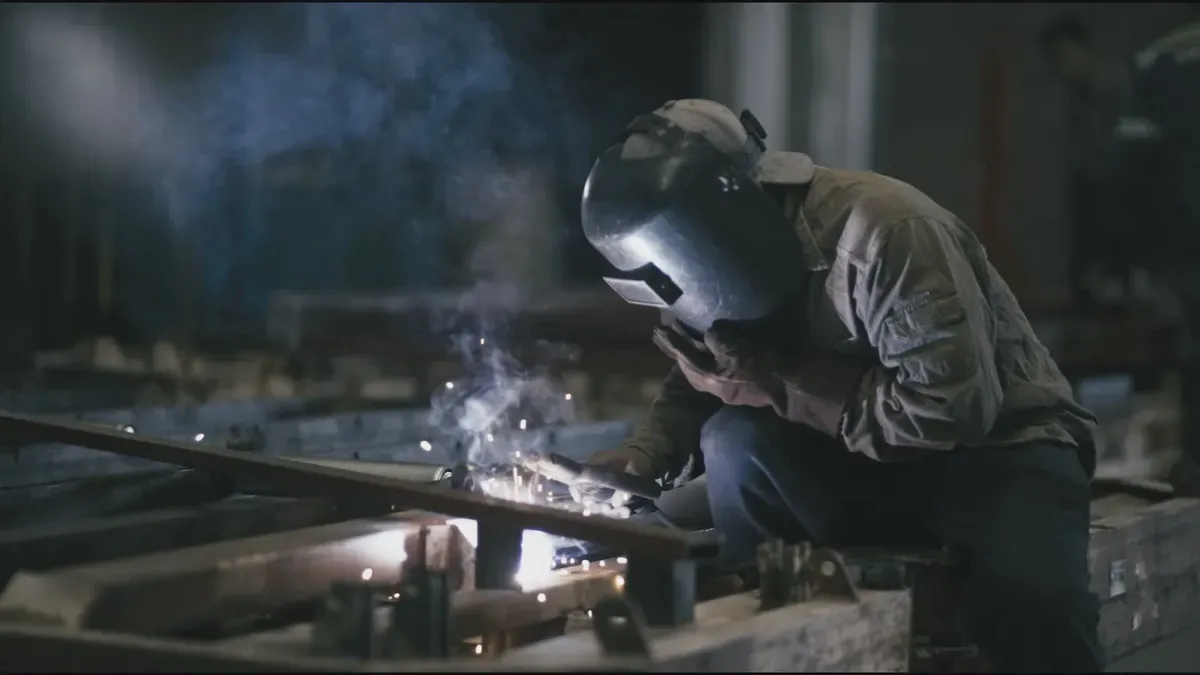
Operating the Torch
Drawn arc welding follows a fixed sequence[3]. The operator loads the stud into the chuck and places a ceramic ferrule over the stud end. The tool then presses against the work position. A trigger press sends a signal from the DC power supply to the internal lift mechanism. The mechanism lifts the stud and draws a pilot arc.
Insert the stud into the chuck and position it against the weld location.
Start the cycle. The stud lifts a controlled distance, and a pilot arc becomes the main welding arc.
Hold the arc for the programmed time. The stud end and base metal melt inside the ferrule.
Plunge the stud back into the molten pool so both molten zones combine.
Stop the arc, let the metal solidify, then remove the ferrule.
The ferrule does quiet work here. It contains the molten metal, blocks air from the pool, and shapes the finished weld collar.
Operating the Gun
Capacitor discharge welding runs on stored energy and a small ignition tip. The tip controls weld time and makes results repeatable. The cycle moves fast.
Position the stud against the base material in the gun.
Trigger the discharge. The tip vaporizes and opens a gap for the arc.
The arc melts the stud end and a small, precise area of the base metal.
The gun forces the stud into the molten pool, and the metals fuse as they solidify.
The full weld finishes in 1 to 3 milliseconds. Heat input stays minimal, so this welding method joins very thin sheets without burn-through. Discoloration, scorching, and reverse-side marking stay absent, and the heat-affected zone stays very small.
Process Dictates Tool Choice
Material thickness settles the decision. Drawn arc is not recommended for base materials under 3/16" thickness, because heat input causes burn-through or distortion. Capacitor discharge is the correct alternative there. Standard drawn arc needs base material at least 1/3 of the stud diameter for studs 1/4" and larger. Short-cycle drawn arc allows base material as thin as 1/5 of the stud diameter for studs 3/8" and smaller.
Both methods share one advantage. Stud welding works from one side and needs no hole. This preserves base material integrity, removes corrosion risks at drilled hole edges, and allows work in confined spaces. The weld bond ends up stronger than the stud material itself, so the connection never becomes the weak point. A stud welding torch suits thick plate and structural strength. A gun suits thin sheet and clean appearance. The job, not preference, picks the tool.
Key Differences Between Torch and Gun
Power Source
The power source separates these two tools at the most fundamental level. A stud welding torch draws from a high-current DC power supply. Welding current ranges from 300 to 3,000 A, with open-circuit voltage between 70 and 100 V. The electrical connection requires 400V with 32 to 125 AT slow blow fuses. This high energy input supports deep penetration into thick plates.
A stud welding gun runs on a bank of capacitors instead. The power supply charges those capacitors to a set voltage, typically 25–200 VDC. The gun then releases that stored energy in one brief pulse. Discharge time lasts only 1 to 3 milliseconds. This difference in power delivery shapes everything else about the two tools.
Weld Type and Materials
The welding process itself dictates which materials each tool handles well. A torch performs drawn arc and short cycle welding. A gun performs capacitor discharge welding. Each method suits different base metals and thicknesses.
| Process | Best Suited Metals | Best Suited Thicknesses | Notes |
|---|---|---|---|
| Capacitor Discharge (CD) | Aluminum, brass | Thin sheet metals | Uses a high-current capacitor pulse to melt the stud tip; suited to light fabrication. |
| Drawn Arc (DA) | Steel (including rusted/scaled surfaces) | Thick steel plates | Uses a pilot arc plus main arc for deep penetration; suited to heavy fabrication and large-diameter studs. |
Material behavior under heat explains this split. Aluminum has very high thermal conductivity and low melting point, which causes rapid heat dissipation during welding. Improper heat control can lead to burn-through, porosity, and distortion. A torch on thin aluminum would struggle. A gun handles it with ease.
That shallow penetration gives the gun a real edge with mixed-material assemblies. A torch works best with carbon steel, stainless steel, and thicker plates. A gun works best with thin sheets and dissimilar metals. Using CD on thick steel may produce weak welds, while using DA on very thin material can cause burn-through or distortion.
Weld Quality and Portability
Both tools produce strong welds when matched to the right job. The quality difference shows up in distortion and cleanup. Capacitor discharge offers cleaner welds on thin materials with less distortion. The fast weld times, as quick as 1–3 ms (0.001–0.003 s), minimize heat buildup. Discoloration and burning stay minimal.
| Welding Method | Ferrule Usage | Distortion | Spatter |
|---|---|---|---|
| Capacitor Discharge (CD) | No ferrules or flux needed | Very little distortion due to fast weld times that minimize heat buildup; also little discoloration or burning | Minimal — rapid discharge and the absence of flux keep spatter very low |
| Drawn Arc | Ceramic ferrule used to contain the molten pool | Low on thick plates — heavy sections absorb weld heat without distortion | Ferrule contains the molten pool to minimize splash; a plunge dampener on larger studs decelerates the stud to further minimize splash |
A stud welding torch is heavier and more expensive. It handles heavier-duty jobs that demand deep penetration. A gun is lighter, more portable, and cheaper. An operator can carry it to the workpiece with far less fatigue.
The stud welding advantages of each tool come down to fit. A torch delivers structural strength on thick plate. A gun delivers speed and cleanliness on thin sheet. Neither tool wins outright. The job picks the winner.
Applications and Best Uses
When to Choose a Torch
A torch earns its place on thick plate and structural work[4]. Construction crews use it to attach shear connectors to steel beams. Shipbuilders rely on it for deck fittings and hull attachments. Heavy manufacturing plants use it for mounting brackets on thick steel frames. These jobs demand deep penetration and high strength. A drawn arc torch delivers both.
The material thickness rule settles most decisions. Drawn arc is not recommended for base materials under 3/16" thickness. A torch also handles studs with flux ends or pre-calibrated tips. Structural steel, bridge components, and pressure vessels all fall into this category. When the weld must carry a structural load, the torch is the correct tool.
When to Choose a Gun
A gun suits thin sheet metal and high-volume production. Automotive assembly lines use capacitor discharge welding for interior panel mounting. Seats, door panels, and dashboard components need reliable connections without visible fasteners. The gun's minimal heat input keeps thin panels flat and free of distortion.
HVAC ductwork, appliance manufacturing, and decorative stud work also favor the gun. Cupped head pins for insulation attachment are a common gun application. The capacitor discharge process joins dissimilar metals with ease. This makes the gun valuable for mixed-material assemblies. A gun also costs less and moves easily between workstations.
Industries and Projects
Several industries depend on stud welding equipment for daily production. Construction, automotive, manufacturing, aerospace, and general fabrication all use these tools. Each sector picks the method that matches its materials and volume.
The automotive industry offers a clear example of capacitor discharge in action.
Manufacturers offer both torch and gun types to suit different project needs. A buyer can match the tool to the material, the stud size, and the production volume. That flexibility covers welding applications from heavy structural steel to thin automotive panels.
Summary Table
Quick Reference
The table below puts the two tools side by side. A reader can scan it in seconds and match a tool to a job. The comparison covers the welding process, power source, stud diameter range, material thickness, portability, cost, and typical applications.
A stud welding torch and a stud welding gun serve different purposes. The torch handles drawn arc welding with a high-current power supply. The gun handles capacitor discharge welding with a bank of capacitors. Each tool excels in its own range of stud sizes and material thicknesses. The table makes these distinctions easy to compare at a glance.
| Feature | Stud Welding Torch | Stud Welding Gun |
|---|---|---|
| Welding Process | Drawn arc, short cycle drawn arc | Capacitor discharge |
| Power Source | High-current DC supply, 300–3,000 A, 70–100 V open-circuit | Capacitor bank, 25–200 VDC, 1–3 ms discharge |
| Stud Diameter Range | M6–M24 (Ø6–25 mm) | M3–M10 (Ø3–10 mm) |
| Material Thickness | Thick plate, 3/16" and above | Thin sheet |
| Portability | Heavier, less portable | Lighter, more portable |
| Cost | Higher | Lower |
| Typical Applications | Construction, shipbuilding, structural steel, heavy manufacturing | Automotive, HVAC, appliance manufacturing, decorative studs |
The table shows one clear pattern. A torch delivers deep penetration and high strength on thick materials. A gun delivers speed and cleanliness on thin sheets. The stud welding equipment a buyer selects should match the material thickness and stud size. A torch on thin sheet risks burn-through. A gun on thick plate may produce a weak weld.
Weld quality depends on matching the tool to the task. A torch produces strong welds on structural steel. A gun produces clean welds with minimal distortion on thin panels. Both tools create a bond stronger than the stud material itself. The right choice comes down to the job requirements, not brand preference.
A buyer should also consider production volume. A gun suits high-volume lines with fast cycle times. A torch suits heavy fabrication with larger studs. The table gives a quick reference for that decision.
The core difference comes down to power and purpose. A stud welding torch handles heavy-duty drawn arc stud welding. A stud welding gun delivers precise capacitor discharge welding. For thick materials and structural strength, choose a torch. For thin sheets and cosmetic welds, choose a gun. Both tools produce strong stud welds when matched to the right job. A torch excels on thick plate. If you need a reliable stud welding torch manufacturer, choose a supplier whose equipment is built for demanding stud welding applications. Each stud bonds securely. The right tool depends on the job.
Need the Right Stud Welding Tool for Your Project?
Black Wolf Welding offers both stud welding torches and capacitor discharge stud guns, with matching power supplies, chucks, and accessories built for demanding production environments.
Explore Our Stud Welding TorchesSend Us an InquiryFAQ
Can one tool handle both drawn arc and capacitor discharge welding?
No. A torch performs drawn arc and short cycle welding. A gun performs capacitor discharge welding. Some specialized tools may support multiple processes, but typically each tool serves one process.
Which tool works best for thin sheet metal?
A gun works best for thin sheets. Capacitor discharge welding joins very thin sheets without burn-through. The process finishes in 1 to 3 milliseconds. Heat input stays minimal. Distortion and discoloration remain absent.
What stud sizes does each tool handle?
A torch handles M6 to M24 (Ø6–25 mm). A gun handles M3 to M10 (Ø3–10 mm). Match the stud diameter to the tool for the best weld quality.
Do I need ceramic ferrules with a gun?
No. Capacitor discharge welding needs no ferrules or flux. The stud tip vaporizes and creates the arc. Cleanup stays simple. A torch requires ceramic ferrules to contain the molten pool and shield the weld from contamination.
Which tool costs less?
A gun costs less than a torch. Capacitor discharge welders are simpler and cheaper than drawn arc systems. A gun also weighs less and moves easily between workstations. A torch costs more but handles heavier-duty jobs with deep penetration.
Can stud welding work from one side only?
Yes. Stud welding works from one side and needs no hole. This preserves base material integrity and removes corrosion risks at drilled hole edges. The weld bond ends up stronger than the stud material itself.
What is the minimum material thickness for drawn arc welding?
Drawn arc is not recommended for base materials under 3/16" thickness. Standard drawn arc needs base material at least 1/3 of the stud diameter for studs 1/4" and larger. Short-cycle drawn arc allows base material as thin as 1/5 of the stud diameter for studs 3/8" and smaller.
Which industries use each tool?
Construction, shipbuilding, and heavy manufacturing use a torch for structural steel. Automotive, HVAC, and appliance manufacturing use a gun for thin sheet metal. Aerospace and general fabrication use both tools depending on the material and stud size.
References
Persistence Market Research — Global stud welding equipment market outlook (2026–2033). https://www.persistencemarketresearch.com/market-research/stud-welding-equipment-market.asp
American Welding Society — WHC2.09 Arc Stud Welding, Welding Handbook, 9th Edition. https://pubs.aws.org/p/930/whc209-arc-stud-welding
TWI — What is Welding? Process definitions and classifications. https://www.twi-global.com/technical-knowledge/faqs/what-is-welding
American Welding Society — AWS D1.1/D1.1M Structural Welding Code - Steel. https://www.aws.org/publications/page/aws-d11