



A Complete Guide to Answer All Your Questions About the TIG Torch
 Apr 29, 2025|
 View:4655
Along with the rapid development of modern industrial manufacturing and the metal processing industry, welding, as an important connection procedure, is also playing an increasingly important role. Of the various types of welding, TIG (Tungsten Inert Gas Welding) welding has become increasingly popular in professional and hobby fields as it offers high precision, high weld quality, and wide applications. The primary TIG welding tool is the TIG Torch, which is the critical instrument used to apply this specialized welding process. The purpose of this very long article is to give you the Ultimate TIG Torch Guide aiming to answer all the questions you may encounter during use and help you better understand and master this crucial equipment.

Bookmarks
Here is a Table of Contents to Help You Quickly and Accurately Find the Information You Seek!
Question 1
What Is A TIG Torch?
The TIG Torch is a front-end tool of the TIG welding system, which can supply electrical energy, cooling medium, and shielding gas to the welding area. Knowing the fundamental structure and types of it is very important when choosing the proper torch and efficiency for welding work.
Basic Definition of TIG Torch
The TIG Torch, otherwise known as the Tungsten Inert Gas welding torch, is the hand-held apparatus used in TIG welding that directs the welding arc, shielding gas and supports the tungsten electrode. It is the hands-on connection between the welder and the welding process, with its design directly affecting comfort, accuracy and overall weld quality.
Main Components of a TIG Torch
A typical TIG Torch will generally have the following components:
Handle: The portion of the torch that the welder grasps, often ergonomically designed to fit comfortably in the hand during use.
Body: Connects the handle with the front-end parts including electricity, cooling, and gas-flow channels.
Collet: This part secures the tungsten electrode, ensuring efficient electrical conductivity.
Collet Body: The part that houses the collet.
Gas Nozzle: A heat and ceramic resistant device controlling the direction of the shielding gases being supplied to the welding region.
Tungsten Electrode: The non-consumable electrode which produces the arc and is made in a variety of types and sizes.
Back Cap: The fitting that seals the rear end of the TIG Torch, with some designs allowing adjustment of the tungsten electrode's protrusion length.
Main Types of TIG Torches
TIG torches can be divided into the following categories according to cooling systems and amperage ratings:
By Cooling Method
It is cooled by the protective gas and the air surrounding the torch.
Pros: Compact, portable, very easy to put together.
Cons: Lower amperage rating, mostly around 200 amps.
Applications: Light-duty work, thin material welding, intermittent use.
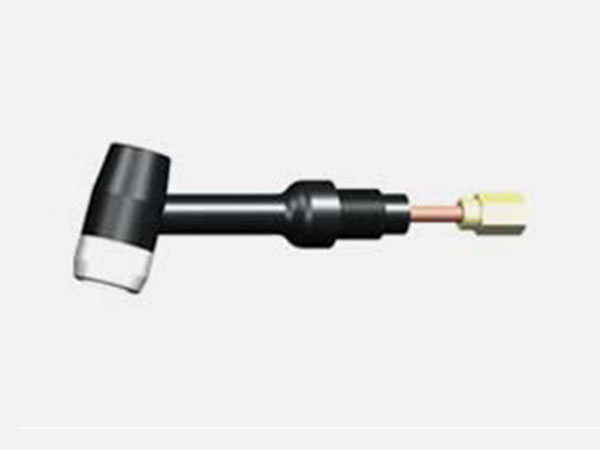
Utilizes a cyclic water cooling system to control temperature.
Pros: Can work with all the way up to 600 amps. Extremely well-suited for continuous, heavy-duty work
Cons: Requires additional cooling equipment, more complicated setup and costs.
Applications: industrial production, welding of heavy material and continuous operation environment.

By Size and Use
Miniature TIG Torch:
Perfect for all types of precision welding, from jewelry to electronics.
Features: Small volume, lightweight, accurate.
Standard TIG Torch:
The most widely used type and can be utilized for general welding tasks.
The amperage range is normally 70 – 200 amps.
Heavy-Duty TIG Torch:
Used for high amperage, heavy-load industrial applications.
Generally water-cooled and in the 350-600 Tamp range.
Knowing these basic types and components will guide you in choosing the best TIG Torch for your specific applications and help you achieve successful welding work.
Question 2
How Does A TIG Torch Work?
Understanding the principle of operation of the TIG Torch is vital to the proper use and maintenance of this piece of equipment. This part will briefly cover the basic principles of TIG welding and an introduction to the TIG Torch and its role in welding.
Basic Principle of TIG Welding
TIG welding is a type of arc welding process for joining metals, where an arc is generated between a non-consumable tungsten electrode and the workpiece under inert gas protection to melt the base material to form a weld. TIG welding provides higher precision and better-looking welds than other types of welding.
Arc Formation Process
With the TIG Torch attached to the welding power source and the tungsten electrode correctly spaced from the workpiece, a high-frequency electrical spark is formed to start the arc. After the arc is initiated, electricity passes from the tungsten electrode to the object to be welded and creates temperatures as high as, (6,000-24,000 °F or 3,315-13,315 °C).
This incredible heat is hot enough to melt just about any metal, but the tungsten electrode (with a melting point of around 6,192° F, or 3,422° C ) will stay nice and solid under normal welding conditions.
Role of Shielding Gas
In TIG welding, argon or helium is frequently used as shielding media. These gases travel from the TIG Torch’s gas nozzle and have several roles:
Oxidation Protection: They separate the area of the welding from the atmosphere, protecting the molten metal from reacting with oxygen or nitrogen in the air at a high temperature.
Supporting the Arc: The gases form a stable ionized atmosphere, which stabilizes and contributes to the controllability of the arc:
Cooling Effect: They somewhat help to cool both the tungsten electrode and the weld area.
For more detailed information about the principles of TIG welding, you can refer to our featured article, "A Comprehensive Analysis of the Operating Principles of TIG Welding."
Question 3
Can You TIG Weld Without Gas?
One common question that arises when talking about TIG welding technology is: Can TIG welding be done without shielding gas? The response to this question is directly related to the strength and integrity of the welds and their safety.
No Shielding Gas: Is it Possible to TIG Weld?
The quick answer is this: no, you cannot TIG weld correctly without a shielding gas. The following serious problems will occur if welding is done without using shielding gas:
The Tungsten Electrode Rapid Consumption: without protective gas, tungsten electrode in high temperature air oxidation, leading to rapid oxidation and wear.
Serious Weld Defects: The molten metal will react to oxygen and nitrogen in the air and produce oxides and nitrides, resulting in porous, brittle and unstable welds.
Unstable Arc: The gas shielding supports the arc. Without this, the arc will be very unstable and unmanageable.
Equipment Damage Hazard: If used improperly, damage to the TIG Torch and related equipment may occur.
The Crucial Role of Shielding Gas in TIG Welding
Shielding gas plays an irreplaceable role in the TIG welding process:
Prevent contamination: It isolates the welded area from the air, preventing oxidation and nitration.
Better Weld Quality: Provides a clean, porosity-free weld with sound mechanical properties.
Extended Tungsten Electrode Life: It can effectively prevent tungsten pole oxidation and extend service life.
Arc Control: Various shielding gases (e.g., argon, helium, mixed gases) have different ionization characteristics - and this influences the shape, the penetration and the heat input of the arc.
Commonly Used Shielding Gases in TIG Welding
The following are examples of the most commonly used shielding gases for TIG welding:
Pure Argon (Ar):
The most common choice for most applications.
Weaker ionization energy, easy to start the arc and maintain it.
Fits most of the normal metals, such as aluminum, stainless steel, and carbon steel.
Relatively economical.
Helium (He):
Delivers greater heat input and better penetration.
It can be used for thick materials and metals with good heat dissipation, such as copper and aluminum.
A more expensive option, generally used in North America.
Argon-Helium Mixture:
Combines the benefits of both gases.
The penetration depth and arc characteristics can be controlled by changing the mix ratio.
Great for thick materials or applications requiring precision control over heat input.
Argon-Hydrogen Mixture:
A small amount of hydrogen is added (normally 1-5%).
Improve the speed and penetration of welding.
IUsed in nickel-based alloys and stainless steel.
Not applicable to materials susceptible to hydrogen embrittlement, such as some high-strength steels.
Question 4
What Is A TIG Torch Used For?
The TIG Torch is used in many industries and applications because it is very precise and produces a high-quality weld. Knowing these applications helps in a better understanding of the nature of TIG welding technology and the possibilities it provides.
Aerospace Industry
When it comes to the aerospace industry, TIG welding is among the favored welding techniques due to its welding quality and reliability:
Aerospace Structures and Materials:
Hulls and load-carrying parts
Engine parts and fuel systems
Tubing and pipe connections, hydraulic systems
Spacecraft Equipment:
Rocket engine components
Satellite structures
Space station joining of modules
When welding for these applications, the TIG Torch is typically utilized along with custom fixtures and automation systems to guarantee utmost accuracy and consistency.
Automotive Manufacturing
Where Is TIG Welding Used Most? TIG is common in the automotive industry, particularly in these places:
High-Performance Vehicles:
Race chassis and safety cage
Custom exhaust systems
Aluminum bodies and frames
Normal Automotive Production:
Special alloy component welding
Joints of intricate shapes
Maintenance and repair work
At the automotive level, TIG welding is a powerful process because all types of metal materials can be handled with it, with clean, nice-looking welds.
Precision Manufacturing and Electronics Industry
Here are the roles of the TIG Torch in precision manufacturing:
Electronic Device Casings:
Medical equipment housings
Instrument case of precision instruments
Casings of watertight electronic apparatus
Small Parts Assembly:
Sensor assemblies
Precision mechanical parts
Specialized electronic device connections
They generally require low current settings and compact TIG Torches that will prevent sensitive electronic components from being damaged.
Artistic Creation and Metal Craft
Artists and metal craftsmen alike favor TIG welding because of the precise control and visually appealing welds:
Metal Sculptures:
Modern art installations
Public artworks
Custom metal sculptures
Decorative Metal Products:
High-end furniture
Architectural sculptures and decorative elements
Custom metal work railings and handrails
Jewelry Making:
Fine metal connections
Custom rings and pendants
Metal artwork restoration
In these artistic applications, TIG Torch also features the precision control that artists need to fully realize their intricate design visions.
Pipe and Pressure Vessel Manufacturing
TIG welding is widely used in pipe fabrication and pressure vessels where high-quality, high-strength welds are essential:
Food and Pharmaceutical Industry:
Hygienic stainless steel tubes
Processing equipment
Storage tanks
Chemical and Petroleum Industry:
High-pressure pipe systems
Reactors and storage tanks
Special alloy equipment
Nuclear Industry:
Reactor components
Cooling systems
Welded joints in metallic special materials
For these applications, welding must meet demanding industry standards, with nondestructive testing to be carried out to guarantee the integrity and safety of welds.
Question 5
How To Set Up TIG Torch?
The proper TIG Torch configuration is an essential foundation in the Welding process. In this section, we’re going to quickly run through some of the most essential preparations and considerations to ensure you are all prepped and ready to to start welding.

Basic Assembly of the TIG Torch
Prior to beginning the weld, it is important that the different sections of the TIG Torch are put together properly:
Selecting the Proper Tungsten Electrode:
Choose the suitable electrode material according to the workpiece and the type of current (tungsten, thorium tungsten, cerium tungsten, etc).
Select the correct tungsten electrode diameter, which is usually matching the expected welding current.
Preparing the Tungsten Electrode:
Check that the electrode point is in the right shape, with a typical angle of 20 - 30 degrees.
You would have to round the tungsten slightly for AC welding (like aluminum).
Grind the tungsten with a separate grinding wheel to prevent contamination.
Assembling the TIG Torch Components:
Choose the right size of the collet and collet body.
Select the right size of Gas nozzles (Bigger sizes of nozzles can cover more range of gas).
Check that all parts are snugged tight but not over-torqued.
Adjusting the Tungsten Electrode Stick-Out:
The tungsten should protrude about 1/8 in.(3 mm) from the gas nozzle.
Specific applications may call for a different electrode stick-out.
Connecting the TIG Torch to the Welder
It is absolutely vital for safe welding to attach the TIG Torch to the welder correctly:
Power Connection:
Make sure the welder is turned off.
Connect the TIG Torch Power plug to the front panel of the welder.
The earth clamp should be well connected to the workpiece.
Gas Connection:
Attach the gas hose into the gas outlet of the welder.
Check for leaks at any connection.
Adjust the suitable gas flow (about 15 to 25 CFH or 7 to 12 L/min).
Water Cooling System Connection (if applicable):
Make sure the inlet and return water hoses are connected correctly.
Verify that the water cooling system is functioning properly.
Ensure the water flow direction is correct.
Basic Parameter Settings for the TIG Welder
With TIG welding, the correct parameters have to be set depending on the material and thickness:
Choosing the Current Type:
Direct Current Electrode Negative (DCEN): Work on most materials, Steel, Stainless steel, copper etc.
Alternating Current (AC): Essentially for materials like aluminum and magnesium, which form stubborn oxide layers.
Setting the Current Intensity:
A thin material requires less current.
Thick materials will need more current.
General rule: Set 1 amp of current for every 0.001 inch (0.025mm) of material thickness.
Gas Pre-Flow and Post-Flow Times:
Pre-flow time: the general setting is 2-5 seconds to make sure the welding area will be covered by gas before welding.
Post-flow time: according to the current, usually 1 second of post-flow time per 10 amps of current.
Pulse Settings(If using the pulse function):
The peak current/background current ratio.
Pulse frequency.
Duty cycle.
Safety Checklist
Before doing any welding, you should perform the following checks for safety:
Personal Protective Equipment (PPE):
Wear a suitable welding helmet (at least shade 11).
Use welding clothes, gloves, and boots that are flame-resistant.
Make sure that no bare skin is present.
Work Area Safety:
Clear away anything flammable.
Ensure adequate ventilation.
Get Proper Fire Suppression Equipment Ready.
Equipment Inspection:
Check all of the cables for any broken ones.
Make sure all gas connections are not leaking.
Make sure the water cooling system (if applicable) works.
Correct TIG Torch setup is also critical to the production of quality welds. If you do these things and take care to focus on these details, you will be fully prepared to TIG weld properly.
Question 6
How To Hold A TIG Torch?
The proper grip of the TIG Torch is important for weld quality and operator comfort. In addition to promoting stability and reducing fatigue, a good grip can help in producing better-quality welds. This article will briefly describe a few of the most basic grip techniques.
Basic Grip Postures
There are some differences in the way the TIG Torch is held depending on personal preference and the particular application, but there are some generally accepted basic principles:
Pencil Grip:
Grip the TIG Torch as you would a pencil.
Suitable For delicate work and precise applications.
Ideal for low current and thin material welding.
Handle Grip:
Wrap your whole hand around the torch handle.
Provide you with greater stability and control.
Great for long welding projects with small electrodes or large currents.
Support Technique:
A non-welding hand or arm can be used to support the welding hand for greater stability.
Rest your hand or wrist on the work surface as a point of support when possible.
Lean your forearm on the edge of the workbench or on a dedicated armrest to minimize tiredness.
Proper Welding Posture and Angle
While learning TIG welding, welders typically face some of the following problems:
Arm Fatigue:
Issue: Prolonged grip leads make your arms tired and shake.
Solution: Use an arm support, take regular breaks, and strengthen the muscles in your forearm.
Problems with the Operating Trigger Switch:
Issue: it's hard to use the trigger or foot pedal control but stay stable at the same time.
Solution: Change grip, master the Foot pedal and practice hand-foot coordination work.
Obstructed Line of Sight:
Issue: TIG Torch or hands are in the way of seeing the weld joint clearly.
Solution: Change the grip angle and try a smaller diameter gas nozzle (allowed by conditions).
Unsteady Filler Material Control:
Issue: TIG Torch and filler material are hard to control at the same time.
Solution: Practice bilateral coordination, or consider using an automatic wire feeder system (for specific scenarios).
Conclusion: Mastering the TIG Torch for Exceptional Welding
With the information and tips that you will find in this guide, we hope to help you understand and improve your skills when using the TIG torch, no matter if you are a beginner or a professional who wants to become better. Once you have mastered this particular welding instrument, a whole new world of metalworking and manufacturing will become available to you, enabling you to produce welds of superior quality.