



What is the difference between a MIG and TIG torch?
 May 14, 2025|
 View:1919
In the field of metal processing, the MIG torch (Metal Inert Gas torch) and the TIG torch (Tungsten Inert Gas torch) are two of the most commonly used welding tools. With the increasing demand for precision, efficiency, and material adaptability in industrial manufacturing, understanding the core differences between the two has become a necessary course for engineers and operators. This article will deeply analyze "What is the difference between a MIG and TIG torch?" from multiple dimensions such as structural design, working principles, and applicable scenarios, helping readers quickly grasp the key points of selection and usage.
Comparison of Core Principles: Differences in Electrodes and Arc Generation
1. Electrode Types and Arc Generation Methods
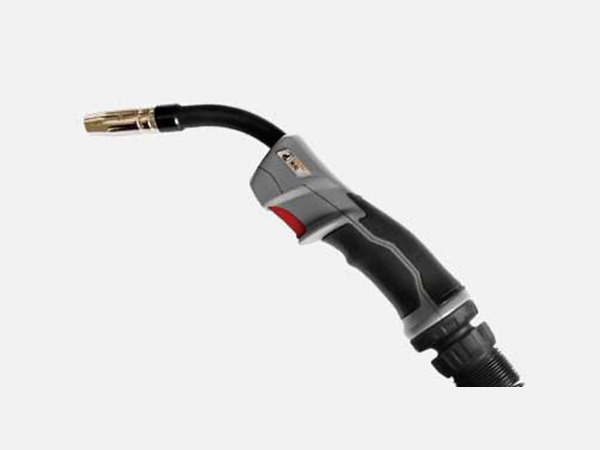
MIG welding torch: It uses a consumable electrode with continuous wire feeding. The welding wire serves both as a conductive material and as filler metal. The arc is generated between the welding wire and the workpiece, and a molten pool is formed by melting the welding wire (for example, when welding aluminum alloys, the welding wire and the base metal melt simultaneously).
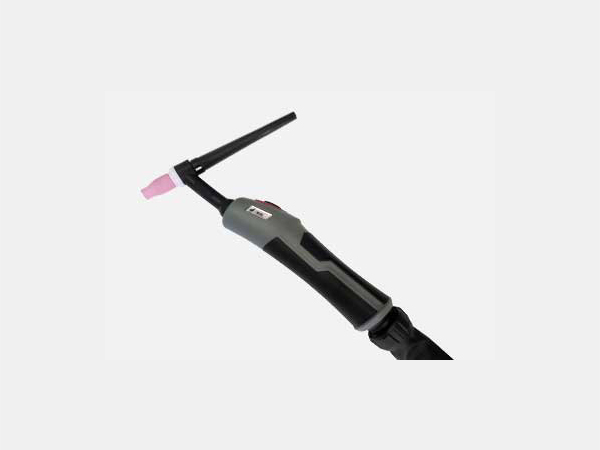
TIG welding torch: It uses a non-consumable tungsten electrode. The arc is generated between the tungsten electrode and the workpiece, and filler metal needs to be added manually or automatically (for example, when welding thin stainless steel sheets, an additional welding wire needs to be fed into the molten pool).
2. The Role and Selection of Protective Gas
MIG welding torch: It relies on inert gas (such as Ar) or a mixed gas (Ar + CO₂) to protect the molten pool and prevent oxidation. For example, CO₂ mixed gas is commonly used when welding low-carbon steel to reduce costs.
TIG welding torch: It only uses inert gas (Ar/He) to ensure the stability of the tungsten electrode and the purity of the molten pool, especially suitable for active metals such as aluminum and titanium.
Differences in Equipment Structure and Operational Characteristics
1. Core Components of the Welding Torch Design
Structure of the MIG welding torch:
Wire feeding mechanism: A core component that ensures the continuous and stable feeding of the welding wire (for example, high-speed wire feeding in automotive manufacturing enables efficient welding).
Contact tip: Guides the welding wire and conducts current, and needs to be replaced regularly to prevent wear.
Gas nozzle: With a wide-bore design, it covers a larger protected area.
Structure of the TIG welding torch:
Tungsten electrode holder: Precisely fixes the tungsten electrode to ensure arc stability (for example, tungsten electrodes of different diameters need to be replaced when welding copper alloys).
Gas lens: Optimizes the gas flow distribution and enhances the protection effect.
Foot pedal or handheld controller: Supports real-time current adjustment to adapt to fine operations.
2. Operational Difficulty and Applicable Scenarios
Advantages of the MIG welding torch:
High degree of automation: Suitable for long welds and thick plate welding (such as continuous welding of I-beams in steel structure buildings).
Fast welding speed: High deposition rate, suitable for large-scale production (such as automotive body assembly lines).
Advantages of the TIG welding torch:
Precise control ability: Suitable for welding thin plates (0.5-4mm), complex shapes, and welds with high aesthetic requirements (such as aerospace components or jewelry processing).
Multi-material adaptability: Capable of welding non-ferrous metals such as aluminum, magnesium, and titanium, as well as dissimilar metals (such as transition joints between copper and steel).
Differences in Performance and Material Adaptability
1. Comparison of Weld Quality and Appearance
MIG welding:
The weld is relatively wide, with a uniform fish-scale pattern on the surface, but spatter is likely to occur during high-speed welding (subsequent cleaning is required).
Suitable for scenarios with high strength requirements and medium aesthetic requirements (such as the internal structure of pressure vessels).
TIG welding:
The weld is narrow and uniform, without spatter, and the surface is smooth like a mirror (such as the hermetic welding of food-grade stainless steel pipes).
It can precisely control the heat input and reduce deformation (such as the encapsulation of thin-walled electronic components).
2. Differences in Material Adaptability
Materials suitable for the MIG welding torch:
Ferrous metals: Low-carbon steel, low-alloy steel (such as H-shaped steel for construction).
Some non-ferrous metals: Aluminum and magnesium alloys (a pulse function needs to be used to reduce porosity).
Materials suitable for the TIG welding torch:
Highly active metals: Titanium alloys (such as medical implants), zirconium alloys (components of nuclear reactors).
Dissimilar metal combinations: Copper and stainless steel (such as the welding of tube sheets in heat exchangers).
Considerations of Economy and Maintenance Costs
1. Initial Investment and Long-term Costs
MIG welding torch: The equipment cost is relatively low, but the consumption of consumables (welding wire, gas) is large, suitable for mass production environments.
TIG welding torch: The equipment is precise and expensive, but the consumption of consumables (tungsten electrode, filler wire) is slow, suitable for high-value-added products.
2. Maintenance and Fault Handling
Maintenance Key Points of the MIG welding torch:
Regularly clean the wire feeding tube to prevent blockage (especially when there is residual lubricant during aluminum welding).
Replace the contact tip to maintain arc stability.
Maintenance Key Points of the TIG welding torch:
Grind the tungsten electrode: Ensure the tip geometry (conical shape is suitable for DC welding, and spherical shape is suitable for AC welding).
Clean the gas lens: Avoid spatter affecting the protection effect.
Conclusion: How to Select a Welding Torch According to Requirements?
The essential differences between the MIG torch and the TIG torch stem from differences in design concepts and application objectives:
For those pursuing efficiency and mass production: Choose the MIG torch, which wins with high speed and automation.
For those pursuing precision and multi-material compatibility: Choose the TIG torch, which excels in controllability and adaptability.
Regardless of which welding torch is selected, understanding its core principles, material adaptability, and maintenance key points can significantly improve welding quality and production efficiency. In the era of Industry 4.0, these two technologies will continue to complement each other, promoting metal processing towards higher precision and a wider range of application scenarios.