



How to Set Up a Water-Cooled TIG Torch System Safely and Efficiently
 Jul 13, 2026|
 View:715
Water-cooled TIG torches are advanced welding tools designed to handle high heat during demanding welding jobs. These torches use a special cooling system that keeps the torch body at a safe temperature, even when working with high amperage. Golden Globe offers a wide range of these torches, including models like the TIG 27 and YT-50TSW2, built for both professional and industrial use.
Key Takeaways
Water-cooled TIG torches are essential for high-amperage welding, providing better heat management and longer work sessions without overheating.
Choose the right torch and water cooler based on your welding needs — Golden Globe offers models suited for both high-amperage and lighter tasks.
Ensure all hoses, fittings, and connectors are durable and leak-proof to maintain an efficient cooling system and prevent accidents.
Regularly inspect coolant levels and flow rates to avoid overheating.
Always wear appropriate PPE — welding helmet, gloves, and flame-resistant clothing.
A clean, organized workspace reduces hazards. Keep flammable materials away and ensure good ventilation.
Monitor coolant temperature and flow rate (ideal: 5–15 L/min) to optimize performance.
Upgrade equipment when you notice frequent overheating or unstable arcs.
How Water Cooling Works
The water cooling system operates by circulating coolant through small passages inside the torch head. This coolant travels down hoses to an external reservoir and radiator, absorbs heat from the torch, and releases it at the cooler — keeping the torch near room temperature. This allows welders to work longer without worrying about overheating.[1]
Note: The water cooling mechanism not only protects the torch but also helps the operator by reducing heat exposure — meaning more comfort and safety during long welding sessions.
| Component | Function |
|---|---|
| Water-cooled copper plate | Acts as the anode, helping to dissipate heat generated during welding. |
| Pressure tube | Conducts arc pressure to a sensor, enabling measurement and control of the welding arc. |
| Computer / controller | Collects electric signals from the sensor to determine the arc pressure value. |
Benefits Over Air-Cooled Torches
Water-cooled TIG torches are designed for prolonged use without overheating, making them ideal for high-amperage tasks. Air-cooled torches may need cooling pauses during long jobs, slowing work and reducing productivity. Golden Globe's liquid-cooled models, such as the TIG 27, provide a 100% duty cycle at high currents — less downtime and more efficient welding.
When to Use Water-Cooled TIG Torches
| Scenario / Industry | Description |
|---|---|
| High-amperage projects (typically over 200A) | Require effective cooling to maintain stable arc performance. |
| Long continuous welding sessions | Essential for managing heat during extended use. |
| Stationary workshops / fabrication shops | Ideal where a water cooler system can be permanently installed. |
Essential Equipment for Liquid Cooled TIG Torch Setup
Torch and Water Cooler
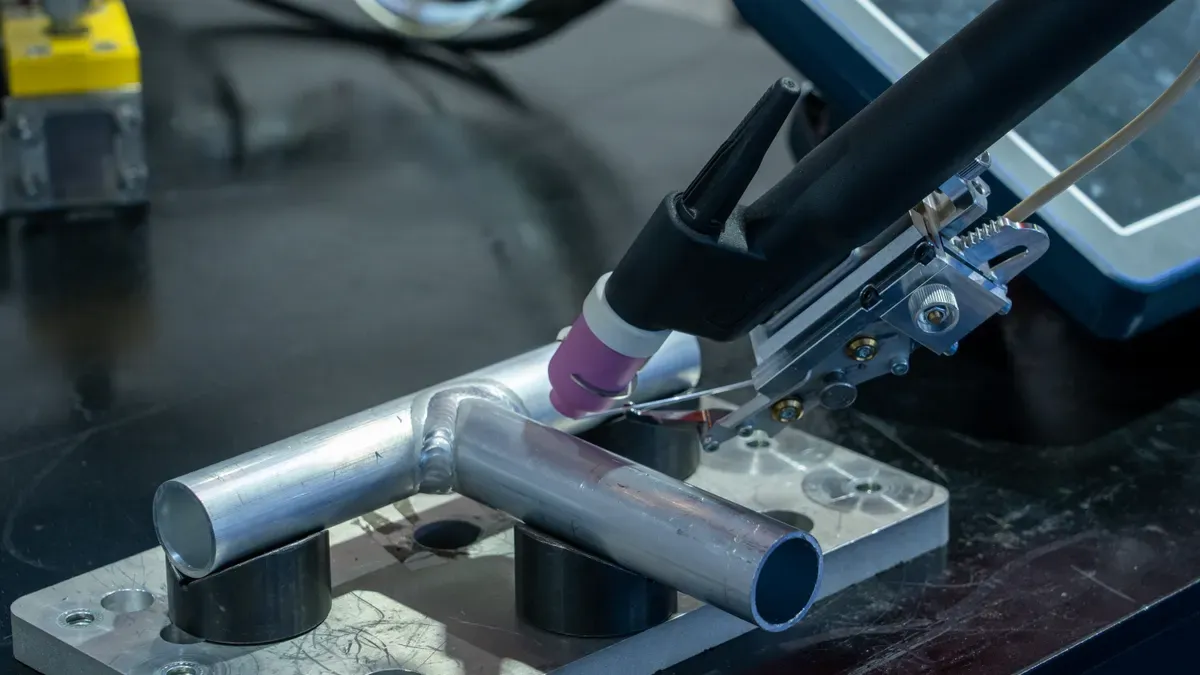
A liquid cooled TIG torch setup starts with selecting the right torch and water cooler. Golden Globe offers a wide range, such as the TIG 27 for high-amperage jobs and the TIG 9 for lighter tasks. The water cooler pumps coolant through the torch and stabilizes temperature — match your cooler to the torch's duty cycle and amperage range for reliable, long-term performance.[2]
Tip: Always check the duty cycle of both your torch and cooler. A higher duty cycle means the equipment can run longer without stopping for cool-down periods.
Hoses, Fittings, and Connectors
Hoses, fittings, and connectors link the torch to the water cooler and power source. These parts must be durable and leak-proof. Common connector types:
| Connector Type | Description |
|---|---|
| DINSE | Used for connecting welding cables to machines; available in sizes 10–25 and 35–50. |
| Thread Sizes | Common sizes include 3/8 BSP and M16×1.5 for optimal compatibility. |
Power Source and Coolant
A stable power source must match the torch's amperage rating. For coolant, industry standards recommend propylene glycol or ethylene glycol for their wide temperature range. Pure or deionized water offers the best heat conduction but must be non-conductive to prevent electrical hazards.[3]
| Specification | Details |
|---|---|
| Recommended Coolants | Propylene glycol, ethylene glycol |
| Best Heat Conduction | Pure water or deionized water |
| Flow Rate Requirement | 5–15 liters per minute recommended |
Note: Always use the coolant recommended by your torch manufacturer to maintain the warranty and ensure the cooling system works as designed.
Safety Gear and Accessories
Every welder should have a complete set of PPE before starting work. Key items include:
Welding Helmet: Auto-darkening filter shields eyes and face from intense light and sparks.
Welding Gloves: Heavy-duty leather gloves protect hands from heat and spatter.
Flame-Resistant Clothing: Long-sleeved shirt and pants; avoid synthetic fabrics.
Safety Glasses: Worn under the helmet to guard against flying debris.
Respirator / Fume Extractor: Essential in poorly ventilated areas.
| Accessory | Purpose |
|---|---|
| Coolant Flow Indicator | Monitors coolant movement and prevents overheating |
| Quick-Connect Fittings | Speeds up hose changes and maintenance |
| Torch Stand | Provides a safe resting place for the torch |
| Cable Covers | Shields hoses and cables from damage |
| Spare Consumables Kit | Ensures replacements for worn tungsten electrodes, nozzles, and collets |
Setup Steps for Water-Cooled TIG Torches
Workspace Preparation
Start by clearing clutter and removing flammable materials from the welding zone. Work on a fire-resistant surface. Keep a fire extinguisher within reach. Good ventilation is critical — use a fume extraction system if needed. Secure gas cylinders upright. For full regulatory guidance, refer to OSHA's welding, cutting, and brazing safety standards.[4]
Assembling Components
Lay out all parts from your Golden Globe kit: torch, water cooler, hoses, fittings, connectors, and power cables. Follow kit instructions for the correct assembly order. Common mistakes and solutions:
| Common Mistake | Solution |
|---|---|
| Incorrect torch assembly (collet, tungsten, etc.) | Verify collet grips tungsten tightly and ceramic cup is the correct size for good gas coverage. |
| Neglecting water-cooled system checks | Regularly inspect for leaks or blockages to prevent overheating and torch damage. |
Note: Take your time during assembly. Careful work now prevents problems later.
Connecting Water Lines and Power
Connect water lines from the torch to the water cooler, following the arrows or labels on hoses for correct flow direction. Tighten all fittings securely. Route hoses away from sharp edges and hot surfaces. Attach the power cable to the welding machine — avoid crossing water lines with power cables. Use cable covers to keep everything organized.
Filling and Priming the Cooler
Remove the protective cap from the coolant reservoir and inspect for cracks.
Lift the coolant bottle and invert it onto the cooler probe, ensuring it locks securely.
Dispense short bursts of coolant to prime the lines. Watch for leaks at all connections.
Open both taps one at a time, allowing coolant to flow in short bursts to clear air pockets.
Repeat several short dispenses until pressure equalizes throughout the cooler.
Confirm successful priming: a steady, splash-free stream with no repeated sputtering.
System Testing
| Step | Description |
|---|---|
| Inspect the torch | Look for cracked cups, loose collets, or signs of heat stress in the torch lead. |
| Check tungsten | Confirm it is clean, properly shaped, and uncontaminated. Replace or regrind if needed. |
| Verify gas flow | Examine hoses and fittings for tightness and confirm proper shielding gas coverage. |
| Inspect cooling system | Monitor coolant flow and return temperature; ensure coolant is clean and flow is unrestricted. |
| Check electrical connections | Work clamp and return path must be clean and tight to prevent arc instability. |
| Annual maintenance | Replace worn items and inspect the full cooling loop for leaks and coolant quality. |
Safety Tips for Liquid Cooled TIG Torch Use
Electrical Safety
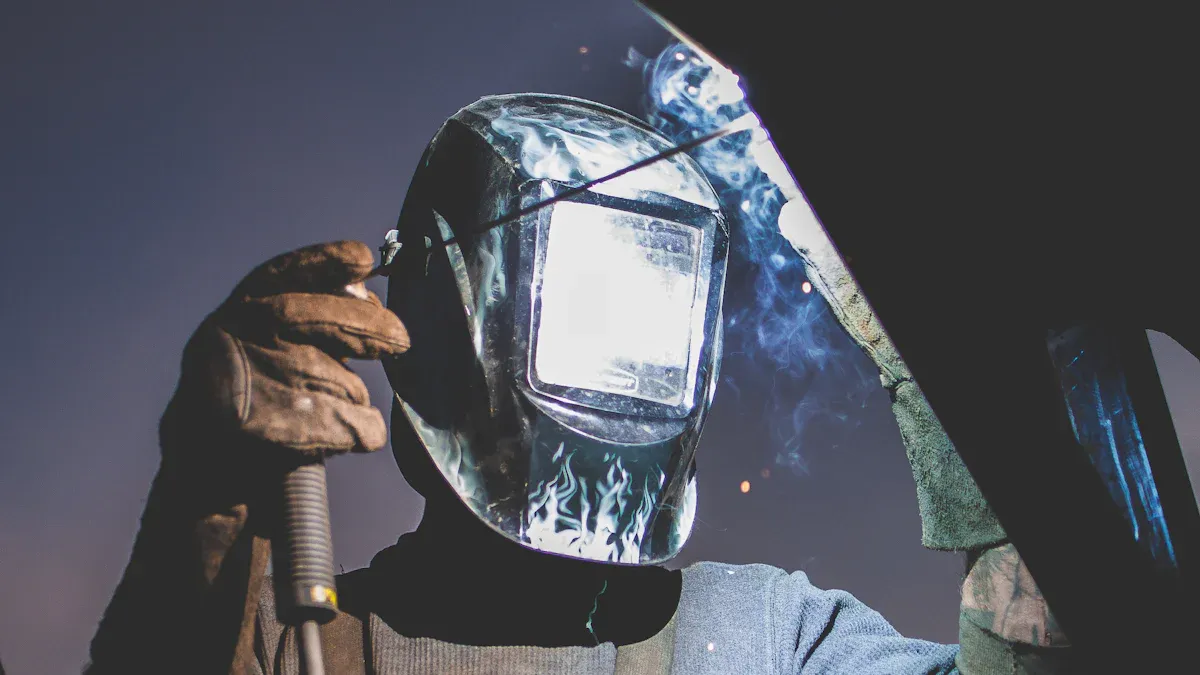
Always disconnect the power source before assembling or inspecting the torch. Inspect cables at the start of each shift for exposed wires or loose connections. Never operate equipment with damaged insulation. Keep all electrical components dry and away from coolant spills. Per OSHA welding standards, arc welding equipment must be regularly inspected and maintained by qualified personnel.[5]
Coolant Handling
Inspect the torch and cooling system for leaks at the start of each shift.
Use only clean, approved coolant to avoid contamination.
Ensure all fittings are tight to prevent spills during high-amperage welding.
Clean up any spills right away to keep the workspace safe.
Dispose of used coolant according to local environmental regulations.
PPE and Workspace Safety
Minimum PPE requirements for safe welding operation:
| PPE Category | Minimum Requirement |
|---|---|
| Eye / Face | Auto-darkening helmet or face shield with correct shade; safety glasses underneath |
| Hearing | Hearing protection appropriate for noise levels |
| Body | Flame-resistant long sleeves and pants; no synthetic materials |
| Hands | Insulated, gauntlet-style leather welding gloves |
| Feet | Steel-toe or composite-toe boots; leather preferred |
Hose and Cable Management
Choose the right hose: Correct type, length, and diameter for your TIG torch system.
Secure all connections: Tightly fasten every fitting to prevent leaks or sudden hose detachment.
Use chafing guards: Protect hoses where they may rub against sharp edges or surfaces.
Keep walkways clear: Route hoses and cables away from main walkways and bundle along walls.
Store hoses properly: Use hose reels or hangers to keep hoses off the ground and prevent tangling.
| Best Practice | Benefit |
|---|---|
| Use hose reels or hangers | Prevents tangling and damage |
| Route cables along walls | Keeps walkways open and safe |
| Replace damaged guards | Reduces risk of leaks and hose failure |
| Store hoses off the ground | Extends hose life and prevents tripping |
Performance and Maintenance Tips
Optimizing Flow and Temperature
Most experts recommend a flow rate between 5 and 15 liters per minute, with coolant temperature maintained between 15°C and 35°C. This range prevents overheating and leads to more stable arc ignition and cleaner welds.
| Feature | Description |
|---|---|
| Temperature Range | 15°C – 35°C for optimal torch performance |
| Flow Rate | 5–15 L/min for consistent water circulation |
| Arc Stability | Cooler torch temperatures yield stable arc ignition and steady amperage |
| Duty Cycle | Active cooling enables longer continuous welding without thermal stress |
Routine Inspection and Cleaning
| Frequency | Task |
|---|---|
| Daily | Inspect torch for debris and damage; check electrode, foot pedal, gas supply, and work area. |
| Weekly | Check cables and connections for wear; test power source; clean cooling system and check coolant levels. |
| Monthly | Inspect ground clamp for corrosion; review gas cylinder pressure and regulator function. |
| Annual | Full system inspection, power source calibration, worn torch component replacement, and coolant change. |
Tip: Clean cooling fins regularly to prevent heat dissipation issues. Monitor coolant levels and use the correct mixture. Check temperature gauges to keep the TIG torch within recommended ranges.
Troubleshooting Common Issues
| Issue | Troubleshooting Steps |
|---|---|
| Improper gas flow | Adjust flow rate. Recommended setting is 15–20 cfh for most TIG applications. |
| Tungsten contamination | Use less current or larger tungsten; avoid contact with weld puddle. |
| Arc instability | Check polarity switch; remove contaminated tungsten and regrind; shorten arc length. |
| Excessive torch body heating | Ensure coolant flow is adequate and coolant level is not low. |
| Yellow powder or smoke on cup | Increase shielding gas flow rate; use proper gas type. |
| Arc will not start | Check gas flow, power supply switch positions, and tighten all connections. |
When to Upgrade or Replace
Watch for these signs to avoid unexpected failures during critical jobs:
Frequent Overheating: If the torch gets hot quickly despite proper coolant flow, the cooling system may be failing.
Leaking Hoses or Fittings: Cracks or leaks can lead to coolant loss and unsafe conditions.
Unstable Arc: Flickering or uncontrollable arc may indicate internal damage.
Worn Torch Body: Burn marks, melted parts, or loose handles indicate end of service life.
Reduced Duty Cycle: If you cannot weld as long as before, the torch may not handle high currents anymore.
Repeated Repairs: Frequent fixes on the same part usually mean upgrading is more cost-effective.
| Situation | Why Upgrade? |
|---|---|
| Higher Amperage Needs | New projects may require more power than your current torch can provide. |
| Longer Welding Sessions | Upgrading allows for longer, uninterrupted work without thermal stress. |
| Advanced Features | Newer models offer better controls, safety, and efficiency. |
| Industry Standards Change | Upgrades help meet new safety or quality requirements. |
Golden Globe offers a wide range of TIG torches and accessories. Models like the TIG 27 and YT-50TSW2 support higher amperage and longer duty cycles with advanced cooling and durable materials.
Ready to Upgrade Your TIG Torch System?
Whether you're setting up a new water-cooled system or sourcing premium replacement torches, our team is here to help. Send us your requirements and get a tailored solution for your welding application.
Send an Inquiry NowFAQ
How do I know if my TIG torch needs water cooling?
Water cooling is needed for high-amperage welding or long sessions. If your torch gets hot quickly or you weld thick materials regularly, a water-cooled system is best.
What coolant should I use in my water-cooled TIG torch?
Use non-conductive coolant recommended by your torch manufacturer — propylene glycol or deionized water. Avoid coolants with oil or grease, and check coolant levels before every use.
Can I use a water-cooled TIG torch with any welding machine?
Most water-cooled TIG torches work with standard welding machines. Always check amperage and voltage compatibility with your power source before connecting.
How often should I inspect my water-cooled TIG torch system?
Inspect daily for leaks, wear, and coolant levels. Clean the torch and check hoses weekly. Replace worn parts as needed to keep your equipment safe and reliable.
What are the signs of a coolant leak in my TIG torch system?
Look for drops in coolant level, wet spots near hoses, or unusual torch heating. A coolant flow indicator can help spot leaks early — fix them right away to prevent damage.
How do I prevent overheating in my water-cooled TIG torch?
Maintain proper coolant flow (5–15 L/min) and temperature (15–35°C). Monitor the flow indicator, keep hoses clear, and use the recommended coolant type.
References
Springer — Chinese Journal of Mechanical Engineering, "Arc Pressure Sensing and Control in TIG Welding" (2018). link.springer.com/article/10.1186/s10033-018-0297-3
Lincoln Electric — TIG Welding Process Overview & Best Practices. lincolnelectric.com
ESAB — TIG Welding Guide: Equipment, Consumables & Techniques. esab.com
OSHA — Welding, Cutting, and Brazing Safety Standards (29 CFR 1910.252–255). osha.gov/welding-cutting-brazing
OSHA — Welding, Cutting, and Brazing Standards (General Industry). osha.gov/welding-cutting-brazing/standards