



How are High-Power Plasma Torches Cooled? A Comprehensive Analysis of Core Heat Dissipation Technologies
 May 30, 2025|
 View:2549
In industrial cutting, material processing, and nuclear fusion fields, high-power plasma torches have become critical tools due to their arc temperatures exceeding tens of thousands of degrees Celsius. However, if such enormous heat energy cannot be effectively controlled, it will lead to electrode meltdown and drastically reduced service life. Therefore, "How are high-power plasma torches cooled?" has become a core issue affecting equipment performance. This article deeply analyzes mainstream cooling solutions and technical principles, uncovering the heat dissipation wisdom behind high temperatures.
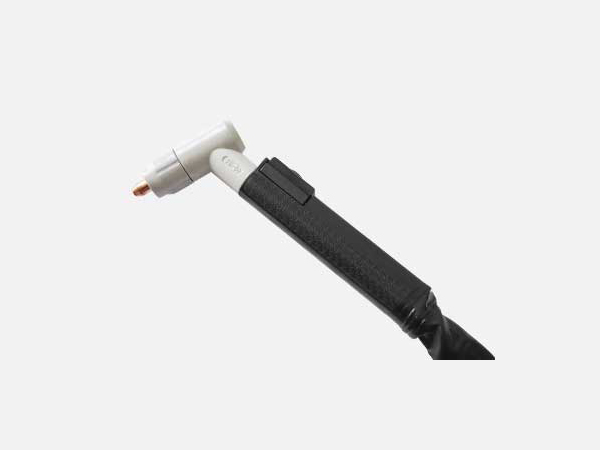
Water Cooling Systems: The Cornerstone of High-Power Heat Dissipation
Water cooling is the preferred solution for devices like plasma cutting torches due to its high heat capacity and low cost, with its design focusing on two core aspects:
1. Layered Cooling Structure Layout
Internal Flow Channels of Electrodes and Nozzles: Cooling water directly flows through spiral or axial channels inside the electrodes, absorbing peak heat (locally exceeding 20,000°F) at the arc contact points. For example, some plasma torches use hollow electrode designs, where cooling pipes extend to the electrode tips to achieve millimeter-level precise temperature reduction.
Shell Sandwich Circulation: The torch housing is equipped with a double-layer water-cooled sandwich. Cooling water is split from the inlet to the electrodes and electromagnetic coils, then converges to the outlet, forming a closed-loop protection system.
2. Characteristics and Maintenance of Cooling Liquids
The Indispensability of Deionized Water: Ordinary water is prone to scaling and blocking micro-channels, while deionized water offers both high thermal conductivity and insulation to avoid circuit short circuits.
Anti-Corrosion Additives: For long-term operation, anti-corrosives such as ethylene glycol are added to protect copper flow channels. Some high-end plasma cutting torches use special cooling fluids (e.g., pink fluorescent agent formulations) to facilitate leak detection.
Gas Film Co-Cooling: Countering Extreme Thermal Loads
Single water cooling still struggles to handle the high-temperature impact of plasma jets. Gas cooling technology enhances reliability through physical isolation:
1. Swirl Gas Film Isolation Technology
Gas Distributor Design: Ionized media (such as nitrogen or argon) are injected into the electrode cavity through tangential inlets, forming a high-speed swirl gas film on the inner wall. This gas film physically isolates the arc column from the electrode wall, reducing direct thermal radiation while enhancing convective heat transfer.
Air Pressure and Flow Rate Control: The thickness of the gas film is precisely controlled by air pressure—too high pressure causes arc instability, while too low pressure leads to isolation failure. Experiments show that a pressure of 0.3–0.5 MPa balances heat dissipation and arc stability.
2. The Auxiliary Role of Gas Cooling
Dual Functions of Plasma Working Gases: Compressed air or argon-hydrogen mixed gases for cutting not only ionize to generate plasma arcs but also flow through nozzles to carry away part of the wall heat.
Emergency Air Cooling Backup: Some systems are equipped with independent air-cooling modules that activate when water temperature anomalies occur, preventing torch overheating and meltdown.
Thermal Management Innovations: Micro-Channels and Intelligent Monitoring
Cutting-edge technologies further break through heat dissipation limits, achieving leapfrog improvements in energy efficiency and reliability:
1. The Revolution of Micro-Channel Heat Sinks (MCHS)
Topological Manifold Micro-Channel Design: In extreme scenarios such as fusion reactor divertors, micro-channel networks are embedded in tungsten tile substrates, with channel widths of only 0.1–0.5 mm. The flow rate difference between adjacent channels is controlled within ±8% to ensure temperature uniformity.
Challenging a Heat Flux of 20 MW/m²: Tests show that this structure can stabilize the surface temperature below 1314K (below the tungsten recrystallization critical point of 1473K) with a pressure drop of 133.3 kPa, with a service life exceeding thousands of cycles.
2. Intelligent Monitoring Systems
Multi-Sensor Closed-Loop Control: Real-time monitoring of parameters such as water temperature, flow rate, and arc voltage dynamically adjusts water pump power and gas flow rate.
Predictive Maintenance: By analyzing changes in cooling fluid turbidity and resistivity, potential pipeline blockages or electrode corrosion can be predicted, triggering alarms in advance.
Conclusion: Cooling Technology Determines the Future of Plasma Torches
From basic water cooling to gas film co-cooling and micro-channel topological optimization, the cooling solutions for high-power plasma torches have always evolved around the principles of "precise temperature control" and "zero-damage operation". Especially for industrial-grade equipment like plasma cutting torches, efficient heat dissipation directly impacts cutting accuracy and equipment lifespan. As power demands rise in fields such as nuclear fusion and aerospace material processing, innovations in cooling technology will continue to unlock the infinite potential of plasma science and technology!