



Air-Cooled vs Water-Cooled MIG Torches: What Welders Need to Know in 2025
 Sep 06, 2025|
 View:1823
A welder stands at the shop bench, eyeing two options: air-cooled MIG torch or water-cooled MIG torch. In 2025, most welders find the air-cooled MIG torch meets their needs for reliability, simplicity, and cost. Choosing the right MIG Torch depends on several factors:
Technical specifications
Material versatility
Safety features
Cost-benefit analysis
Quality and reliability
Adherence to safety standards
Understanding these differences helps users match their torch to their work. Each welder should weigh personal habits, job requirements, and budget before making a decision.
Key Takeaways
Air-cooled MIG torches are lightweight and portable, making them ideal for fieldwork and maintenance tasks.
Water-cooled MIG torches excel in high-amperage environments, providing superior heat management for continuous welding.
Evaluate your welding tasks based on amperage and duty cycle to choose the right torch for your needs.
Air-cooled models are generally more affordable and require less maintenance than water-cooled options.
For demanding projects involving thick metals, a water-cooled MIG torch offers better performance and longer consumable life.
Safety is crucial; monitor torch temperatures and inspect equipment regularly to prevent overheating and electrical hazards.
Consider future welding needs when selecting a torch to ensure it meets evolving project demands.
Consult with experienced professionals to make informed decisions about the best MIG torch for your specific applications.
MIG Torch Choice in 2025
Best Option Overview
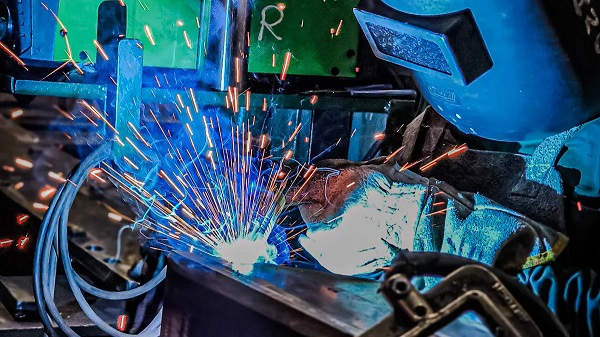
In 2025, most welders select the MIG Torch that matches their specific job requirements and work environment. For general fabrication, repair, and mobile welding, the air-cooled MIG torch remains the preferred choice. This torch type offers simplicity, portability, and cost-effectiveness. However, professionals working in high-amperage or continuous-duty environments often turn to the water-cooled MIG torch for its superior heat management and long-term value.
Tip: Welders should evaluate the amperage range, duty cycle, and frequency of their welding tasks before making a decision.
Air-Cooled MIG Torch Users
Air-cooled MIG torches serve welders who value portability, quick setup, and straightforward maintenance. These torches excel in fieldwork, maintenance, and repair operations where access to water-cooling systems is limited or impractical. The following table highlights the main reasons welders choose air-cooled models:
| Advantage | Description |
|---|---|
| Lightweight and Portable | No coolant hoses, pumps, or reservoirs--easier to handle and transport in confined spaces. |
| Simplified Maintenance | Easier to service without a cooling system, reducing downtime and costs. |
| Lower Initial Investment | Generally less expensive to purchase and operate compared to water-cooled setups. |
| Flexible for Field Work | Ideal for mobile welding where access to water-cooling is limited. |
| Quick Setup | Fewer components mean faster setup and takedown in time-sensitive environments. |
| Sufficient for Light to Medium Duty | Well-suited for intermittent welds and applications up to ~300 amps. |
Welders often use air-cooled MIG torches in the following scenarios:
| Characteristics | Applications |
|---|---|
| Lightweight and portable | Ideal for mobile welding |
| Easy to handle and transport | Suitable for maintenance and repair operations |
| Works well in confined spaces | Effective for short runs and intermittent welds |
| Up to ~300 amps | Best for light to medium duty applications |
These features make the air-cooled MIG torch a practical solution for welders who need flexibility and ease of use in various environments.
Water-Cooled MIG Torch Users
Water-cooled MIG torches appeal to welders who demand high performance, especially in industrial and heavy-duty settings. These torches provide advanced cooling, enabling stable operation at higher amperages and for longer periods. The table below outlines the main advantages for users:
| Advantage | Description |
|---|---|
| Cooling Efficiency | Improved cooling efficiency by over 300%, allowing stable operation under high loads (300-600 amps). |
| Welding Quality | Enhanced arc stability, increasing welding pass rates to over 98% in industries like automotive. |
| Operational Comfort | Lightweight design (300-500 grams) reduces welder fatigue, combined with ergonomic features. |
| Long-Term Cost Savings | Total cost of ownership can be 15%-20% lower over three years due to reduced consumable replacement. |
Industries and applications that benefit most from water-cooled MIG torches include:
| Industry/Application | Description |
|---|---|
| Heavy Fabrication | Used for demanding operations requiring high-amperage welding. |
| Industrial Production | Ideal for continuous-duty cycles in large-scale manufacturing. |
| Aerospace | Suitable for high-spec applications needing reliable performance. |
| Shipbuilding | Essential for welding in marine construction due to high heat management. |
| Automotive | Commonly used in automotive manufacturing for robust welding needs. |
Water-cooled MIG torches operate at higher amperages for extended periods.
They utilize internal coolant channels to manage heat.
These torches are ideal for applications above 350 amps.
Water-cooled MIG torches deliver consistent performance and durability in environments where heat management and productivity are critical.
Torch Types Explained
Air-Cooled MIG Torch
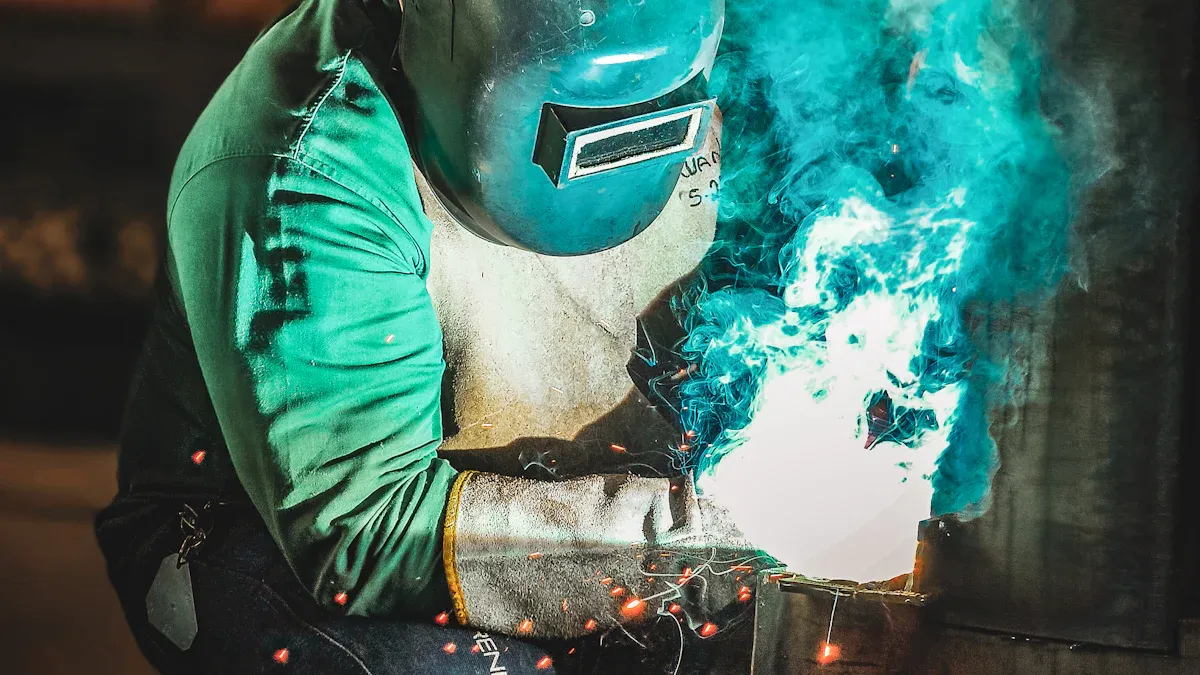
An air-cooled MIG torch uses ambient air and shielding gas to dissipate heat during welding. This torch features a rugged and simple design, making it a popular choice for welders who need reliability and ease of use. Heavier construction and fewer moving parts contribute to its durability. Welders often select this torch for jobs with lower duty cycles and amperage requirements.
Key features include:
Simpler design with fewer components
Lower initial cost
Minimal maintenance needs
Suitable for light to medium-duty applications
The air-cooled MIG torch works best for repair, fabrication, and mobile welding tasks. Welders appreciate its straightforward setup and ability to perform in environments where water cooling is not practical.
Water-Cooled MIG Torch
A water-cooled MIG torch uses a liquid cooling system to transfer heat away from the torch head. This system includes coolant channels, a pump, and a radiator, which work together to maintain lower operating temperatures. The torch remains lighter and more flexible, reducing fatigue for welders during long shifts.
Construction differences include:
More complex design with additional equipment
Higher initial investment
Increased maintenance requirements
Water-cooled MIG torches excel in high-amperage, continuous-duty environments. Welders in industrial, automotive, and shipbuilding sectors rely on these torches for consistent performance and superior weld quality.
Note: Water-cooled MIG torches provide faster cooling and better weld quality, especially when working with thicker metals or higher duty cycles.
Key Differences
The following table highlights the main technical differences between air-cooled and water-cooled MIG torches:
| Feature | Air-Cooled MIG Torch | Water-Cooled MIG Torch |
|---|---|---|
| Cooling Mechanism | Uses ambient air and shielding gas | Uses a radiator and liquid coolant |
| Duty Cycle | Recommended for 50% or less | Recommended for 60% or higher |
| Amperage Range | 150-600 amps | 300-600 amps and above |
| Design | Simpler, rugged | More complex, requires extra equipment |
| Maintenance | Minimal | Requires regular checks and service |
| Initial Cost | Lower | Higher |
| Weight | Heavier, less flexible | Lighter, more flexible |
| Suitable Applications | Thinner metals, low duty-cycle | Thicker metals, high duty-cycle |
| Cooling Efficiency | Slower cooling | Faster cooling |
Welders should compare these features when choosing a MIG Torch for their specific needs. Air-cooled models offer simplicity and cost savings, while water-cooled models deliver advanced cooling and performance for demanding jobs.
Performance
Heat Management
Effective heat management remains a critical factor in welding performance. The air-cooled MIG torch relies on ambient air and shielding gas to dissipate heat. This method works well for light and intermittent tasks but struggles under heavy loads. In contrast, the water-cooled MIG torch uses a liquid coolant system that circulates through the torch, removing heat much more efficiently. This advanced cooling allows welders to operate at higher amperages for longer periods without overheating.
The following table compares heat dissipation efficiency and suitable applications:
| Torch Type | Heat Dissipation Efficiency | Suitable Applications |
|---|---|---|
| Water-Cooled | Superior heat dissipation, suitable for high-amperage, continuous welding | Large and thick metal pieces, 100% duty cycle |
| Air-Cooled | Struggles with heat dissipation under heavy loads | Lightweight, intermittent tasks |
Note: Water-cooled systems maintain lower torch temperatures, which helps prevent damage to internal components and consumables.
Duty Cycle
Duty cycle measures how long a torch can operate at a given amperage before it needs to cool down. The air-cooled MIG torch typically offers a duty cycle of 60% at up to 175 amps AC or 200 amps DC. This means it can weld for six minutes out of every ten before requiring a rest. The water-cooled MIG torch, however, achieves a 100% duty cycle at higher amperages, such as 250 amps DC or 200 amps AC. This capability makes it the preferred choice for industrial environments where continuous welding is necessary.
Here is a quick comparison:
| Torch Type | Amperage Rating | Duty Cycle |
|---|---|---|
| Air-Cooled | Up to 175A AC, 200A DC | 60% |
| Water-Cooled | Up to 250A DC, 200A AC | 100% |
Welders who need to maximize productivity and minimize downtime often select water-cooled models for demanding projects.
Welding Power
Welding power directly impacts the thickness and type of materials that can be joined. The air-cooled MIG torch supports up to 200 amps AC and 175 amps DC. This range covers most light to medium fabrication jobs. The water-cooled MIG torch, on the other hand, handles amperages higher than 250 amps for both AC and DC. This extra power enables welders to tackle thicker metals and more challenging applications.
The table below highlights the maximum welding power output:
| Torch Type | Maximum Amperage (AC) | Maximum Amperage (DC) |
|---|---|---|
| Air-Cooled | 200 amps | 175 amps |
| Water-Cooled | Higher than 250 amps | Higher than 250 amps |
Tip: For projects involving thick steel or aluminum, a water-cooled MIG torch delivers the necessary power and reliability.
The right choice of MIG Torch ensures optimal performance, safety, and efficiency for every welding task.
Cost Comparison
Initial Cost
When welders consider a new MIG Torch, the initial purchase price often becomes the first deciding factor. In 2025, air-cooled MIG torches remain the most budget-friendly option for most users. These torches offer a straightforward design, which keeps manufacturing costs low. Water-cooled MIG torches, on the other hand, require more complex construction and additional components, such as pumps and coolant reservoirs. This complexity increases the upfront investment.
The following table shows the typical price ranges for both torch types:
| Type | Price Range |
|---|---|
| Air-Cooled | $10.50 - $65.50 |
| Water-Cooled | $51.00 - $89.50 |
Welders who need a torch for occasional or light-duty work often choose the air-cooled MIG torch due to its lower entry cost. Those who plan to weld at higher amperages or for longer periods may find the higher initial cost of a water-cooled MIG torch justified by its performance benefits.
Operating Cost
Operating costs can add up over time, especially for welders who use their MIG Torch daily. Air-cooled MIG torches use less energy per hour and do not require coolant or extra equipment. Water-cooled MIG torches consume more energy because of the cooling system and need regular coolant replacement. However, the coolant in water-cooled systems helps extend the service life of consumables, which can reduce downtime and maintenance interruptions.
Here is a comparison of energy costs and total ownership over five years:
| Type | 1-hr Energy Cost | 5-Year Total Cost of Ownership |
|---|---|---|
| Air-Cooled Torch | $0.06 | $260 |
| Water-Cooled Torch | $0.38 | $580 |
Water-cooled MIG torches require more energy and maintenance supplies.
The extended consumable life and reduced downtime can offset some of these higher costs.
Tip: Welders who run long shifts or handle demanding projects may recover some operating expenses through increased productivity and fewer consumable changes.
Long-Term Value
Long-term value depends on how often and how intensively a welder uses the MIG Torch. Air-cooled MIG torches provide excellent value for users who weld intermittently or on lighter materials. Their simple design means fewer parts to replace and lower maintenance costs. For welders in high-production environments, the water-cooled MIG torch delivers greater value over time. The advanced cooling system protects internal components, extends consumable life, and supports higher duty cycles.
Welders should consider these factors when evaluating long-term value:
Frequency and duration of welding tasks
Cost and availability of replacement parts
Downtime due to maintenance or overheating
Energy and coolant expenses
A water-cooled MIG torch may cost more upfront and during operation, but it can pay off for professionals who demand maximum performance and reliability. An air-cooled MIG torch remains the economical choice for most light to medium-duty applications, offering a balance of affordability and dependable service.
Safety
Overheating
Overheating presents a significant risk during MIG welding operations. Extended use of a MIG torch at high amperage settings can generate excessive heat, especially when the torch exceeds its rated capacity. Both air-cooled MIG torch and water-cooled MIG torch models face this challenge. Insufficient cooling, such as a malfunctioning cooling system or inadequate coolant flow, can worsen the situation. Improper handling, like restricting airflow around the torch, also increases the temperature. Overheating not only reduces the efficiency of the welding process but also shortens the lifespan of the equipment. Welders must recognize these risks to maintain optimal performance and safety.
Note: Regularly monitoring the torch temperature and following manufacturer guidelines helps prevent overheating and protects both the welder and the equipment.
Electrical and Water Risks
Water-cooled MIG torches introduce specific hazards related to electricity and water. The following table outlines the most common risks welders encounter:
| Hazard Type | Description |
|---|---|
| Electrical Hazard | Water conducts electricity, increasing the risk of shock if coolant leaks onto the floor. |
| Leak from Hose | Damaged hoses can cause leaks, creating a path for electrical current and potential injury. |
| Overheating Torch | An overheated torch may lead to electrical faults, requiring immediate attention. |
| Improper Coolant Use | Mixing water with coolant can result in freezing and cracking, which may cause leaks and shocks. |
| Environmental Risks | Extreme temperatures without proper coolant management increase the likelihood of leaks and hazards. |
Air-cooled MIG torch models do not use liquid coolant, so they avoid water-related risks. However, both torch types require proper grounding and equipment inspection to minimize electrical hazards.
Safety Tips
Welders can reduce the risk of accidents by following essential safety practices. The following recommendations help maintain a safe work environment when using any MIG torch:
Wear clean clothing to prevent fire hazards from grease or oil.
Always use eye protection and a welding helmet with the correct filter lens.
Use protective gloves to shield hands from burns and skin damage.
Ensure the work area remains free of combustible materials.
Use protective screens and barriers to guard against sparks and arc flash.
Maintain proper ventilation to reduce exposure to harmful fumes.
Ground all welding equipment correctly to prevent electrical shocks.
Inspect and maintain MIG torches and related equipment regularly.
Keep a fire extinguisher nearby for emergencies.
Providing comprehensive training and education on safety protocols equips welders with the skills to handle MIG torches safely. A strong safety culture minimizes risks and promotes productivity in every welding environment.
Maintenance
Air-Cooled Maintenance
Routine maintenance keeps an air-cooled MIG torch performing reliably. Welders inspect the tip for clogging, wear, and damage. They check insulation around cables and leads for signs of wear. Cleaning the torch body helps maintain consistent performance. Operators ensure the trigger operates smoothly to prevent interruptions during welding.
The following table outlines essential maintenance steps for air-cooled MIG torches:
| Maintenance Step | Description |
|---|---|
| Check consumables | Ensure the tip adaptor and contact tip remain tight to prevent overheating and poor current transfer. |
| Gas flow check | Use a gas flow tester to confirm adequate gas delivery, which cools and protects the weld. |
| Liner fitting | Fit liners correctly to avoid wire feeding issues, following specific fitting instructions. |
Welders also:
Inspect the torch regularly for loose connections.
Replace worn contact tips and nozzles.
Monitor the cable for cuts or abrasions.
Regular attention to these steps extends the lifespan of the air-cooled MIG torch and reduces downtime.
Water-Cooled Maintenance
Water-cooled MIG torches require more detailed maintenance due to their complex cooling systems. Welders check coolant levels and replace coolant when conductivity exceeds recommended thresholds. They inspect hoses and fittings for leaks, which can cause electrical hazards or reduce cooling efficiency.
The table below shows recommended coolant replacement intervals:
| Frequency of Check | Recommended Conductivity Level | Action Required |
|---|---|---|
| Monthly to Quarterly | MIG/MAG: over 350 µS/cm | Replace coolant |
| TIG: over 250 µS/cm | Replace coolant | |
| Plasma: over 30 µS/cm | Replace coolant |
Operators also:
Examine the pump and radiator for proper operation.
Clean coolant reservoirs to prevent contamination.
Test the system for consistent coolant flow.
Proactive maintenance ensures the water-cooled MIG torch operates safely and efficiently, especially during high-amperage welding.
Common Issues
Both air-cooled and water-cooled MIG torches experience maintenance challenges. Overheating remains a frequent problem, leading to rapid wear of front-end neck parts and reduced lifespan of contact tips and nozzles. Welders often encounter TCP inaccuracy, where misalignment of the neck causes improper weld placement. Physical impacts or wear typically cause this issue.
Common maintenance issues include:
Overheating, which shortens component life.
TCP inaccuracy from neck misalignment.
Wire feeding problems due to liner issues.
Leaks in water-cooled systems.
Addressing these problems quickly helps maintain MIG Torch performance and ensures weld quality.
Regular maintenance and prompt repairs keep both air-cooled MIG torch and water-cooled MIG torch models working at peak efficiency. Welders who follow these guidelines reduce downtime and improve the reliability of their equipment.
Durability
Torch Lifespan
Durability stands as a critical factor when welders select a MIG Torch for daily operations. Torch lifespan depends on cooling efficiency, duty cycle, and the intensity of use. Water-cooled MIG torches typically last longer under heavy workloads. Their external cooling system dissipates heat rapidly, which protects internal components and reduces wear. Welders who operate at high amperage or maintain a 100% duty cycle benefit from this advanced cooling. Water-cooled torches can cool down in as little as 30 seconds to 2 minutes, depending on the amperage load. This quick recovery allows for extended use without risking damage.
Air-cooled MIG torches rely on ambient air for cooling. This method works well for light to medium-duty tasks but can struggle in high-temperature environments. When welders push air-cooled torches beyond their rated capacity, heat builds up faster. This can shorten the lifespan of the torch and lead to more frequent repairs. Welders who use air-cooled MIG torches for intermittent jobs or in cooler settings often experience reliable performance over time.
Key factors affecting torch lifespan include:
Cooling system efficiency
Frequency of high-amperage welding
Maintenance routines
Environmental conditions
The following table compares torch lifespan under typical usage:
| Torch Type | Lifespan (Typical Use) | Cooling Method | Best For |
|---|---|---|---|
| Air-Cooled MIG Torch | Moderate (light/medium duty) | Ambient air | Fieldwork, repairs |
| Water-Cooled MIG Torch | Long (heavy/continuous duty) | External coolant system | Industrial production |
Welders who prioritize longevity and operational efficiency often choose water-cooled MIG torches for demanding environments.
Consumables Life
Consumables such as contact tips, nozzles, and liners play a vital role in MIG Torch performance. Their lifespan directly impacts productivity and operating costs. Water-cooled MIG torches maintain cooler operating temperatures, which extends the life of consumables. Welders using these torches report fewer changes and less downtime. Cooler temperatures prevent rapid wear and reduce the risk of overheating, especially during continuous welding.
Air-cooled MIG torches, while reliable for lighter tasks, expose consumables to higher temperatures. This can lead to faster degradation and more frequent replacements. Welders who use air-cooled models for short runs or repairs may not notice significant wear. However, those who attempt longer welds at higher amperages often face increased consumable costs.
Consider the following advantages of water-cooled MIG torches regarding consumables:
Longer-lasting contact tips and nozzles
Reduced frequency of consumable changes
Lower risk of burnback and spatter buildup
The table below highlights consumables life for each torch type:
| Torch Type | Consumables Life | Maintenance Frequency |
|---|---|---|
| Air-Cooled MIG Torch | Shorter (high heat) | More frequent replacement |
| Water-Cooled MIG Torch | Longer (cool operation) | Less frequent replacement |
Regular inspection and timely replacement of consumables help maintain weld quality and reduce costs for any MIG Torch.
Welders who seek maximum durability and lower consumable expenses often select water-cooled MIG torches for industrial and high-volume applications. Those who value simplicity and portability may prefer air-cooled MIG torches, accepting shorter consumable life as a trade-off for ease of use.
Ease of Use
Setup
Setting up a MIG Torch can influence productivity and user satisfaction. Air-cooled MIG torches offer a straightforward installation process. Welders connect the torch to the power source and shielding gas, then begin welding. The absence of coolant hoses and pumps reduces the number of steps required. This simplicity benefits operators who need to start work quickly or change locations often.
Water-cooled MIG torches require additional setup. Welders must connect coolant hoses, ensure the reservoir is filled, and check the pump operation. The cooling system adds complexity, which can increase preparation time. Operators must verify that all connections are secure to prevent leaks or overheating. This process suits environments where high-amperage welding is routine and downtime must be minimized.
| Torch Type | Setup Complexity | Typical Steps Required |
|---|---|---|
| Air-Cooled MIG Torch | Simple | Connect power, gas, start |
| Water-Cooled MIG Torch | Complex | Connect power, gas, coolant |
Quick setup saves time and reduces frustration, especially for welders who move between jobs or work in unpredictable conditions.
Portability
Portability remains a key factor for welders who travel between job sites or work in the field. Air-cooled MIG torches excel in this area. Their lightweight design and lack of external cooling equipment make them easy to transport. Welders can carry these torches to remote locations without worrying about additional gear. This advantage proves valuable for maintenance crews, repair technicians, and mobile fabricators.
Water-cooled MIG torches, while offering superior performance for extended welding, are less portable. The need for coolant reservoirs, pumps, and hoses increases the weight and bulk of the system. Moving a water-cooled MIG torch requires careful planning and more effort. Welders working in fixed industrial settings may accept this trade-off for the benefits of continuous operation.
Welders who prioritize mobility and convenience often choose air-cooled MIG torches for fieldwork. Water-cooled models suit stationary environments where portability is less important.
Learning Curve
The learning curve for MIG Torch operation affects how quickly welders achieve proficiency. Air-cooled MIG torches present fewer challenges for beginners. The simple design allows new users to focus on welding technique rather than equipment management. Most operators master the basics after a short orientation.
Water-cooled MIG torches demand more attention to detail. Welders must understand coolant flow, monitor system performance, and respond to potential leaks or overheating. Training sessions often cover maintenance routines and troubleshooting. Experienced welders adapt quickly, but new users may need extra guidance.
Air-cooled MIG torch: Easier for beginners, minimal training required.
Water-cooled MIG torch: Requires technical knowledge, best for experienced users.
Investing in proper training ensures safe and efficient MIG Torch operation, regardless of the model selected.
Welders who value ease of use, fast setup, and portability often prefer air-cooled MIG torches. Those who work in demanding environments and require advanced cooling may accept a steeper learning curve for the benefits of water-cooled MIG torches.
Use Cases
Home and Hobby
Many home welders and hobbyists choose the MIG Torch for its ease of use and versatility. MIG welding offers a straightforward learning curve, making it accessible for beginners and those working on personal projects. Most individuals find the air-cooled MIG torch ideal for home environments. This torch type provides reliable performance for light-duty tasks, such as repairing garden equipment, crafting metal art, or building furniture.
MIG welding is easier to learn than stick welding.
Stick welding, while less expensive, requires more skill and practice.
A typical home workshop benefits from the air-cooled MIG torch due to its simple setup and minimal maintenance. Users appreciate the lightweight design, which allows for easy movement around the workspace. The air-cooled MIG torch supports intermittent welding, which matches the pace of most hobby projects. Safety remains manageable, as the torch does not require a complex cooling system.
Tip: Beginners should start with an air-cooled MIG torch to gain confidence and master basic welding techniques.
Automotive and Fabrication
Automotive and fabrication shops rely on the MIG Torch for its efficiency and adaptability. In 2025, professionals in these industries demand torches with a strong duty cycle, ergonomic comfort, and lightweight construction. The air-cooled MIG torch suits repair tasks and short runs, while the water-cooled MIG torch excels in high-volume production and continuous welding.
Preferred brands in the industry include Tweco, Binzel, and Bernard, recognized for their durability and performance. Automotive technicians use MIG torches to weld body panels, exhaust systems, and custom frames. Fabricators select torches that reduce fatigue and improve weld quality, especially during long shifts.
| MIG Torch Type | Best For | Key Features |
|---|---|---|
| Air-Cooled | Repairs, short runs | Lightweight, easy to handle |
| Water-Cooled | Production, continuous welding | Superior cooling, ergonomic design |
Shops often choose the water-cooled MIG torch for demanding jobs, such as welding thick steel or aluminum. The advanced cooling system maintains consistent temperatures, which protects consumables and ensures high-quality welds.
Note: Selecting the right MIG Torch improves productivity and reduces downtime in busy automotive and fabrication environments.
Industrial Welding
Industrial welding applications require robust solutions. The MIG Torch plays a central role in manufacturing, shipbuilding, and aerospace sectors. Welders in these settings face high-amperage demands and extended duty cycles. The water-cooled MIG torch stands out as the preferred choice for industrial use. Its efficient cooling system supports continuous operation, even under extreme conditions.
Industrial welders use the water-cooled MIG torch to join thick metals, fabricate large structures, and maintain production lines. The torch’s durability and cooling capacity minimize overheating and extend the lifespan of consumables. Safety protocols in industrial environments emphasize regular maintenance and monitoring of coolant systems.
| Application | Torch Type | Benefits |
|---|---|---|
| Manufacturing | Water-Cooled | Handles high-amperage, long duty cycle |
| Shipbuilding | Water-Cooled | Manages heat in large-scale welding |
| Aerospace | Water-Cooled | Ensures precision and reliability |
Industrial teams value the water-cooled MIG torch for its ability to deliver consistent results and support large-scale operations.
Welders should match their MIG Torch selection to the demands of their work environment for optimal safety and performance.
Choosing a MIG Torch
Key Questions
Selecting the right MIG Torch requires welders to ask targeted questions about their work environment and welding habits. They should consider the following:
What amperage do most projects require?
How often will the torch be used each day?
Will the work take place in a shop or on-site?
What types of metals and thicknesses will be welded?
Is portability a priority?
What is the available budget for both initial purchase and ongoing maintenance?
Welders who answer these questions honestly can narrow down their options and avoid costly mistakes. A clear understanding of daily tasks and job settings leads to a more effective choice between an air-cooled MIG torch and a water-cooled MIG torch.
Matching Projects
Different welding projects demand specific torch features. Matching the MIG Torch to the job ensures safety, efficiency, and quality results. Welders should review the following factors before making a decision:
Amperage requirements: High-amperage jobs benefit from a water-cooled MIG torch, while light to medium tasks suit an air-cooled MIG torch.
Wire size compatibility: The torch must support the wire sizes needed for each project.
Duty cycle: Continuous welding calls for a torch with a higher duty cycle, often found in water-cooled models.
Materials to be worked with: Thicker metals and heavy fabrication require advanced cooling, while thinner materials allow for simpler torches.
Quality and durability: Industrial projects need robust equipment that withstands frequent use.
Ergonomics and user-friendliness: Comfortable torches reduce fatigue during long shifts.
Budget and price range: The total cost, including consumables and maintenance, should fit within financial limits.
Seeking expert advice: Consulting with experienced professionals can clarify complex requirements.
| Project Type | Recommended Torch Type | Key Considerations |
|---|---|---|
| Home/Hobby | Air-Cooled MIG Torch | Portability, ease of use |
| Automotive/Fabrication | Air or Water-Cooled MIG Torch | Duty cycle, ergonomics |
| Industrial | Water-Cooled MIG Torch | High amperage, durability |
Tip: Welders should match the torch to the most demanding project they expect to handle, not just their current needs.
Future Needs
Welders who plan for future projects make smarter investments. They should anticipate changes in workload, materials, or job settings. For example, a welder who expects to move into industrial fabrication may benefit from a water-cooled MIG torch, even if current tasks seem light. Those who value flexibility and mobility may continue to prefer an air-cooled MIG torch.
Consider upcoming certifications or new contracts.
Evaluate whether future projects will require higher amperage or longer duty cycles.
Assess if new materials or techniques will demand different torch features.
Planning ahead ensures the MIG Torch remains a valuable tool as job requirements evolve. Welders who invest with the future in mind avoid unnecessary upgrades and downtime.
Choosing the right MIG Torch depends on each welder’s needs. The air-cooled MIG torch offers portability and simple maintenance, while the water-cooled MIG torch delivers superior cooling and longer consumable life.
| Torch Type | Pros | Cons |
|---|---|---|
| Air-Cooled MIG Torch | Lightweight, affordable | Limited duty cycle |
| Water-Cooled MIG Torch | High performance, durability | Higher cost, complex setup |
Welders should assess their projects and budget before purchasing. For reliable MIG Torch solutions, Golden Globe stands out as a trusted supplier. Contact their team for expert advice today.
FAQ
What is the main difference between an air-cooled MIG torch and a water-cooled MIG torch?
An air-cooled MIG torch uses air and shielding gas to cool the torch. A water-cooled MIG torch relies on a liquid coolant system for heat management. Water-cooled models handle higher amperage and longer duty cycles.
Which MIG torch is best for beginners?
Most beginners prefer an air-cooled MIG torch. It offers simple setup, easy maintenance, and reliable performance for light to medium welding tasks. Water-cooled MIG torches require more technical knowledge and regular coolant checks.
Can a water-cooled MIG torch improve weld quality?
Yes. A water-cooled MIG torch maintains lower operating temperatures, which helps produce stable arcs and cleaner welds. This torch type reduces spatter and extends consumable life during high-amperage welding.
How often should a welder perform maintenance on a MIG torch?
Welders should inspect and clean their MIG torch after each use. For water-cooled MIG torches, checking coolant levels and hose connections monthly prevents leaks and overheating. Regular maintenance extends torch lifespan and improves safety.
Is an air-cooled MIG torch suitable for industrial welding?
An air-cooled MIG torch works well for repairs and short runs in industrial settings. For continuous welding or high-amperage jobs, a water-cooled MIG torch provides better heat management and durability.
What safety precautions should welders follow when using a MIG torch?
Welders must wear protective gear, check equipment for damage, and ensure proper grounding. For water-cooled MIG torches, they should inspect hoses for leaks and use recommended coolant to prevent electrical hazards.
Does a water-cooled MIG torch cost more to operate?
A water-cooled MIG torch requires more energy and regular coolant replacement. However, it reduces downtime and consumable costs in high-volume environments. Welders should consider total ownership costs when choosing a torch.
Can a MIG torch weld all types of metals?
A MIG torch can weld steel, stainless steel, and aluminum. The torch type, amperage, and wire selection affect weld quality. Water-cooled MIG torches perform better on thick metals and demanding projects.
Tip: Always match the MIG torch to the material and project requirements for best results.