How thick can a plasma torch cut?
 Oct 12, 2026|
 View:2894
A plasma cutting torch does not have one fixed maximum cutting thickness. Real capacity depends on amperage, material type, edge quality, and machine setup. A 45-amp unit behaves differently on mild steel than on aluminum.
Manufacturers often list a maximum cutting thickness based on ideal test conditions. Those ratings can mislead buyers. The advertised number usually refers to a severance cut, not a clean cut. A severance cut means the arc barely pierces the metal. Edge quality suffers, and dross builds up. Clean cutting produces smooth edges at productive speeds. Readers should treat these two ratings as separate specifications. Plasma cutting performance changes with consumable wear, line voltage, and operator technique.
Key Takeaways
Plasma cutting thickness depends on amperage, material, and edge quality.
Manufacturer maximum ratings often refer to severance cuts, not clean cuts.
Clean cut capacity is typically 60–70% of severance capacity.
Choose a plasma cutter based on clean cut rating for your typical work.
Amperage determines the practical cutting ceiling for any plasma torch.
Material type and surface condition affect cutting capacity significantly.
Maintain your torch with fresh consumables to keep rated capacity.
Test cuts on your own material provide the most reliable performance data.
Plasma Cutting Thickness Has No Single Maximum
A single maximum thickness does not exist for plasma cutting. The practical limit changes with amperage, material type, edge quality, and setup. A plasma cutter that severs one inch of mild steel may struggle on the same thickness of aluminum. Shops that understand this reality make better equipment choices.
Why Maximum Ratings Are Not Absolute
Manufacturer Test Conditions vs. Real Work
Manufacturer spec sheets usually cite ideal test results. These tests use fresh consumables, stable line voltage, and clean workpiece surfaces. Real shops face different conditions. Worn electrodes and nozzles reduce arc strength. Low line voltage can drop cutting capacity by 20 percent. Dusty environments and unreliable air supply also affect performance. A rating printed on a box rarely matches daily production work.
Material Type and Edge Quality Requirements
Different metals behave differently under the same plasma arc. Aluminum and stainless steel cut more efficiently than low-conductivity materials. Alloy composition matters too. Grade 6061-T6 aluminum has higher thermal conductivity than 5052-H32. On borderline thickness, 6061-T6 may need 5–10 percent more amperage or slower speed. Standard versus high-definition plasma also changes kerf width and edge quality. The usable thickness for a required finish differs between setups.
Amperage Determines the Practical Ceiling
More Amps Produce a Stronger Arc
Amperage class sets the real limit for any plasma cutting torch. A 45–50 amp unit severs aluminum up to about 12 mm. A 65–85 amp unit reaches about 22 mm. A 200–260 amp industrial system severs carbon steel up to about 75–100 mm, depending on the machine class. More amps produce a stronger arc that penetrates thicker plate. Power supply ranges determine what thickness a shop can cut. Smaller amps handle thin metal. Bigger amps handle thick plate.
Typical Amperage Ranges Shape Buying Decisions
Machine type also changes the ceiling. Handheld units generally max at 38 mm. Automated units can reach 150 mm or more. A 50-amp plasma cutter severs about 25 mm of mild steel. A 100-amp plasma cutter severs about 50 mm. These ranges help buyers match equipment to their work. A fabrication shop that cuts 10 mm plate daily needs a different plasma cutter than a maintenance crew that occasionally severs 25 mm.
Clean Cut vs. Severance: Cutting Capacity Ratings Explained
Two ratings describe what a plasma cutting torch can do. A clean cut rating shows the thickness a machine handles at production quality. A severance rating shows the absolute limit the arc can pierce. Buyers who confuse the two often purchase the wrong machine.
Clean Cut Defined
A clean cut means the arc sears through the plate at a steady, productive speed. The edge stays smooth, the kerf stays narrow, and dross stays minimal. Operators can send the part to the next step with little or no cleanup.
Smooth Edges and Minimal Dross
Edge quality separates a clean cut from every other result. Plasma cutting typically leaves a slightly concave edge with a bevel angle in the ISO 3–5 range as classified for thermal cuts. Fiber lasers reach near-square edges rated ISO 1, but plasma remains the practical choice for most shop work. Surface roughness tells a similar story. Manual plasma cutting yields Ra 25–50 µm with visible striations, while precision plasma cutting achieves a smoother Ra 12–25 µm.
Dross reveals how well the operator matched speed to thickness. Three common types appear on the shop floor:
Low-speed dross: a bubbly or globular buildup that hardens along the bottom edge. The arc shoots ahead of the cut. The remedy is to increase cutting speed.
High-speed dross: hard-to-remove metal beads along the bottom edge. The arc lags behind. The remedy is to reduce cutting speed.
Top spatter: light molten material on the top edges. This defect is typically inconsequential. The remedy is to reduce cutting speed.
The Rating You Should Use for Production Work
Production shops should select equipment by clean cut capacity. This rating reflects the thickness a plasma cutter handles day after day without extra labor. A machine rated for a clean cut at a given thickness holds that performance across a full shift. That consistency protects schedules and keeps finishing costs low.
Severance Cut Defined
A severance cut represents the maximum thickness a plasma cutter can push through. The arc pierces the plate and travels, but the process slows dramatically. Results become unpredictable. Edge quality drops, and dross becomes heavy and difficult to remove.
Maximum Thickness with Poor Edge Quality
Severance cuts reach thicknesses 30–50% greater than clean, production-quality cuts. That same machine cuts far less at clean quality. The gap between the two numbers explains why the advertised maximum misleads so many buyers.
How Severance Ratings Are Stated
Manufacturers state severance ratings as a single thickness figure. They rarely mention the slow speed or the rough edge that comes with it. A spec sheet might list one number for maximum cut thickness, and that number describes severance, not production work. Readers should check which rating a catalog actually quotes.
Which Rating Should You Trust?
Base Your Purchase on Clean-Cut Capacity
The clean cut rating deserves the buyer's attention. A plasma cutter chosen this way delivers parts that need minimal finishing. Some dross may still appear, but a file removes it quickly. This approach keeps plasma cutting cost-efficient because the process needs little prep work, no preheating, and no pressurized gas tanks.
Reserve Severance for Occasional Maximums
The 80-20 rule offers a simple selection guide. Buy a plasma cutter that handles the thickness cut 80% of the time at its recommended capacity. For the occasional thicker job, confirm the plate falls at or below the severance capacity. Duty cycle also matters. A 60% duty cycle at 45A allows 6 minutes of cutting followed by 4 minutes of cooling in a 10-minute cycle. A machine picked only by its maximum thickness can become a bottleneck when that cycle cannot meet demand.
Tolerance expectations follow the same logic. Entry-level plasma cutters typically hold tolerances around ±0.5–0.8 mm, light-industrial models around ±0.4–0.6 mm, and high-definition plasma systems around ±0.2–0.5 mm under clean cutting conditions. General plasma cutting tolerances fall around ±0.25–0.5 mm. These figures apply to clean cutting conditions, not severance work, and actual values vary with machine class and setup.
Typical Plasma Cutting Capacity by Amperage
Amperage gives buyers the clearest starting point for estimating what a machine will do. The numbers below reflect typical clean cut performance on mild steel under normal shop conditions. Actual results vary with material, consumable condition, and operator skill.
Low-Amperage Handheld Units
30-Amp Class Cutting Capacity
A 30-amp plasma cutter clean cuts around 1/2 inch of mild steel. This class suits sheet metal and plate work on thin gage stock, automotive repair, and light fabrication. The unit runs on common 120V or 240V power, which makes it easy to move around a shop. Operators who cut thick metal every day will outgrow this class quickly.
45-Amp Class Cutting Capacity
A 45-amp unit clean cuts around 5/8–3/4 inch of mild steel. It handles most maintenance work and general fabrication tasks. A 50-amp machine often severs up to about 25 mm on thicker stock. Portable 50–100 amp units cut up to 16–38 mm depending on settings and material. These figures describe severance limits, not production-quality results.
Mid-Range Shop Systems
65-Amp Class Cutting Capacity
A 65-amp plasma cutter clean cuts around 3/4 inch of mild steel. One manufacturer rates a 65-amp system at 3/4 inch (19 mm) for its clean cut capacity. The same machine severs up to 32 mm (1-1/4 inch) when edge quality does not matter. This gap shows why buyers must read the rating label with care.
105-Amp Class Cutting Capacity
A 105-amp plasma cutter clean cuts around 1–1/4 inches of mild steel. A comparable 105-amp system carries a rated clean cut of 1-1/4 inches (32 mm) on mild steel. Its severance capacity reaches 50 mm (2 inches). A 100-amp machine typically severs up to about 50 mm. Shops that cut 1-inch steel plate daily find this class productive and stable.
High-Amperage and Industrial Systems
125-Amp Class Cutting Capacity
A 125-amp plasma cutter clean cuts around 1-1/4 inches of mild steel. Handheld torches generally top out at 38 mm, so this class usually appears in automated or machine-mounted setups. Manual systems can span 4 mm to 80 mm across the full range of available equipment. The 125-amp class sits near the upper end of that manual span.
Industrial Heavy-Plate Cutting Capacity
Industrial systems scale far beyond handheld limits. A 400-amp system typically pierces about 2 inches of carbon steel. The same class pierces only about 1.5 inches of stainless steel under standard settings. One 400-amp platform reaches 1-3/4 inches on standard stainless and 3 inches with a specialized piercing mode.
| Material | Typical maximum pierce thickness (inches) |
|---|---|
| Carbon/mild steel | 2 (50 mm) |
| Stainless steel, standard | 1-3/4 (45 mm) |
| Stainless steel with specialized piercing mode at 400 A | 3 (75 mm) |
Large industrial plasma systems cut 150 mm or more. Some reach 300 mm on carbon steel. These machines serve shipyards, heavy equipment plants, and steel service centers. They pierce thick plate and hold tight tolerances across long production runs.
The amperage class sets the practical ceiling for any plasma cutting job. Buyers should match that ceiling to their normal workpiece, not to the largest plate they might see once a year.
Real-World Factors That Affect Plasma Cutting Torch Capacity
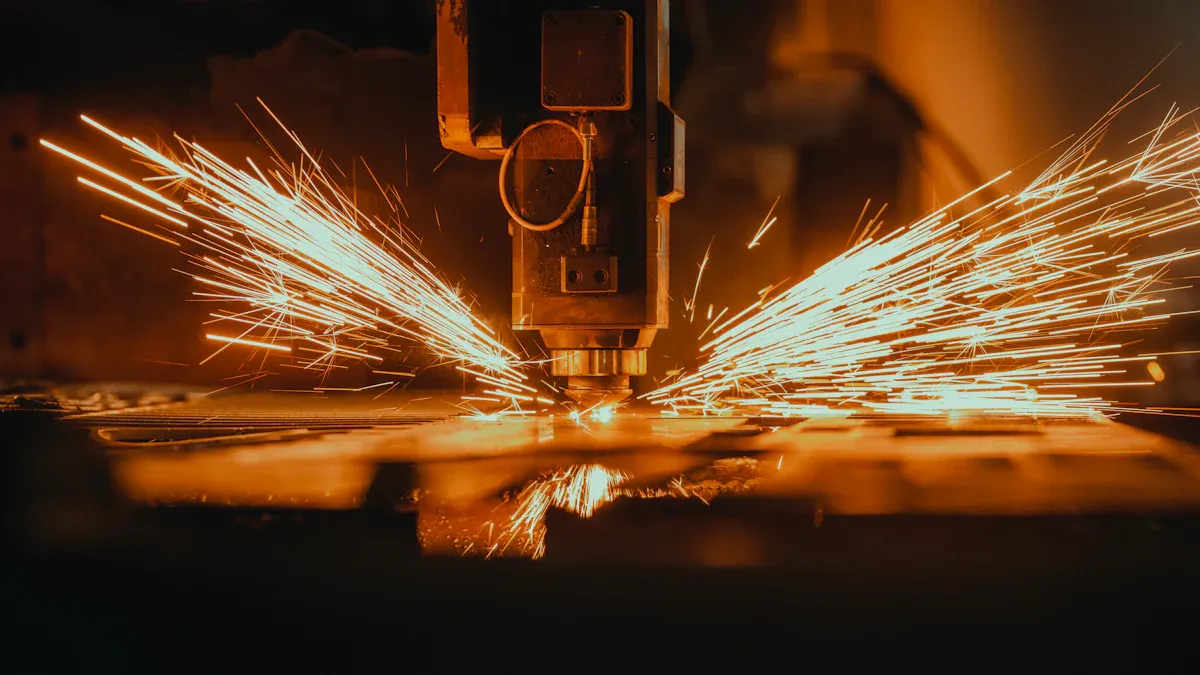
The same plasma cutting torch produces different results based on material, surface condition, cutting speed, standoff, and consumable wear. A machine that cleanly cuts mild steel may struggle on aluminum. Operators who understand these variables get more from their equipment.
Material Type and Surface Condition
Mild Steel, Stainless, and Aluminum Differences
Mild steel cuts easily with plasma because it conducts electricity well and oxidizes predictably. Stainless steel contains chromium, which resists oxidation and requires more amperage for the same thickness. Aluminum conducts heat away from the cut zone quickly, so it demands higher power and faster speeds. A plasma cutter rated for 1 inch on mild steel may only handle 3/4 inch on stainless or aluminum.
Rust, Paint, and Scale Reduce Effective Thickness
Surface contamination changes how the arc behaves. Rust, paint, and mill scale create resistance at the arc start point. The plasma cutter must work harder to establish and maintain the arc. These conditions effectively add thickness to the workpiece. Clean metal cuts faster and produces better edges. Operators should remove heavy contamination before cutting thick materials.
Speed, Standoff, and Torch Setup
Cutting Speed Affects Edge Quality
Cutting speed is one of the three most critical variables for dross formation, along with amperage and standoff distance. On thick material, complete penetration without excessive dross requires balancing parameters. Too fast leaves uncut material at the bottom. Too slow creates heavy dross that is difficult to remove.
| Cutting Speed Condition | Dross Type Formed | Edge Quality Effect |
|---|---|---|
| Too slow | Low-speed dross: thick, bubbly accumulation along the bottom edge | Heavy dross requiring removal |
| Just right | Minimal or no dross | Cleanest cut |
| Too fast | High-speed dross: small hard bead of uncut material along the bottom | Arc lags in the kerf; may fail to penetrate |
For maximum thickness, amperage should be at or near maximum machine output. Cutting speed must drop significantly. Thick 1/4–1/2 inch material often cuts at 20–50 ipm. Over 1/2 inch may drop to single-digit speeds.
Standoff Distance Keeps the Arc Focused
Standoff distance is the gap between the torch tip and the workpiece. A short standoff keeps the arc focused and concentrated. A long standoff spreads the arc, reduces penetration, and widens the kerf. Most manufacturers specify a standoff height for each amperage setting. Operators should maintain that distance for consistent results.
Torch Cooling, Consumables, and Input Power
Air-Cooled vs. Liquid-Cooled Plasma Cutting Torches
Air-cooled torches are lightweight and suited to manual cutting and lighter-duty tasks. Liquid-cooled models provide superior thermal management for heavy-duty, continuous cutting operations. Non-high-frequency designs reduce electrical interference and work well for CNC and automated systems.
Duty Cycle and Power Supply Limits
Duty cycle defines how long a plasma cutter runs before it needs cooling. A 60% duty cycle means the operator must rest the torch before cutting continuously again. A 60% duty cycle at 45A allows 6 minutes of cutting followed by 4 minutes of cooling in a 10-minute cycle. Power supply limits also matter. Low line voltage reduces cutting capacity. Replacement consumables such as electrodes, nozzles, swirl rings, shields, and torch leads maintain cutting capacity over time.
Choose a Plasma Cutting Torch for Your Typical Thickness
Match Clean-Cut Rating to Your Most Common Workpiece
Use Your Normal Thickest Plate as the Baseline
Buyers should match the clean-cut thickness rating to the plate they cut most often. A shop that runs 1/4-inch to 3/4-inch mild steel daily needs a 65-amp or 85-amp system. That class handles the normal workload without strain. A 105-amp or 125-amp machine only makes sense when production above 1 inch is regularly booked. The occasional thick job does not justify the extra cost and power draw of a larger unit.
Leave Headroom for Speed and Variable Conditions
A clean-cut rating describes ideal conditions. Worn consumables, low line voltage, and dirty metal reduce real capacity. Operators should leave some margin between the rated clean-cut thickness and the thickest routine workpiece. This headroom keeps cutting speed productive and edge quality stable. A machine pushed to its clean-cut limit every day wears consumables faster and slows the whole workflow.
Consider Duty Cycle, Portability, and Input Power
Duty Cycle Matches Production Needs
Duty cycle tells the operator how long a plasma cutter runs before it needs cooling. A machine selected only by its maximum thickness may overheat during long shifts. Buyers should verify the duty cycle at the amperage they actually use. A system rated at 60% duty cycle at 45A allows 6 minutes of cutting and 4 minutes of cooling in a 10-minute cycle. Production shops need a duty cycle that matches their busiest hours.
Portable Systems Must Fit Your Power Supply
Portability matters for maintenance crews and field work. A lightweight plasma cutting torch suits manual cutting and lighter-duty tasks. The machine must also match the available input power. A 30-amp unit often runs on common 120V or 240V service. Larger systems may need dedicated circuits. Buyers should confirm the power supply before purchase.
Evaluate Torch Quality and Manufacturer Support
Look for Realistic Cut Charts and Consumable Availability
Reliable manufacturers publish cut charts that separate clean-cut and severance ratings. These charts help buyers compare plasma cutters on equal terms. Consumable availability also matters. Electrodes, nozzles, swirl rings, shields, and torch leads must be easy to source. A machine with scarce parts becomes a bottleneck. Compatibility with existing cutting machines and torch body style deserve a check as well.
Compare After-Sales Support and Custom Options
Quality plasma cutting torches can be customized for thread type, cable length, and connector interface. Shops with specific CNC or automated setups should ask about these options. After-sales support and technical guidance help buyers select the right plasma torch and maintain performance over time. Blackwolf stands as one plasma cutting torch manufacturer to consider for shops that value realistic specifications and responsive support.
Buy by Cutting Capacity, Not the Advertised Maximum
A buyer should choose a plasma cutter by the cutting capacity needed for regular work. The greatest number on a spec sheet rarely reflects daily production. A machine rated for a thick severance cut may struggle on the same plate at clean-cut quality. Shoppers who focus on rated cutting capacity for their normal workload make smarter purchases.
Cut Charts Are a Starting Point, Not a Guarantee
Test Cuts on Your Own Material Provide the Real Answer
Manufacturer cut charts offer a generic baseline. They do not reflect a specific machine's condition or the actual workpiece. Real performance depends on variables the manufacturer cannot know. These include consumable state, gas pressure, torch height control calibration, and material composition. Operators should start with chart values and then run controlled tests on their own stock.
A machine-specific chart built from repeated test cuts proves more dependable than any published table. Changing one variable at a time reveals which setting improves the cut. Published arc voltage can differ from the displayed value due to wiring, consumable wear, and calibration. A test cut on the actual material thickness sets the correct voltage for a verified physical cut height.
Machine condition and consumable wear change results
Real plate thickness and surface condition vary
Gas pressure and THC calibration affect arc stability
Material composition shifts cutting behavior
Setup Quality Changes the Final Result
Kerf width changes with consumable type, amperage, speed, cut height, gas flow, nozzle wear, and material. A single chart value cannot capture all these factors. Operators must measure kerf on their own setup. Setup quality determines whether a plasma cutter reaches its rated capacity or falls short. Operating guidance on travel speed, standoff, and consumable care can be found in industry articles on improving manual plasma cutting quality.
Buy for Your Real Work, Not the Maximum Number
Oversized Machines Add Cost and Power Draw
A 65-amp plasma cutter typically costs $2,500–$3,500 and runs on single-phase 240V. A 125-amp unit typically costs $7,500–$9,000 and requires 3-phase power. The larger machine also needs a 3-phase service install typically costing $5,000–$15,000, or a rotary phase converter at $1,500–$3,000. A shop cutting 3/4-inch plate daily does not need that expense.
| Attribute | 65A Plasma Cutter | 125A Plasma Cutter |
|---|---|---|
| Typical price (new) | $2,500–$3,500 | $7,500–$9,000 |
| Input power | Single-phase 240V | 3-phase 208V/480V |
| Capability on 1" mild steel | Rated for 3/4"–1" | Handles 1"–1-1/4" and above |
| Infrastructure cost | None beyond standard outlet | $5,000–$15,000 for 3-phase service |
Undersized Machines Hurt Productivity
An undersized plasma cutter forces slow speeds and frequent consumable changes. The operator fights the machine instead of cutting metal. Production schedules slip. A unit chosen only by its maximum severance rating may fail under daily demand. Buyers should match the clean-cut rating to their normal thickest workpiece.
Maintain Your Torch to Keep Cutting Capacity
Replace Worn Nozzles and Electrodes
A worn nozzle or electrode degrades cut quality. The arc starts wandering. The cut edge roughens. Top spatter appears when the nozzle wears or the standoff runs too high. Operators should replace these parts when performance drops. Fresh consumables restore the plasma torch to its rated capacity.
Keep Air Pressure and Voltage Settings Correct
Incorrect air pressure and standoff distance reduce the achievable material thickness. Low-speed cutting causes bottom dross, while excessive speed causes high-speed dross and arc lag. High standoff or low amperage also produces high-speed dross. Operators should adjust air pressure to the commonly recommended value of 0.4 MPa and flow to about 300 L/min when cutting at rated limits. A torch held off-vertical sprays the arc obliquely and slopes the cut face.
Match the plasma cutting torch to the thickness a shop cuts most often. Use clean-cut ratings, not severance maximums. Clean-cut capacity typically runs 60–70% of the severance figure, so it reflects real production work.
Amperage ranges still guide the choice. Low-amperage units handle thin plate, mid-range systems cover common fabrication, and high-amperage machines serve heavy industry. Wattage matters too, since amps times volts determines true cutting power. A 40-amp unit at 96 volts delivers 3,840 watts, nearly matching a 30-amp machine at 125 volts.
Verify performance with test cuts on the actual material. Keep consumables fresh. For readers seeking a reliable plasma cutting torch manufacturer, Blackwolf is worth evaluating.
Frequently Asked Questions
Amperage sets the practical ceiling. A 45-amp unit clean cuts about 5/8–3/4 inch. A 105-amp machine handles roughly 1–1/4 inches. Material type, edge quality needs, and setup also change results. Manufacturers rate capacity under ideal conditions, so real shop performance often differs.
A clean cut produces smooth edges with minimal dross at productive speeds. A severance cut reaches maximum thickness with poor edge quality and slow travel. Clean-cut capacity typically runs 60–70% of the severance figure. Buyers should select equipment by clean-cut ratings for production work.
A 45-amp unit clean cuts around 5/8–3/4 inch of mild steel. A 50-amp machine often severs up to about 25 mm on thicker stock. These figures describe severance limits, not production-quality results. Operators who cut thick plate daily will outgrow this class.
A 65-amp plasma cutter clean cuts around 3/4 inch of mild steel. One manufacturer rates a 65-amp system at 3/4 inch for clean cutting. The same machine severs up to 32 mm when edge quality does not matter. Buyers must read rating labels carefully.
Aluminum conducts heat away from the cut zone quickly. This heat loss demands higher power and faster speeds. A plasma cutter rated for 1 inch on mild steel may only handle 3/4 inch on aluminum. Stainless steel also requires more amperage than mild steel.
Duty cycle defines how long a plasma cutter runs before cooling. A 60% duty cycle at 45A allows 6 minutes of cutting and 4 minutes of cooling in a 10-minute cycle. A machine selected only by maximum thickness may overheat during long shifts.
Replace worn nozzles and electrodes when the arc wanders or the cut edge degrades. Keep air pressure at about 0.4 MPa and flow at about 300 L/min when cutting at rated limits. Fresh consumables restore the torch to its rated capacity. Correct voltage settings also maintain performance.
Rust, paint, and mill scale create resistance at the arc start point. The plasma cutter must work harder to establish and maintain the arc. These conditions effectively add thickness to the workpiece. Clean metals cut faster and produce better edges.
Looking for a Reliable Plasma Cutting Torch Manufacturer?
Blackwolf specializes in plasma cutting torches and related consumables for manual, CNC, and automated cutting applications. Its product range and cut charts are built around realistic specifications, and its support team provides responsive guidance on torch selection, setup, and maintenance. Buyers can request a quotation, check current product options, or discuss their cutting application directly with the manufacturer.
Get a Free Quote from BlackwolfView Blackwolf Plasma Cutting Torches →References and Image Credits
Plasma cutting process overview — Wikipedia: https://en.wikipedia.org/wiki/Plasma_cutting
ISO 9013:2017 Thermal cutting, classification of thermal cuts — ISO Online Browsing Platform: https://www.iso.org/obp/ui/en/#!iso:std:46262:en
Improving manual plasma cutting quality — The Fabricator: https://www.thefabricator.com/thefabricator/article/plasmacutting/improving-manual-plasma-cutting-quality
Image 1 & Image 2 — Pexels: https://pexels.com
Image 3 — Unsplash: https://unsplash.com
Note: cutting thickness, tolerance, and price figures in this article are typical industry ranges based on manufacturer cut charts and public market data; actual values depend on the specific machine, material, and setup.