



What gas is used for MIG welding: the role of CO2
 Sep 30, 2026|
 View:5
The primary gas used for MIG welding is a blend of argon and CO2. This mixture gives welders strong penetration and a stable arc. Carbon dioxide stands out as one of the most common and cost-effective components in shielding gas. The best mix depends on the metal a person works with. Mild steel, aluminum, stainless steel, and silicon bronze each need a different formula. A welder can also find practical tips for running a CO2 torch at home or in a small shop. The type of gas used shapes weld quality, spatter levels, and overall results. This guide speaks to DIY welders and hobbyists who want clear, honest answers about gas selection for their next project.
Key Takeaways
Shielding gas protects the weld from air and keeps the arc stable.
CO2 gives deep penetration on steel and costs less than argon mixes.
Pure CO2 creates more spatter and a rougher bead than argon blends.
Use 75% argon and 25% CO2 for general mild steel welding.
Choose 100% CO2 for thick steel and heavy fabrication to save money.
Select 90% argon and 10% CO2 for thin sheets and smooth welds.
Avoid CO2 on aluminum, stainless steel, and silicon bronze.
Set gas flow to 15-25 CFH and check for leaks to prevent porosity.
Why Shielding Gas for MIG Welding Matters
The Purpose of Shielding Gas
Protecting the Weld Pool
Shielding gas for MIG welding serves one primary job: it pushes air away from the molten metal. Air contains oxygen, nitrogen, and moisture. These elements ruin a weld by causing porosity, cracking, and weak joints. A steady flow of gas creates a protective bubble around the weld pool. This bubble blocks outside air from touching the hot metal. Without this barrier, the weld fails. The type and amounts of shielding gas directly control how well this protection works. A proper shielding gas flow keeps the weld clean and strong. Too little gas leaves the weld exposed. Too much gas creates turbulence and pulls air back into the stream.
Stabilizing the Arc
The arc needs a stable path to jump from the wire to the metal. Shielding gas helps create that path. It ionizes in the arc, which means it becomes electrically charged. This charged gas carries the current smoothly. A stable arc produces a consistent weld. An unstable arc jumps around and creates a messy bead. Different gases stabilize the arc in different ways. Carbon dioxide runs hotter and works well at high currents. Argon runs cooler and offers a smoother arc at lower currents. The right shielding gas mixture depends on the job at hand.
How Shielding Gas Affects Weld Quality
Penetration and Bead Shape
The gas a welder picks changes how deep the weld bites into the metal. It also shapes the bead profile. A 75% argon / 25% CO2 mix (C-25) produces minimal spatter and a good bead profile. This mix washes out well at the toes of the weld. Pure CO2 (C-100) may produce a bit more spatter and a slightly erratic arc. A 90% argon / 10% CO2 mix (C-10) suits spray transfer mode and often works on thicker plates.
| Shielding Gas Composition | Spatter Generation | Bead Profile |
|---|---|---|
| 75% Argon / 25% CO2 (C-25) | Minimal spatter | Good bead profile; washes out well at the toes of the weld |
| 100% CO2 (C-100) | May produce a bit more spatter; slightly erratic arc | Not explicitly described, but implied less optimal than C-25 |
| 90% Argon / 10% CO2 (C-10) | Not explicitly described | Suitable for spray transfer mode, often used on thicker plates |
Spatter and Travel Speed
Spatter wastes filler metal and creates cleanup work. The use of shielding gas with higher argon content reduces spatter. A welder can move faster with less cleanup. Travel speed also rises with better arc stability. A smooth arc lets the welder push the torch at a steady pace. A rough arc forces the welder to slow down and fight the puddle. The welding gas choice affects every pass. A welder who wants clean beads and fast travel picks a mix with more argon. A welder who needs deep penetration on thick steel may accept more spatter from pure CO2. Each option trades one benefit for another.
The Role of CO2 in MIG Welding
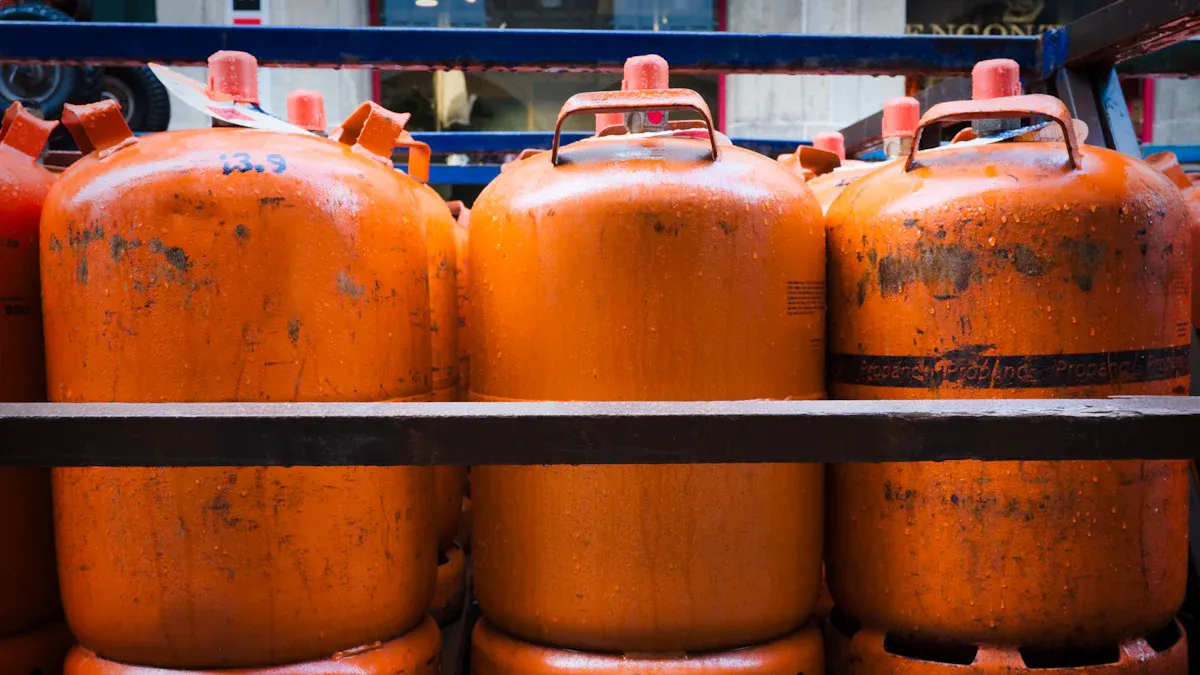
Carbon dioxide holds a unique place among shielding gases. It is the only reactive gas that a welder can use in pure form for MIG welding. Unlike argon, which is inert and does not react with the weld pool, CO2 breaks down in the arc and interacts with the molten metal. This reaction drives several of the benefits that make CO2 so popular. The gas is non-flammable and denser than air, which makes it safe to store when handled correctly. Pure CO2 does not produce welds identical in quality to argon-rich mixtures. Yet its low cost and wide availability keep it in high demand.
How CO2 Improves Penetration
Deeper Penetration on Steel
The reactive nature of CO2 pushes heat deeper into the base metal. This gas with CO2 creates a hotter arc than argon alone. The extra heat melts more of the parent material. A welder gets deeper fusion on steel parts. This matters for thick sections and heavy fabrication. A joint that needs full penetration benefits from the extra bite that CO2 provides. The gas used in these cases often runs as pure CO2 or as a mix with a higher percentage of CO2.
Effect on Bead Profile
The bead profile changes when CO2 enters the mix. A weld made with pure CO2 tends to sit higher and crown more. The toes of the weld may not wash out as smoothly as they do with an argon-rich blend. A welder who wants a flatter bead often turns to a mix with more argon. The trade-off is clear. More CO2 gives deeper penetration but a rougher profile. More argon gives a smoother profile but less penetration. A welder picks the balance that suits the job.
CO2 and Arc Stability
Stable Arc at Higher Currents
Arc stability refers to how steadily the arc burns during a weld. CO2 performs well at higher currents. The arc stays focused and does not wander. This stability lets a welder run longer beads without fighting the puddle. The arc also handles changes in stick-out better than some other gases. A welder who runs hot and fast on thick steel will find CO2 a reliable partner. The arc does not snuff out or sputter as easily under those conditions.
Reducing Undercutting
Undercutting happens when the arc eats into the edges of the weld joint. This creates a groove that weakens the weld. CO2-rich mixes can help reduce undercutting in some joints by spreading heat across a wider arc. The arc does not concentrate all its energy in one spot. This even heat distribution keeps the edges of the joint intact. A welder who struggles with undercutting on steel may find that a CO2-rich mix solves the problem.
Limitations of CO2
Increased Spatter and Oxidation
CO2 does have drawbacks. The reactive nature that helps penetration also creates more spatter. Small droplets of molten metal fly off the weld pool and stick to the workpiece. This spatter requires extra cleanup time. The oxidation effect also plays a role. CO2 can leave a light surface oxidation on the weld. A welder must clean the weld before painting or coating. These issues do not make CO2 unusable. They simply mean a welder must plan for extra finishing work.
Unsuitability for Aluminum
Aluminum welding requires a different approach. CO2 does not work for aluminum. The gas reacts poorly with aluminum and creates porosity and weak welds. A welder who wants to join aluminum must use argon or a helium blend. This limitation is clear: no amount of adjustment makes CO2 suitable for aluminum. A welder who works with both steel and aluminum needs two different gas supplies. The role of CO2 in MIG welding comes down to a trade-off. It offers deep penetration, good arc stability at high currents, and low cost. It also brings more spatter, surface oxidation, and a strict limit on the materials it can join. A welder who understands these traits can use CO2 effectively on steel and switch to argon blends for other metals.
Welding Gas for Mild Steel
Argon and CO2 blends serve as the most common shielding gas for MIG welders working on mild steel. A mix of argon and CO2 generally delivers the best overall results for steel. The exact ratio changes the arc behavior, penetration depth, and bead appearance. Three standard options cover most mild steel projects: C25, pure CO2, and C-10.
75% Argon / 25% CO2 (C25)
General-Purpose Welding
The 75% argon/25% carbon dioxide mix, known as C25, handles a wide range of mild steel jobs. This welding gas for mild steel works well for fabrication shops, auto body repair, and general repair work. The blend gives welders a stable arc that runs smoothly across different thicknesses. Mechanical properties such as tensile and yield strength are determined mainly by the filler metal rather than by the shielding gas. Match the filler metal to the application and verify its published mechanical data before designing structural joints.
Balanced Penetration and Spatter
C25 offers a practical balance between penetration and spatter control. The table below compares C25 with pure CO2 across key performance areas.
| Attribute | C25 (75% Argon / 25% CO2) | 100% CO2 |
|---|---|---|
| Spatter level | Noticeably lower spatter; smoother, more stable arc; less grinding, chipping, and rework | More spatter; harsher, more erratic arc; extra cleanup required |
| Bead appearance | Flatter and more uniform bead; better for visible or customer-facing work | Rougher bead profile; acceptable for hidden or structural work |
| Penetration | Lower penetration at same setting | Deeper penetration, especially on thicker sections |
| Transfer mode | Short-circuit and globular transfer; true spray requires 85%+ argon | Cannot sustain true spray arc; stays in globular or short-circuit transfer |
| Cost | Higher cost per fill | Lower cost per cubic foot |
The C25 mix is widely used for short-circuit transfer at normal voltages. This mode runs quiet and stable with low spatter. A welder who wants clean beads and minimal cleanup will find C25 a strong performer.
100% CO2
Deepest Penetration and Lowest Cost
Pure CO2 provides deep penetration on carbon steel at the lowest gas cost. This option suits thick material and heavy fabrication. A welder who needs to fuse thick steel plates can rely on the deep bite that pure CO2 delivers. The gas costs less per fill than any argon blend. Small shops and hobbyists often choose pure CO2 for budget reasons. Pure CO2 provides deep penetration on carbon steel at the lowest gas cost, though with a less stable arc and more spatter. It is useful when welding thick material, but the additional spatter can lead to downtime for post-weld cleaning. Pure CO2 is limited to short-circuit and globular transfer processes.
Higher Spatter and Rougher Bead
The trade-off with pure CO2 is clear. The arc becomes erratic with a coarse, raspy quality. Spatter increases compared to C25. The weld bead profile with 100% CO2 is typically wider with deeper penetration. This strong penetration helps on thicker materials but proves harder to control on thin metal such as auto body panels. Spatter can become an issue with CO2, not a flux-core-type mess, but extra cleanup if finished appearance matters. Keeping the arc length short helps reduce spatter. Pure CO2 cannot achieve spray transfer mode. It produces short-circuiting transfer at low current and globular transfer at higher current.
90% Argon / 10% CO2
Smooth Arc for Thin Materials
The 90% argon/10% CO2 mix, or C-10, shines on thin materials. This blend produces a smooth arc that runs quietly and steadily. A welder working on sheet metal or auto body panels will appreciate the gentle heat input. The lower CO2 content reduces penetration slightly, which helps prevent burn-through on thin gauge steel. The arc remains stable even at lower currents.
Spray Transfer Mode
C-10 is common for spray transfer mode. In this mode, the wire electrode melts into tiny droplets that spray across the arc. The result is a clean, spatter-free weld with excellent bead appearance. Spray transfer requires higher voltage and current settings. A welder must use a gas mix with at least 85% argon to achieve this mode. C-10 meets that threshold. The smooth arc and low spatter make C-10 a favorite for production welding on thin to medium steel. Pure CO2 (pub gas) can be used if an argon/CO2 mix is unavailable. A welder who cannot source a blend can still complete the job with pure CO2. The results will show more spatter and a rougher bead. Yet the weld remains structurally sound for many applications. The choice comes down to available supply and the finish requirements of the project.
Gas Selection for Other Materials
Aluminum: Argon or Helium Blends
Why CO2 Must Be Avoided
Aluminum requires an inert shielding gas. CO2 reacts poorly with this metal. The gas breaks down in the arc and introduces oxygen. This reaction creates porosity and weak joints. A welder who uses CO2 on aluminum sees bubbles in the weld. Inert gases fulfill the requirement. CO2 does not.
Choosing Argon vs. Helium
A pure inert gas serves as the standard welding gas for aluminum. It provides a stable arc and good cleaning action. The arc scrubs the oxide layer from the surface. This cleaning action allows proper fusion. A pure blend works well on thin sections. Helium blends improve penetration on thicker aluminum. Helium adds heat to the arc. The extra heat improves fusion on heavy sections. A mix of helium and inert gas provides deeper penetration than a pure blend alone. The trade-off includes higher cost and higher flow rates. A welder selects the blend based on material thickness.
Stainless Steel: 98% Argon / 2% CO2 and Trimix
General Stainless Welding
Welding gas for stainless steel with a 98% argon/2% CO2 composition works well on thin sections. This mix produces a stable arc and minimal spatter. The low CO2 content limits heat input. This control helps prevent carbide precipitation and maintains corrosion resistance. The American Welding Society standard D1.6[1] provides guidance for this process. AWS D1.6 recommends an argon + 2-5% CO2 shielding gas for MIG welding of stainless steel to prevent carbide precipitation and preserve corrosion resistance. Additionally, back purging with argon is required for pipe welding. This composition limits heat input and avoids the temperature range that causes chromium carbide formation, thus preserving corrosion resistance. For applications with strict passivation requirements, an argon-oxygen blend serves as another option. This choice minimizes oxidation and maximizes corrosion performance.
Trimix for Thicker Sections
Thicker stainless steel sections benefit from a tri-mix shielding gas. The most common formula contains 90% helium and a balanced inert mix. The helium content increases heat input and improves fusion on heavy joints. Tri-mix costs more than standard blends and may not be available at every gas supplier. A welder should test the mix on a sample piece before committing to a full project.
Silicon Bronze: 100% Argon
Clean, Low-Spatter Welds
MIG brazing with silicon bronze filler metal produces clean, low-spatter results. This process joins base metals of similar composition, steels, and cast iron to copper alloys. Welders often use it for braze welding galvanized and coated sheet steel. Application areas include automotive repair and art fabrication.
Why CO2 Is Not Used
CO2 creates oxidation in silicon bronze welds. The oxygen reacts with the filler metal. This makes the weld brittle and weak. A welder must choose an inert shielding material. No blend containing CO2 works for this task. The choice remains straightforward.
Best Practices for CO2 Torch Use
Setting the Right Flow Rate
Typical Range: 15-25 CFH
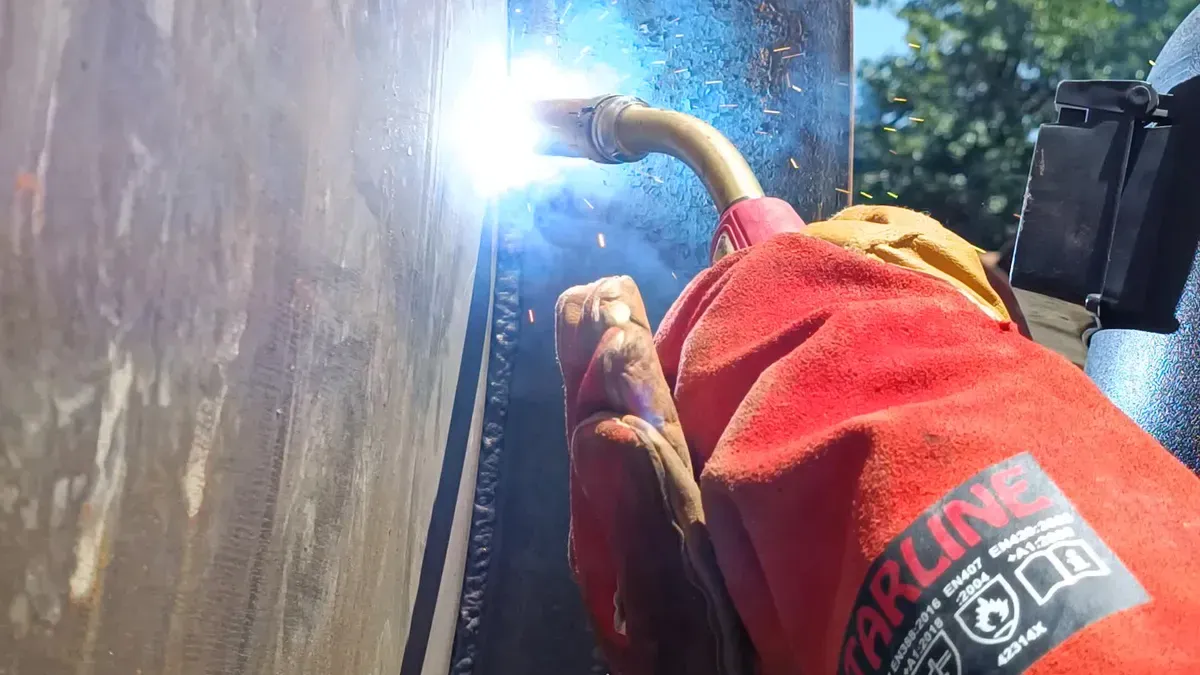
A welder must set the correct gas flow rate for each job. The typical range for a CO2 torch falls between 15 and 25 cubic feet per hour (CFH). This range provides enough shielding gas coverage to protect the weld pool. A rate below 15 CFH leaves the weld exposed to air. A rate above 25 CFH creates turbulence and wastes gas. The exact setting depends on the nozzle size, joint design, and travel speed. A welder should start at 20 CFH and adjust from there.
Adjusting for Drafts
A slight breeze can disrupt the shielding gas stream. This problem becomes worse when a welder uses 100% CO2. The gas blows away from the weld pool. The arc becomes unstable. The weld suffers from porosity. A welder should shield the work area from wind. Simple cardboard or a welding curtain works well. Outdoor jobs require extra care. A welder may need to increase the flow rate slightly to compensate for air movement. However, a higher flow rate does not fix a windy environment. Physical barriers remain the best solution.
Equipment Setup and Maintenance
Regulator and Hose Checks
A welder should inspect the regulator and hose before each use. Leaks waste gas and weaken the shielding gas coverage. A simple soapy water test reveals leaks at connections. A welder applies the solution to fittings and watches for bubbles. Bubbles indicate a leak that needs tightening or replacement. The hose must remain free of cuts and cracks. A damaged hose allows gas to escape and air to enter. This problem ruins weld quality.
Nozzle and Liner Care
Proper maintenance extends the service life of any CO2 torch. A welder should clean the nozzle regularly. Spatter builds up inside the nozzle and blocks gas flow. A clogged nozzle creates poor shielding gas coverage. The liner also needs attention. A worn liner causes wire feeding problems. A welder should check for obstructions and replace worn parts. Black Wolf Welding offers MIG/MAG torches including air-cooled models (BW 15AK, BW 23KD, BW 26KD, BW 36KD, BW 350A) and water-cooled models (BW 500i, BW 5000). The lineup also includes spool guns (BW LBT 150, LBT 240, LBT 250) for aluminum. These torches work with EUR, Fronius, JPN, Trafimet, OTC, BND, TWK, and ESAB interfaces.
Safety and Handling
Ventilation and Leak Detection
Carbon dioxide displaces oxygen in the air. A welder must work in a well-ventilated area[2]. A small shop needs an exhaust fan or open door. A welder should never work in a sealed space with a CO2 torch. Leak detection also matters for safety. A leaking cylinder can fill a room with gas. A welder should check all connections with soapy water. A gas monitor provides extra protection in confined spaces.
Cylinder Storage
A welder must store gas cylinders upright and secure[3]. A chain or strap prevents tipping. The cylinder valve should remain closed when not in use. Heat sources pose a danger. A welder should keep cylinders away from direct sunlight and open flames. Proper storage protects the welder and the equipment. A secure cylinder also prevents damage to the regulator and hose.
Cost and Performance of CO2
Cost Advantages
Lower Gas Prices
Carbon dioxide costs less than argon and stands as the most common shielding gas for MIG welding. A welder who runs a small shop or works on weekend projects feels this difference at the register. The table below shows typical U.S. retail price ranges for pure CO2 and the popular C25 mix.
| Attribute | 100% CO2 | C25 (75% Argon / 25% CO2) |
|---|---|---|
| Cost per cubic foot | $0.38-0.65 | $0.46-0.72 |
| Typical 125 cu ft exchange | $50-60 | $58-68 |
| Relative cost | 10-20% cheaper than C25 | More expensive than straight CO2 |
| Spatter | More spatter | Low spatter |
| Penetration | Deeper penetration | Good penetration on steel |
| Weld appearance | Dirtier, more cleanup needed | Cleaner weld |
The cost difference per cylinder runs about $8-10. That gap looks small on paper. Yet a shop that goes through 10 or more cylinders each month sees real savings with pure CO2. The cheapest gas is not always the most cost-efficient. High-spatter CO2 means more time spent grinding and cleaning. For high-volume operations, labor savings from C25 often outweigh the slightly higher gas cost.
Refill Convenience
Carbon dioxide cylinders are easy to find and exchange. Many welding supply stores stock CO2 for beverage and industrial use. A welder can refill a tank at a local shop without special ordering. Argon blends sometimes require a trip to a dedicated welding supplier. This convenience matters for hobbyists who work on tight schedules.
When to Choose CO2 vs. Argon Blends
Thick Steel and Heavy Fabrication
Pure CO2 offers deep penetration. This trait makes it ideal for structural steel, heavy plate, and farm equipment repair. A welder who needs strong root fusion on thick sections will find CO2 a reliable partner. The rougher arc and extra spatter become acceptable trade-offs for the depth of bite. Industrial settings and large shops that go through 10 or more cylinders each month often choose CO2 as a budget option.
Thin Sheet and Aesthetic Welds
Thin sheet metal demands a gentler touch. CO2 brings high heat input and a risk of burn-through. The arc runs rougher and creates more spatter. An argon/CO2 blend or Argoshield results in easier and neater welds compared to pure CO2. The mix combines the arc stability and low spatter of argon with the penetration benefits of CO2. A welder who produces visible welds or works with automated equipment will find the smoother arc worth the extra cost. For most small users, the cost difference remains minimal.
Troubleshooting Common CO2 Issues
Excessive Spatter
Adjusting Voltage and Wire Speed
Spatter increases when voltage runs too high or wire speed runs too low. A welder should lower voltage in small steps and watch the arc. The arc should sound like frying bacon, not crackle or pop. Wire speed needs to match the burn-off rate. If the wire stubs into the work, the speed is too low. If the wire burns back to the tip, the speed is too high. Small adjustments make a big difference.
Correct Polarity and Anti-Spatter
MIG welding with CO2 requires electrode positive polarity (DCEP). Reverse polarity causes heavy spatter and poor fusion. A welder should verify the torch and ground connections. Anti-spatter spray also helps. A light coat on the nozzle and workpiece reduces spatter adhesion. Gel or spray both work well. Clean the nozzle after each session to prevent buildup.
Porosity and Poor Fusion
Checking Gas Flow and Leaks
Porosity often comes from poor shielding gas coverage. A welder should set the gas flow rate to 15-25 CFH indoors. Flow above 50-60 CFH creates turbulence and pulls air into the weld. Leaks in hoses or regulators also reduce gas delivery. A soapy water test on all fittings reveals leaks. Wind or drafts blow shielding gas away from the weld pool. A welder should block air movement with a screen or curtain.
Cleaning Base Metal
Dirt, rust, oil, grease, and paint release gases at welding temperatures. These gases create voids in the weld. A welder must clean the base metal with a wire brush or solvent before welding. Moist or dirty MIG wire also causes porosity. Store wire in a dry place and avoid touching it with dirty gloves. Pre-heating the base metal removes moisture and reduces porosity risk.
| Cause of Porosity | Prevention Method |
|---|---|
| Poor shielding gas coverage | Set gas flow to 15-25 CFH indoors |
| Wrong shielding gas type | Match gas to base metal and wire |
| Wind or draft | Block air movement or increase flow |
| Dirty base metal | Clean surface before welding |
| Moist or dirty wire | Store wire in dry environment |
Arc Instability
Verifying Gas Mixture
Arc stability depends on the correct shielding gas mixture. A welder should verify the gas type for the application. Standard steel MIG mixtures or 100% CO2 work for carbon steel. A flow meter designed for carbon dioxide ensures accurate readings. The float should move freely and pressure should stay steady during welding.
Inspecting Consumables
A worn contact tip causes arc wander and inconsistent electrical contact. The bore becomes oversized and the wire wobbles. A welder should inspect the tip for discoloration or an egg-shaped bore. Replace worn tips and match the bore to the wire diameter exactly. A clogged nozzle also restricts gas flow. Clean the nozzle regularly and check for obstructions. These simple steps restore arc stability and improve weld quality.
Conclusion
CO2 remains a cost-effective and widely used component in MIG welding gas, especially for mild steel. The right shielding gas mixture depends on the material and the application. A welder should always follow manufacturer guidelines for the best results. Experimenting with different gas blends helps a welder find what works best for each project. Argon-rich mixes suit thin sheet, while pure CO2 excels on thick steel. Each gas offers distinct trade-offs in spatter, penetration, and cost. For those seeking a reliable CO2 torch manufacturer, Black Wolf Welding offers a versatile lineup of MIG welding torches for various applications.
Need the Right MIG/MAG Torch for Your Gas Setup?
Whether you run pure CO2 on thick steel or a C-25 blend on general fabrication, our MIG/MAG torch lineup covers air-cooled, water-cooled, and spool gun models. Tell us your application and get a tailored recommendation.
Related: Comparing the P80 Torch to Top Plasma Cutting Competitors
FAQ
Can a welder use pure CO2 for MIG welding?
Yes. Carbon dioxide is the only reactive gas that works in pure form for MIG welding. It provides deep penetration on steel at the lowest cost. However, pure CO2 produces more spatter and a rougher bead than argon blends.
What flow rate works best for a CO2 torch?
A welder should set the flow rate between 15 and 25 cubic feet per hour indoors. A rate below 15 CFH leaves the weld exposed to air. A rate above 25 CFH creates turbulence and wastes gas. Windy conditions require physical barriers.
Why does CO2 create more spatter than argon blends?
The reactive nature of CO2 drives deeper penetration but also throws more molten droplets from the weld pool. This spatter requires extra cleanup time. Argon-rich mixes reduce spatter and produce smoother beads. A welder trades penetration for cleanliness with pure CO2.
Which materials work with CO2 shielding gas?
CO2 suits mild steel and carbon steel. It does not work for aluminum, stainless steel, or silicon bronze. Aluminum requires argon or helium blends. Stainless steel needs 98% argon / 2% CO2 or trimix. Silicon bronze demands 100% argon.
How does a welder reduce porosity when using CO2?
Porosity comes from poor shielding coverage. A welder should check for leaks with soapy water. The base metal must be clean and free of rust, oil, or paint. Wind or drafts blow the gas away from the weld pool. Block air movement with a screen.
Is CO2 cheaper than argon mixes?
Yes. Pure CO2 costs 10-20% less than the C25 mix per cylinder. A 125 cubic foot exchange runs $50-60 for CO2 versus $58-68 for C25. High-volume shops see real savings. However, extra spatter cleanup adds labor costs.
What polarity does CO2 MIG welding require?
Electrode positive polarity (DCEP) is required. Reverse polarity causes heavy spatter and poor fusion. A welder should verify the torch and ground connections before starting. Correct polarity ensures stable arc performance and proper weld penetration.
References
American Welding Society (AWS). https://www.aws.org/
U.S. Occupational Safety and Health Administration (OSHA) — Welding, Cutting, and Brazing. https://www.osha.gov/welding-cutting-brazing
Compressed Gas Association (CGA). https://www.cganet.com/