



 Apr 27, 2026
 View:470
Choosing the right MIG welding torch matters for both weld quality and productivity. Welders who match torch type, cooling method, duty cycle, and ergonomics to their project see better results and less fatigue. Take a look at how these factors make a difference:
| Factor | Impact on Weld Quality and Productivity |
|---|---|
| Water-cooled models | Faster cooling and higher weld quality, especially with thick metals. |
| High duty cycle | Longer continuous operation, fewer interruptions on busy production lines. |
| Ergonomic design | Less fatigue, more comfort, better productivity during long shifts. |
Everyone should think about their own needs before picking a torch. What matters most for your job?
Key Takeaways
Choosing the right MIG welding torch improves weld quality and productivity.
Consider the cooling method: water-cooled torches handle heavy-duty jobs better than air-cooled ones.
Match the torch's duty cycle to your workload to minimize interruptions during welding.
Select a torch based on the material type and thickness for optimal performance.
Ergonomic designs reduce fatigue, allowing welders to work longer and more comfortably.
Regular maintenance of consumables like contact tips and nozzles extends the torch's service life.
Spool guns are ideal for aluminum welding, preventing wire tangling and feeding issues.
Use a checklist to compare torch features, ensuring you choose the best fit for your specific welding needs.
MIG Welding Torch Basics
What Is MIG Welding?
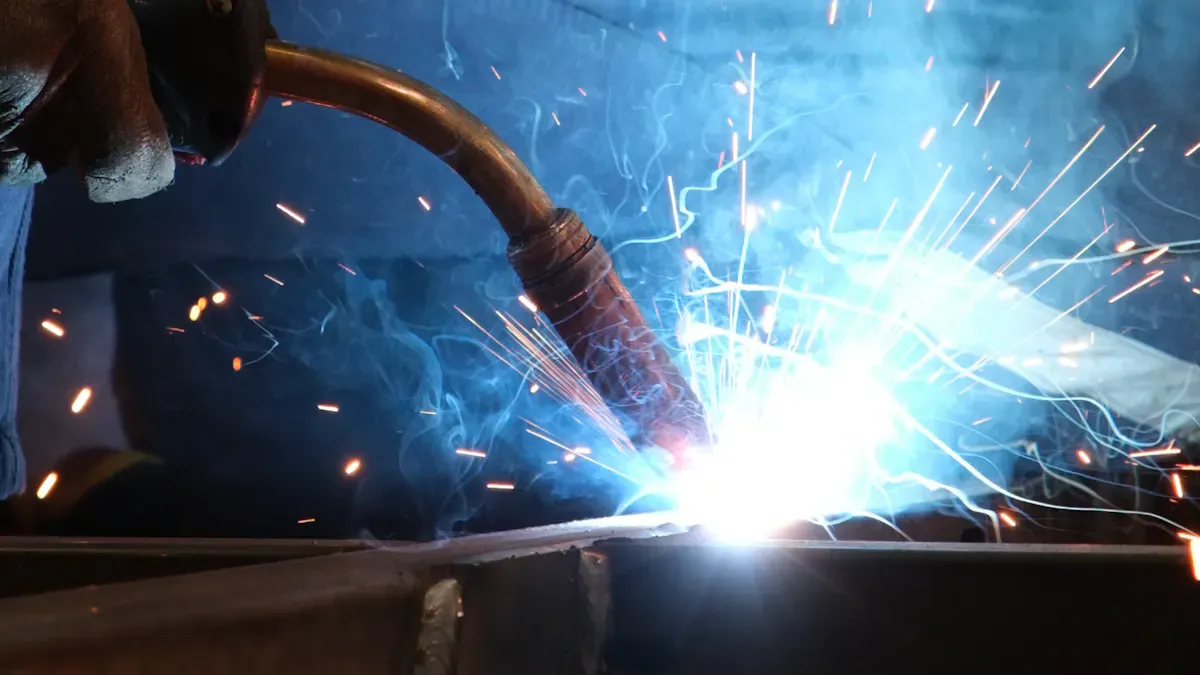
MIG welding stands for Metal Inert Gas welding. This process uses a wire electrode that feeds through the torch and melts to join metal pieces. The torch supplies shielding gas, which protects the weld from contamination. MIG welding is popular because it works fast and produces clean welds. Many people choose this method for projects ranging from car repairs to industrial fabrication.
MIG welding offers a simple setup and easy operation. Welders can adjust the wire speed and voltage to match the job. The process suits both beginners and professionals. It works well on steel, aluminum, and other metals.
Here's a quick look at how torch requirements differ between MIG and other welding processes:
| Welding Process | Torch Requirements | Cooling Method | Suitability |
|---|---|---|---|
| MIG | Provides gas for protection and transfers current to wire | Air-cooled or water-cooled | Lighter projects (air-cooled), Heavy-duty work (water-cooled) |
| TIG | Various designs, may include on/off switch or foot pedal | N/A | N/A |
Torch Types Overview
Choosing the right MIG welding torch depends on the type of torch and the job at hand. Each torch type offers unique features and benefits.
Standard Torches
Standard torches are the most common choice for MIG welding. They feed the wire directly from the machine to the weld. These torches work well for general fabrication, automotive repairs, and light manufacturing. Welders like standard torches because they are easy to handle and maintain. Air-cooled models suit lighter tasks, while water-cooled versions handle heavy-duty jobs.
Different brands design standard torches with features like rotating joint handles. These features help reduce stress on the welder's wrist and improve comfort during long shifts. The duty cycle rating matters here. A torch with a higher duty cycle can run longer without overheating, making it ideal for production lines.
Spool Guns
Spool guns hold a small spool of wire inside the handle. This design prevents wire tangling and feeding issues, especially when welding aluminum. Spool guns are perfect for jobs where the wire is soft or prone to kinking. They offer flexibility and make aluminum welding easier for both hobbyists and professionals.
Push-Pull Guns
Push-pull guns combine a motor in the torch handle with the main wire feeder. This setup keeps the wire moving smoothly, even over long distances. Push-pull guns excel in industrial settings, such as shipbuilding or pipeline welding. They reduce feeding problems and allow for consistent welds on large projects. Welders appreciate the versatility and reliability these torches provide.
Tip: When selecting a MIG welding torch, consider the torch type, duty cycle, and comfort features. These factors impact performance and operator fatigue.
Key Selection Factors
Material and Thickness
Choosing the right torch starts with knowing what you plan to weld. Material type and thickness play a big role in torch selection. Thicker metals need more power and a stronger torch. For example, welding a thin car panel is very different from joining thick steel beams. The type of metal also matters. MIG welding works best for mild steel, but some jobs may call for TIG welding, especially with aluminum or stainless steel.
Here's a quick table to help you match your project to the right torch:
| Factor | Description |
|---|---|
| Material Thickness | Thicker materials require higher amperage and more robust torches. |
| Type of Metal | The metal type influences the choice; MIG is better for mild steel, while TIG is preferred for aluminum and stainless steel. |
| Power Requirements | Make sure the torch is rated for the necessary amperage to prevent overheating or equipment failure. |
Tip: Always check the thickness and type of metal before picking a torch. This step helps avoid problems like overheating or poor weld quality.
Power and Amperage
The power rating of a MIG welding torch tells you how much heat it can handle. If you use a torch with too low an amperage rating, it may overheat or wear out quickly. Each material and thickness needs a certain amount of power for a strong weld.
Check out these guidelines for matching amperage to your project:
| Material Type | Thickness Range | Recommended Amperage |
|---|---|---|
| Light metals (thin steel) | 1/25 – 1/8 inch | 30-130 amps |
| Medium-thickness metals | 1/8 – 1/4 inch | 130-200 amps |
| Heavy metals (aluminum, thick steel) | > 1/4 inch | 200+ amps |
For every .001 inch of material thickness, use about 1 amp of output. For example, .125 inch thick steel needs about 125 amps.
Choose the right wire size for your amperage:
30-130 amps: .023 inch wire
40-145 amps: .030 inch wire
50-180 amps: .035 inch wire
75-250 amps: .045 inch wire
Torches like the BW 5000 offer high amperage ratings and can handle thick steel plates. This makes them a solid choice for heavy-duty jobs in industries like shipbuilding or pipeline construction.
Need Expert Welding Torch Solutions?
Get professional guidance on selecting the perfect MIG welding torch for your specific application. Our team of welding experts is ready to help you optimize your welding operations with high-quality torches and consumables.
Request a Quote NowCooling Methods
Cooling keeps your torch working longer and safer. There are two main types: air-cooled and water-cooled. Each has its own strengths.
| Feature | Air-Cooled MIG Torches | Water-Cooled MIG Torches |
|---|---|---|
| Weight | Lightweight and portable | Heavier due to water cooling system |
| Cooling Efficiency | Good for light to medium-duty tasks | Superior cooling for high-amperage welding |
| Application | Great for fieldwork and maintenance | Best for demanding industrial applications |
| Cost | Usually more affordable | Typically more expensive |
| Maintenance | Needs less maintenance | Needs regular maintenance |
| Performance | Works for lower amperage | Handles thick metals and high power |
Air-cooled torches work well for smaller jobs or when you need to move around a lot. Water-cooled models shine in high-power, industrial settings. They can handle long welding sessions without overheating, which is perfect for production lines or thick materials.
Note: Always match the cooling method to your work environment and the demands of your project. This choice can make a big difference in torch lifespan and weld quality.
Duty Cycle
Duty cycle tells how long a torch can run before it needs to cool down. Welders often check this rating to avoid interruptions during work. In industrial settings, a high duty cycle means more productivity and fewer breaks. According to ISO welding standards, duty cycle requirements vary based on application intensity.
Air-cooled torches usually have a duty cycle of 60% at lower amperages. They can weld for six minutes out of every ten before needing a rest.
Water-cooled torches reach a 100% duty cycle at higher amperages. They allow continuous welding without overheating.
Water-cooled models suit jobs that demand long, uninterrupted welds, like those found in automotive manufacturing or shipbuilding.
Torches with duty cycles from 60% to 100% are available. Water-cooled models handle high temperatures and keep working on production lines. Welders who choose a torch with the right duty cycle avoid downtime and finish projects faster.
Tip: Always match the duty cycle to your workload. If you weld thick materials or work in a busy shop, a higher duty cycle saves time and keeps the torch running smoothly.
Ergonomics and Comfort
Comfort matters when welding for hours. Ergonomic features help reduce fatigue and boost productivity. Welders who use a torch designed for comfort can work longer and stay focused.
Weight and Handle
A lighter torch feels easier to hold. Handles with ergonomic grips reduce hand strain and heat stress. Welders notice less fatigue when the handle fits well and stays cool.
Ergonomic design enhances comfort and lowers physical strain.
Handle, neck, and cable design affect how long a welder can work without discomfort.
Choosing a lightweight torch, like the BW Q400 at 450g, lets welders work longer without feeling tired.
Many professional torches have handles that disassemble quickly. This feature helps with rapid fault analysis and keeps downtime low.
Torch Shape and Length
The shape and length of a torch matter in tight spaces or high-altitude jobs. Welders often need a torch that fits the workspace and feels balanced.
| Feature | Description |
|---|---|
| Torch handles disassemble | Allows for rapid fault analysis in 5 seconds |
| Cable supports | Designed for flexibility and smooth wire feed |
Flexible cable supports make wire feeding easier. Welders who use torches with ergonomic grips and flexible cables notice less hand fatigue.
Note: Welders should test different torch shapes and handle designs. The right fit improves comfort and helps maintain steady welds.
A MIG welding torch with ergonomic features and a high duty cycle makes welding safer and more efficient. Welders who match torch specs to their needs get better results and enjoy their work more.
MIG Welding Torch Features
Compatibility and Versatility
A good MIG welding torch should work with a wide range of wires and shielding gases. This flexibility helps welders tackle different projects without switching equipment. For example, torches that handle wire sizes from 0.6mm to 2.4mm cover most jobs, from thin sheet metal to thick steel plates.
Welders often switch between gases like CO₂, argon, or nitrogen. Each gas works best with certain metals and affects the weld's appearance and strength. Using the right wire and gas combination prevents problems like poor bonding or too much spatter. A torch that supports many options saves time and money because welders do not need to buy extra tools for each job.
Tip: Before starting a project, check the wire and gas compatibility. This step helps avoid mistakes and keeps the weld strong.
Consumables and Maintenance
Consumables like contact tips, nozzles, and liners wear out over time. Regular maintenance keeps the torch running smoothly and extends its service life. Welders who clean and inspect their equipment see fewer problems and better results. The OSHA welding safety standards emphasize the importance of proper equipment maintenance.
Here's a quick look at common maintenance tasks and their impact:
| Maintenance Task | Impact on Service Life |
|---|---|
| Regular cleaning | Removes dust and dirt that can cause overheating and malfunction. |
| Inspection of drive rolls | Ensures proper wire delivery and prevents wear due to contaminants. |
| Proper handling | Reduces the risk of premature wear and welding issues. |
Welders should also:
Clean consumables often to prevent spatter buildup.
Watch heat levels during welding to avoid extra wear.
Set a schedule to check and clean equipment.
High heat can soften consumables, making them collect more spatter. Tight spaces or tricky setups can reflect heat back onto the torch, wearing parts out faster. Regular care helps avoid these problems and keeps the torch in top shape.
Durability and Service Life
Durability matters for anyone who welds often. The materials and design of a torch decide how long it will last. Premium torches use strong metals and smart construction to handle tough jobs.
| Component | Material Used | Benefits |
|---|---|---|
| Contact Tips | Copper, Silver-Plated | Great conductivity, stands up to high heat |
| Nozzles | High Quality Brass | Nickel-plated for extra durability |
| Liners | Steel, Thermoplastics | Smooth wire feed, less downtime |
| Insulators | Rubber-type Composite | Handles extreme temperatures |
| Handles | Reinforced Materials | Stays strong during heavy use |
Contact tips and liners play a big role in torch performance. Good tips have a clean, round hole and show no signs of burning or discoloration. This means they transfer current well and help make smooth welds. Bad tips look burnt or uneven, which can cause problems like micro-arcing or burnbacks.
Torches using C18150 chromium-zirconium copper for their contact tips last longer and resist wear better than standard copper. Welders who use durable torches spend less time on repairs and more time working.
Ergonomic design and lightweight construction also help. A torch that feels good in the hand and does not weigh much lets welders work longer without getting tired. The BW Q400, for example, weighs only 450g and has an anti-slip handle. Features like these boost productivity and keep welders comfortable during long shifts.
Note: Choosing a torch with strong materials and a smart design means fewer replacements and less downtime. Welders get more done and enjoy their work more.
Application Scenarios
Light Fabrication
Light fabrication covers tasks like building frames, repairing thin sheet metal, or making small brackets. These jobs need a torch that is easy to handle and quick to set up. Welders often choose air-cooled torches for these projects. They like the lighter weight and simple design. Air-cooled models work well for short to medium duty cycles, usually rated between 150 and 300 amps.
A stable arc is important for clean welds. The contact tip helps control the arc and keeps the weld smooth. Welders also pay attention to the handle design. A comfortable grip makes it easier to move the torch and reach tight spots.
Here's a quick look at what matters most for light fabrication:
| Feature | Description |
|---|---|
| Cooling Type | Air-cooled torches, 150–300 amps, ideal for light fabrication |
| Contact Tip | Key for arc control and weld quality |
| Torch Handle Design | Good handle improves comfort and maneuverability |
Air-cooled torches suit short to medium jobs.
The contact tip keeps the arc steady.
A well-designed handle helps with tricky angles.
Tip: For light fabrication, choose a torch that feels good in the hand and matches the job's power needs.
Automotive and Shipbuilding
Automotive and shipbuilding projects demand more from a MIG welding torch. Welders often work with thicker metals and need longer cables to reach large parts. They look for torches with higher duty cycles and strong cooling systems. These features help them weld for longer periods without stopping.
A common torch in these industries supports wire sizes from 0.8mm to 1.6mm. It handles up to 350 amps at a 60% duty cycle with CO₂ gas. Welders can pick cable lengths from 3 to 5 meters, which helps them move around big vehicles or ship sections. These torches meet strict standards, so welders know they are safe and reliable.
| Specification | Details |
|---|---|
| Duty Cycle | 350A @ 60% with CO₂, 300A @ 60% with mixed gas |
| Wire Size Support | 0.8mm to 1.6mm |
| Cooling | Efficient air-cooled |
| Length | 3m, 4m, or 5m |
| Standards | Industry certifications |
Welders in these fields need torches that can handle tough jobs and keep up with busy schedules.
Industrial and Pipeline Welding
Industrial and pipeline welding brings even bigger challenges. Welders often join thick steel plates or pipes. They need torches with high power ratings and strong cooling. Many choose water-cooled models for these jobs. These torches can run for long periods without overheating.
A high duty cycle is a must. Welders want to keep working without waiting for the torch to cool down. They also look for torches that support a wide range of wire sizes and shielding gases. This flexibility helps them switch between different tasks quickly.
In pipeline work, welders often work in tough spots or outdoors. They need torches that are durable and easy to handle. A lightweight design helps reduce fatigue during long shifts. Welders also check for features like anti-slip handles and flexible cables. These details make a big difference when working in hard-to-reach places.
Note: For industrial and pipeline welding, pick a torch with a high duty cycle, strong cooling, and a comfortable grip. This choice keeps the work moving and the welds strong.
High-Altitude and Tight Spaces
Welders often face tough conditions when working at heights or inside cramped areas. These jobs demand tools that are easy to handle and reliable. Many professionals choose MIG welding torches with lightweight designs. A lighter torch helps them move quickly and reduces strain on their arms and shoulders. The BW Q400, for example, weighs only 450g. This makes it a smart choice for welders who need to climb ladders or squeeze into tight corners.
High-altitude welding brings extra challenges. Wind, cold, and limited space can make the job harder. Welders need torches that operate smoothly without extra equipment. Some models work without auxiliary gas, which helps in outdoor settings where carrying gas bottles is not practical. Built-in features like Hot Start and Anti-Stick make arc initiation easier. These features cut down on downtime and help welders start their work faster.
Many torches now use advanced inverter technology. This gives welders better control over the welding current. They can create smoother arcs and achieve deeper penetration, even in tricky positions. Welders who use torches with MMA or LIFT TIG capability find it easier to switch between welding methods. This versatility matters when the workspace changes or the job calls for different techniques.
Here's a quick look at features that help in high-altitude or tight space environments:
| Feature | Benefit |
|---|---|
| Lightweight design | Easier to transport and maneuver in tight spaces. |
| Advanced inverter technology | Provides better control over welding current, resulting in smoother arcs and improved penetration. |
| Operates without auxiliary gas | Ideal for outdoor applications and challenging conditions, enhancing flexibility. |
| Built-in Hot Start / Anti-Stick | Ensures stable arc initiation and reduces downtime, crucial in high-altitude or confined spaces. |
| MMA/LIFT TIG capability | Allows for versatility in welding applications, particularly useful in various positions. |
Welders often work in shipyards, construction sites, or repair jobs where space is limited. They need torches with flexible cables and ergonomic handles. A torch that fits the hand well and bends easily helps them reach awkward spots. Welders also look for contact tips that last longer. Durable tips reduce the need for frequent replacements, which is important when working far from the shop.
Tip: Welders should test the torch's balance and grip before starting work in tight spaces. A comfortable torch makes the job safer and more efficient.
Some professionals use modular torches. These allow quick changes to the handle or cable length. Welders can adapt their tools to fit the workspace. This flexibility keeps them productive and reduces fatigue.
High-altitude and confined space welding requires careful planning. Welders who choose torches with the right features stay safe and finish their work faster. They avoid unnecessary breaks and keep their focus on the job.
Comparing Models and Brands
What to Look For
Choosing the right MIG welding torch starts with knowing what features matter most for your job. Welders often compare models using a simple checklist. Here are some key points to consider:
Amperage: Check if the torch can handle the power needed for your materials.
Duty Cycle: Look for a torch that can run long enough without overheating.
Cooling Method: Decide between air-cooled or water-cooled based on how much welding you plan to do.
Power Output: Make sure the torch matches the thickness and type of metal you want to weld.
Wire Feeder Type: Choose between spool guns or push-pull systems for different materials.
Portability: Think about how easy it is to move the torch around your workspace.
Additional Features: Features like digital displays or adjustable settings can make welding easier.
Welders who use this checklist find it easier to compare models and pick the right tool for their needs.
Popular Models Overview
Many professionals use MIG welding torches from well-known brands. Each model offers unique features that suit different applications. Premium models are available that combine multifunctional capabilities, comprehensive packages for beginners, and compact designs with advanced technology.
These models stand out for their reliability and user-friendly designs. Welders often choose them for both small and large projects. The right model depends on the job's demands and the welder's preferences.
Specialty Torch Options
Spool Guns for Aluminum
Many welders choose spool guns when working with aluminum. Aluminum wire is soft and can kink or tangle easily. Standard MIG torches sometimes struggle to feed this wire smoothly. Spool guns solve this problem by placing a small spool of wire right in the handle. This design keeps the wire path short and reduces feeding issues.
Welders like spool guns for several reasons:
They are simple to operate and do not require much training.
Spool guns cost less than many other specialty torches.
They can reach up to 50 feet from the power source, which gives welders more freedom to move.
Spool guns improve the feeding of soft aluminum wire and help prevent birdnesting.
Welders can use spool guns with their existing MIG machines, so there is no need to buy new equipment.
Spool guns make aluminum welding easier and more reliable. They offer a flexible entry point for anyone who wants to start MIG welding aluminum.
Push-Pull Systems
Push-pull systems take wire feeding to the next level. These torches use two motors—one pushes the wire from the feeder, and the other pulls it through the gun. This setup keeps the wire moving smoothly, even over long distances. Welders notice fewer tangles and more consistent feeding.
A push-pull system helps maintain steady wire flow. It handles larger spools and works well for long welds. Welders see better control during the welding process, which leads to higher quality welds. Many professionals use push-pull systems for big projects or when they need to weld far from the power source.
Push-pull systems give welders more control and reduce wire feeding problems. They help create strong, clean welds, especially on large or complex jobs.
Modular and Custom Torches
Some jobs need more than a standard torch. Modular and custom torches let welders build the tool that fits their needs. These torches offer options like different neck angles, from 30 to 80 degrees. Welders can reach tricky joints or weld at odd angles with ease. They can also pick straight or curved handles, depending on what feels best.
Modular torches bring several benefits:
They improve operator comfort, which means less fatigue during long shifts.
Welders get longer life from their consumables, saving money and time.
Productivity and efficiency go up because the torch fits the job perfectly.
Modular and custom torches give welders the flexibility to tackle specialized tasks. They help boost comfort, extend tool life, and keep work moving smoothly.
Final Considerations
Choosing the right MIG welding torch starts with matching features to the job. Welders should check wire sizes, cooling options, and duty cycle. A checklist helps cover tip size, amperage rating, torch length, ergonomics, price, and warranty. Common mistakes include picking the wrong tip, mismatched amperage, or uncomfortable handles. Industry standards guide torch selection for different applications. Talking with welding professionals gives tailored advice. Product manuals also help clarify specs. Welders who follow these steps find the best fit for their needs.
FAQ
What is the difference between air-cooled and water-cooled MIG torches?
Air-cooled torches use airflow to stay cool. They work best for light to medium jobs. Water-cooled torches use liquid for cooling. They handle heavy-duty welding and longer sessions without overheating.
How does duty cycle affect welding performance?
Duty cycle shows how long a torch can weld before it needs a break. A higher duty cycle means more continuous welding and less downtime. Welders finish projects faster with the right duty cycle.
Can one MIG torch handle different wire sizes?
Many MIG torches support a range of wire sizes. Welders can switch wires for different materials or thicknesses. Always check the torch's specifications for wire compatibility.
Why does ergonomic design matter in a MIG torch?
Ergonomic design reduces hand and arm fatigue. Welders work longer and stay comfortable. Features like lightweight handles and anti-slip grips make a big difference during long shifts.
What maintenance does a MIG torch need?
Regular cleaning and inspection keep a torch working well. Welders should check contact tips, liners, and nozzles for wear. Replacing worn parts helps maintain weld quality.
Is a spool gun necessary for aluminum welding?
A spool gun helps feed soft aluminum wire smoothly. It prevents tangling and feeding issues. Welders often use spool guns for aluminum to get better results.
How do welders choose the right torch length?
Welders pick torch length based on workspace size and job type. Shorter torches work well in tight spots. Longer cables help reach large workpieces or awkward areas.
What safety tips should welders follow with MIG torches?
Welders should wear proper protective gear, check for gas leaks, and keep the workspace clean. They should always follow the manufacturer's safety guidelines for their torch.