



Understanding the Main Differences Between MIG and TIG Torches
 Mar 16, 2026|
 View:646
MIG and TIG torches differ in their design, operation, and the level of control they offer. These differences shape how each torch performs in welding, what metals they work best with, and how easy they are to use. Industries choose MIG torch systems for their speed and versatility, especially in automotive and construction. In contrast, TIG torches deliver precise welds for specialized fields like aerospace and medical equipment. Black Wolf brings years of expertise to welding and cutting solutions, offering reliable tools for every application.
Key Takeaways
MIG torches use a consumable wire electrode, making them faster and easier for beginners.
TIG torches use a non-consumable tungsten electrode, allowing for precise control and high-quality welds.
MIG welding is ideal for thicker materials and repetitive tasks, while TIG excels in detailed and intricate work.
Proper maintenance of welding torches extends their lifespan and ensures high-quality results.
Choosing the right torch depends on the type of metal, project complexity, and desired weld quality.
MIG welding is more forgiving with joint fit-up, while TIG requires tight fitting for effective welding.
Investing in quality equipment pays off with better performance and fewer repairs over time.
Both MIG and TIG torches have unique advantages, so understanding their differences helps in selecting the right tool for the job.
What Is a Welding Torch?
Torch Basics
A welding torch is a handheld tool that delivers heat to metal parts, allowing them to melt and join together. This tool plays a central role in many metalworking processes. Welders use torches to create strong, lasting bonds between pieces of metal. The torch directs a focused stream of heat, which can come from an electric arc, a gas flame, or a high-temperature plasma jet. Each type of torch uses a different method to generate the heat needed for welding.
Torch Role in Welding
A torch serves several important functions in welding.
Heat Source: The torch provides controlled heat to melt both the base metal and any filler material, creating a strong weld.
Precision and Control: Welders can adjust gas flow and flame settings on the torch for the right amount of heat.
Versatility: The torch adapts to different welding techniques, such as gas welding, arc welding, and more.
Efficiency and Productivity: Using a torch speeds up the welding process and improves results.
Mobility and Accessibility: The portable design of most torches allows welders to work in many positions and locations.
Weld Quality and Strength: Proper heat input from the torch ensures strong, defect-free welds.
Safety: Many torches include features that protect both the welder and the workspace.
Skill Development: Mastering torch use helps welders improve their skills over time.
Main Torch Components
Welding torches come in several types, each designed for specific tasks. The table below shows some common torch types, their descriptions, and where they are used:
Type of Torch | Description | Applications |
|---|---|---|
Used in wire-feed welding with a continuous solid wire electrode. | Automotive, fabrication, industrial settings | |
Provides precise, high-quality welds with manual feeding of filler rod. | Stainless steel, aluminum, intricate work | |
Oxy-Fuel Welding Torch | Mixes oxygen and fuel gas to create a high-temperature flame for welding. | Metalworking, plumbing, farm equipment repair |
Black Wolf stands out as a trusted manufacturer of advanced welding and cutting torches. The company offers a wide range of products, including MIG, TIG, and plasma cutting torches. Plasma cutting torches from Black Wolf use a high-temperature ionized gas jet to cut through tough metals with accuracy and speed. This expertise ensures welders have access to reliable tools for every project.
MIG Torch and TIG Welding Overview
What Is a MIG Torch?
A mig torch is a tool used in mig welding, which stands for Metal Inert Gas welding. This torch feeds a thin, consumable wire through its tip. The wire acts as both the electrode and the filler material. As the welder pulls the trigger, the wire moves forward and an electric arc forms between the wire and the metal. This arc melts the wire and the base metal, creating a strong joint. The torch also releases a shielding gas, such as argon or a mix of argon and carbon dioxide, to protect the weld from air contamination. Many industries use mig because it works quickly and handles a wide range of metals.
MIG welding is more forgiving when it comes to the fit-up of the joint, while TIG welding requires tightly fitting components to ensure a successful weld.
What Is TIG Welding?
Tig welding, or Tungsten Inert Gas welding, uses a different approach. The torch holds a non-consumable tungsten electrode. This electrode creates an electric arc that melts the base metal. The welder may add a separate filler rod by hand, or sometimes weld without any filler. The torch supplies a shielding gas, usually pure argon or an argon-helium blend, to keep the weld clean. Tig produces precise, high-quality welds, especially on thin materials like stainless steel and aluminum. Many professionals choose tig for jobs that need careful control and a neat finish.
Mig welding uses a consumable electrode and is more forgiving with joint fit-up.
Tig welding requires a non-consumable tungsten electrode and tight fit-up for effective welding.
Mig is generally faster and easier to learn compared to tig.
Torch Function in MIG and TIG
The torch plays a key role in both mig and tig processes, but its function differs in important ways. The table below highlights these differences:
Aspect | MIG Welding | TIG Welding |
|---|---|---|
Electrode type | Uses a consumable wire that melts during welding | Uses a non-consumable tungsten electrode that does not melt |
Filler delivery | Automatically feeds filler wire | Requires manual addition of filler rod or may use no filler at all |
Shielding gas | Commonly uses CO2, argon blends, or pure argon | Generally uses pure argon or argon-helium blends |
Mig torches handle both the wire feed and the gas flow with a single trigger, making operation straightforward. Tig torches require the welder to control the arc and add filler material by hand, which demands more skill and attention. Mig works well for fast, repetitive tasks, while tig excels in situations where precision matters most.
MIG Torch vs TIG Torch
Design Differences
Torch Size and Shape
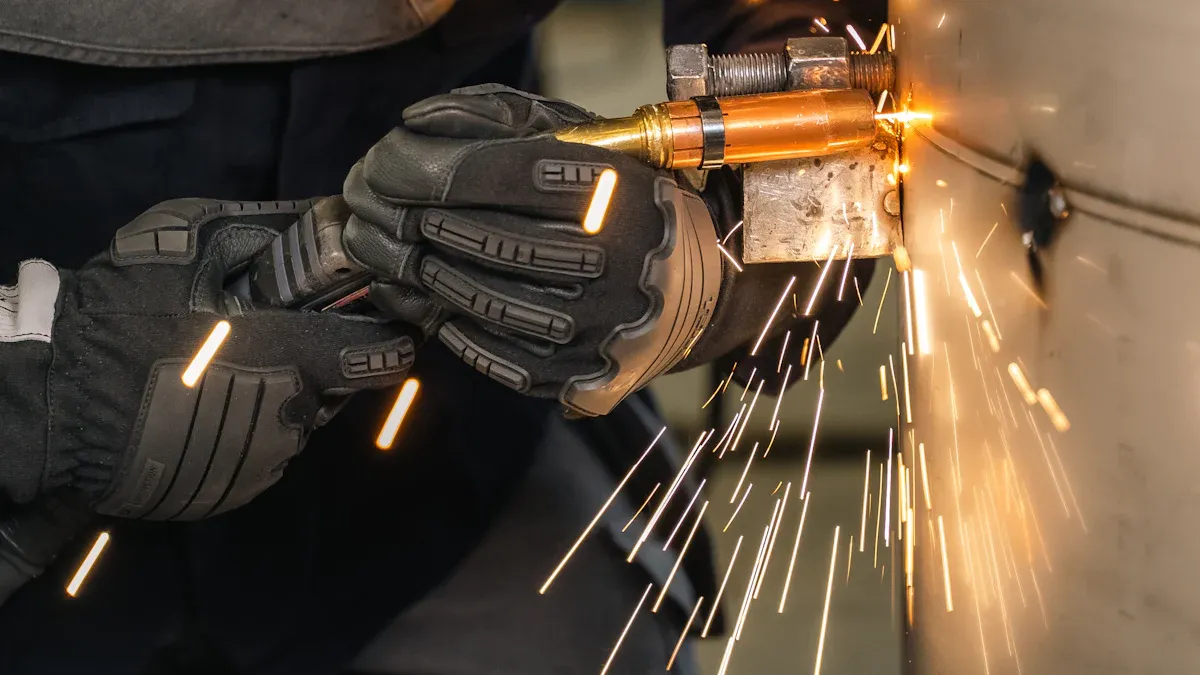
MIG torches usually have a larger and bulkier design. This size allows space for the wire feed mechanism and the consumable electrode. The handle often feels thicker to support the extra components. TIG torches, on the other hand, are slimmer and lighter. The smaller size makes them easier to maneuver, especially for detailed work. Welders who need to reach tight spaces or perform delicate welds often prefer the compact shape of a TIG torch.
Cooling Methods
Both MIG and TIG torches use cooling systems to manage heat during welding. Air-cooled torches rely on ambient air and the shielding gas to keep temperatures down. These torches tend to be heavier because they contain more copper in the cables. Water-cooled torches use a radiator system and special coolant. This method makes the torch lighter and more flexible, but it also increases maintenance needs and initial costs. Water-cooled TIG torches often last longer because they handle heat more effectively, especially during long welding sessions.
Ergonomics
Ergonomics play a key role in torch design. MIG torches often include a trigger for easy operation, allowing welders to start and stop the process with one hand. The grip is designed for comfort during repetitive tasks. TIG torches focus on precision and control. The handle is slimmer, and the torch feels balanced in the hand. This design helps welders make fine adjustments during the tungsten inert gas welding process. Both types aim to reduce fatigue, but TIG torches offer more flexibility for intricate work.
Note: Choosing the right torch size and cooling method can improve comfort and productivity during long welding projects.
Operation Differences
Trigger vs Manual Control
MIG torches use a trigger system. The welder pulls the trigger to start the arc, feed the wire, and release shielding gas all at once. This setup makes the metal inert gas welding process straightforward and efficient. TIG torches require more manual control. The welder must use one hand to hold the torch and the other to feed the filler rod. Some TIG torches use a foot pedal or fingertip control to adjust the arc. This approach gives the welder more control over heat and weld quality.
Wire Feed vs Filler Rod
The MIG torch features a continuous wire feed system. The wire acts as both the electrode and the filler metal. The machine automatically feeds the wire through the torch tip, making the process fast and consistent. In contrast, the TIG torch uses a non-consumable tungsten electrode. The welder must manually add a separate filler rod as needed. This difference means that MIG welding is often faster, while TIG welding allows for greater precision.
Feature | MIG Welding | TIG Welding |
|---|---|---|
Wire Feed System | Continuous wire feed system | Manual feeding of filler rods |
Filler Rod Usage | Filler metal is part of the wire | Separate filler rods are used |
Technique | Automatic feed through spool gun | Manual operation with one hand |
Shielding Gas Use
Shielding gas protects the weld from contamination. MIG torches use a blend of argon and carbon dioxide, usually 75% argon and 25% CO2. This mix improves arc stability and penetration, making it ideal for thicker materials. TIG torches use pure argon or a blend with non-reactive gases like helium. Pure argon prevents contamination, which is crucial for high-quality welds in the TIG welding process.
Welding Type | Shielding Gas Used | Flow Rate (cubic feet per hour) | Impact on Weld Quality |
|---|---|---|---|
TIG | Pure Argon or blend with non-reactive gases | 15 to 25 | Sensitive to reactive gases, prevents contamination |
MIG | Mixture of Argon and CO2 | 35 to 50 | Enhances arc stability and penetration, suitable for thick materials |
TIG welding uses pure argon to avoid contamination, which is crucial for high-quality welds.
MIG welding's use of argon and CO2 enhances penetration, making it better for thicker materials.
Key Components
Consumables
Consumables are parts that wear out and need replacement. The MIG torch uses a consumable wire electrode that melts during welding. This wire has a shorter lifespan because it is in constant use. The TIG torch uses a non-consumable tungsten electrode and a separate filler rod. The tungsten electrode lasts longer, especially in water-cooled systems, because it does not melt during welding.
Welding Type | Key Consumable Components | Lifespan Comparison |
|---|---|---|
MIG | Consumable wire electrode | Generally shorter lifespan due to continuous use |
TIG | Non-consumable tungsten electrode, separate filler rod | Longer lifespan, especially with water-cooled systems due to better heat management |
Cable and Hose
Cable and hose design affects flexibility and maintenance. Air-cooled torches have heavier cables with more copper, making them less flexible but easier to maintain. Water-cooled torches use lighter cables and hoses, which improves flexibility. However, these systems require a radiator and special coolant, increasing maintenance needs and initial investment.
Feature | Air-Cooled Systems | Water-Cooled Systems |
|---|---|---|
Cooling Method | Uses ambient air and shielding gas | Requires a radiator cooling system |
Cable Composition | Contains more copper, heavier, less flexible | Requires less copper, lighter, more flexible |
Maintenance Complexity | Easier to operate, assemble, maintain, and transport | Higher maintenance costs, requires special coolant |
Initial Investment | Lower initial investment | Higher initial investment due to radiator system |
Operating Costs | Generally lower | Higher due to coolant requirements and potential leaks |
Maintenance
Proper maintenance ensures long-term performance for both MIG and TIG torches. Welders should follow these steps:
Clean the welding machine after each use to remove dust and debris.
Inspect connections and lubricate moving parts regularly.
Replace electrodes and gas nozzles as needed.
Check and clean cooling components to prevent overheating.
Calibrate and test the machine for accuracy.
Train operators on correct usage and maintenance procedures.
Regular care extends the lifespan of both MIG and TIG torches. Water-cooled systems require extra attention to the cooling system, while air-cooled systems are easier to maintain.
Tip: Consistent maintenance helps prevent unexpected breakdowns and ensures high-quality welds every time.
Welding Performance and Results
Weld Quality
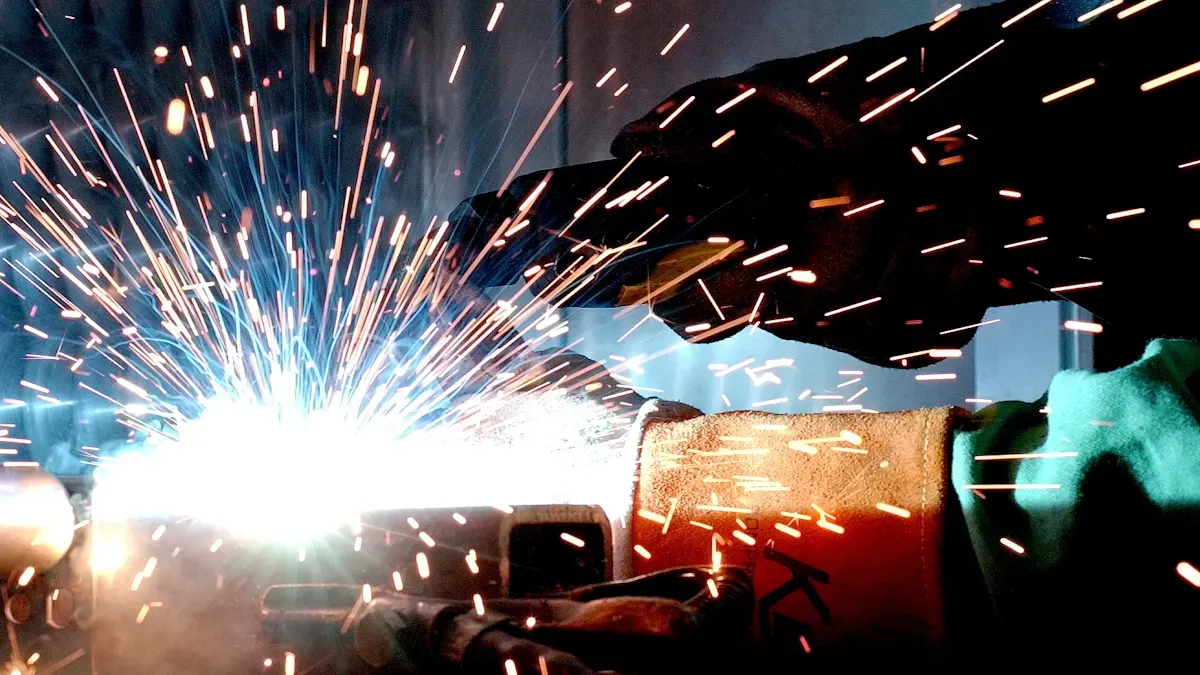
Weld quality stands as a key factor when comparing the mig and tig welding process. Industry benchmarks show that tig welding produces minimal spatter and a smooth, attractive finish. Many professionals choose tig for projects that require clean, strong welds. This method works well for thin materials and detailed designs. Mig welding, while faster and easier to learn, may create more spatter and sometimes needs extra cleanup. The following table highlights the main differences in weld quality and other important factors:
Welding Method | Weld Quality | Speed | Aesthetic Finish | Control Level |
|---|---|---|---|---|
MIG | Lower | Faster | Moderate | Moderate |
TIG | Superior | Slower | High | High |
Tig welding is often the top choice for critical applications that demand high cleanliness and strength. Mig welding fits best in situations where speed matters more than appearance.
Speed and Efficiency
Speed and efficiency play a big role in choosing the right welding method. Mig welding is known for its fast operation and high efficiency. The automatic wire feed system keeps the arc going and allows for long, continuous welds. This makes the mig welding process ideal for large projects and thick materials. Many industries use mig for structural steel and general fabrication because it saves time and boosts productivity.
Tig welding moves at a slower pace. The welder must add filler metal by hand, which takes more time. This slower process gives the welder better control but can lead to mistakes if rushed. Tig is best for jobs where weld quality is more important than speed. Mig, on the other hand, shines in high-volume production where efficiency is key.
Tip: For large-scale projects or thick materials, mig welding offers the best balance of speed and efficiency.
Precision and Control
Precision and control set tig welding apart from other methods. The tig welding process allows the welder to adjust both the heat and the amount of filler metal with great accuracy. This level of control helps prevent overheating and burn-through, especially on thin or delicate materials. Tig welding creates neat, accurate welds with a consistent surface finish. Many industries prefer tig for intricate workpieces and projects that require a flawless appearance.
Mig welding provides moderate control, but it cannot match the precision of tig. The automatic wire feed in mig makes it easier to use, but it limits the welder’s ability to fine-tune the weld bead. For detailed tasks, tig welding remains the preferred choice.
Tig welding offers greater precision and control, making it ideal for detailed and intricate work.
The manual addition of filler metal in tig welding allows for more precise weld beads.
Tig welding provides excellent heat control, which helps prevent defects on thin materials.
Mig welding is better suited for tasks where speed is more important than fine detail.
Material Compatibility and Applications
Metals for MIG
MIG works well with a variety of metals. Many industries choose this process for its speed and versatility. The most compatible metals include:
Aluminum
Stainless steel
Other steel alloys
For stainless steel, welders often select ER308, ER308L, or ER308LSI wires for 304 stainless steel. When working with 316L stainless steel, 316L wire is the preferred choice. A recommended gas mixture for stainless steel includes 90% helium, 8% argon, and 2% carbon dioxide. These settings help create strong, clean welds.
Metals for TIG
TIG offers excellent results on a wide range of metals. The process provides high precision, making it ideal for specialized applications. The table below shows common metals and their typical uses:
Metal | Typical Applications |
|---|---|
Titanium and aluminum | Aerospace |
Mild steel, stainless steel, aluminum | Automotive |
316L stainless steel, nickel alloys | Medical |
Stainless steel | Food Processing |
Brass, copper, stainless steel, aluminum | Art and Architecture |
TIG stands out for its ability to join thin or delicate materials. Many professionals rely on this method for projects that demand accuracy and a clean finish.
Common Uses
Automotive and Fabrication
Automotive shops use both MIG and TIG for building and repairing vehicles. MIG is popular for chassis fabrication and custom exhaust systems. TIG is often chosen for detailed work on aluminum and stainless steel parts. Fabricators value the speed of MIG for large projects and the control of TIG for precision tasks.
Art and Decorative
Artists and designers use TIG to create sculptures and decorative pieces. The process allows for smooth, clean welds on brass, copper, and stainless steel. MIG also finds use in larger metal art installations where speed is important. Both methods help bring creative visions to life.
Industrial Applications
Many industries depend on MIG and TIG for critical tasks. The table below highlights common uses:
Industry | Common Uses |
|---|---|
Aerospace | Aircraft components, fuel systems, structural assemblies |
Automotive | Chassis fabrication, custom exhaust systems, motorsport |
Medical Equipment | Small, intricate components that require hygiene and durability |
Black Wolf provides reliable torches for these demanding environments. Their products support welders in achieving quality results across many fields.
Note: Choosing the right process depends on the metal type, project requirements, and desired finish.
Ease of Use and Learning Curve
Beginner Friendliness
Many people find MIG welding easier to learn than TIG. MIG torches work much like a hot glue gun. The user pulls the trigger, and the machine feeds the wire and gas automatically. This setup allows beginners to focus on moving the torch along the joint. TIG welding requires more coordination. The welder must use both hands and sometimes a foot pedal. One hand holds the torch, the other feeds the filler rod, and the foot controls the heat. This process can feel overwhelming for those new to welding.
The table below compares the learning curve for each method:
Welding Type | Learning Curve | Description |
|---|---|---|
MIG | Easier | More beginner-friendly, similar to a hot glue gun, requiring less expertise. |
TIG | Harder | Involves using both hands and one foot, necessitating good coordination. |
Tip: Beginners often start with MIG because it allows them to build confidence before moving on to more complex techniques.
Skill Requirements
Operating MIG and TIG torches well requires different skills. MIG welding focuses on steady hand movement and basic torch control. TIG welding demands more advanced abilities. The welder must master torch control, heat control, and filler rod manipulation. These skills help create strong, clean welds and reduce mistakes.
The following table highlights important skills for both methods:
Skill | Benefits |
|---|---|
Torch Control | Reduced splatter, precise control, minimal defects, uniform fusion, enhanced productivity, improved aesthetics, operator confidence. |
Heat Control | Optimal fusion, material integrity, minimized distortion, versatility, reduced post-weld work, craftsmanship. |
Filler Rod Manipulation | Optimal fusion, uniform reinforcement, minimized defects, enhanced aesthetics, reduced heat input, complex joints, craftsman’s touch. |
Welders also need to read blueprints, understand welding symbols, and follow industry codes. Mastery of these skills leads to better results and safer work.
Common Mistakes
Beginners often make similar mistakes when learning to weld with MIG or TIG torches. Moving the torch too fast can cause weak welds. Moving too slowly may burn through thin metal or waste filler on thick pieces. Failing to clean the metal leads to porosity and weak joints. Incorrect wire feed speed or voltage can create spatter and unstable arcs. Gas flow problems may cause poor shielding and defects.
The table below lists common mistakes and their effects:
Mistake | Explanation |
|---|---|
Moving too fast | Insufficient heat input leads to weak welds with high fracture susceptibility. |
Moving too slowly | Causes burn-through on thin sheets and waste of filler material on thicker sheets. |
Failure to clean metal | Contaminants cause porosity and arc instability, compromising weld strength. |
Incorrect wire feed/voltage | Can lead to spatter, unstable arcs, and poor fusion. |
Gas flow issues | Insufficient or excessive gas flow can lead to porosity and compromised shielding. |
Tungsten contacts metal | Causes tungsten inclusions, compromising weld strength and stability. |
Unsteady hand | Affects arc length and weld quality, requiring practice to improve. |
Metal overheating | Can warp materials, especially heat-sensitive ones. |
Using wrong filler rod | Mismatched filler can lead to cracking and insufficient strength. |
Note: Practice and attention to detail help welders avoid these mistakes and improve their technique over time.
Pros and Cons of MIG and TIG
MIG Torch Pros
Many welders choose a mig torch for its practical advantages. The following points highlight why this tool stands out in many workshops:
Easy to learn: Beginners can master the basics quickly, making it a popular choice for those new to welding.
Fast welding: The automatic wire feed system allows for quicker work, which increases productivity.
Versatile: This torch works well with different metals, such as steel and aluminum, and adapts to various joint types.
Cleaner welds: The shielding gas reduces contamination and spatter, resulting in better-looking welds.
Continuous welding: Operators can weld for longer periods without frequent stops, which improves efficiency.
Tip: Many fabrication shops use mig torches for large projects because they combine speed and ease of use.
MIG Torch Cons
Despite its strengths, a mig torch also has some limitations. Welders should consider these factors before starting a project:
Limited outdoor use: Wind can disrupt the shielding gas, making outdoor welding more difficult.
Equipment complexity: The system includes several components that require regular maintenance.
Skill and technique: Achieving high-quality results still demands proper technique and experience.
Limited penetration: Thicker materials may need multiple passes, which can slow down the process.
Shielding gas challenges: Remote locations may lack easy access to gas, making setup harder.
Weld appearance: More spatter can occur, leading to extra cleanup after the job.
Note: Planning ahead helps reduce these challenges and ensures better results with a mig torch.
TIG Pros
A tig torch offers several benefits, especially for tasks that require accuracy and control. The main advantages include:
Heat control: The operator can adjust the heat input, which helps prevent warping or weakening of the base metal.
Arc stability: This torch provides a stable arc, allowing for precise bead placement and better control over the weld pool.
Filler metal deposition: The welder can add filler metal with great accuracy, producing strong and attractive welds.
Contamination control: Proper shielding gas coverage keeps the weld clean and free from impurities.
Versatility: The tig torch works with many types of equipment and materials, saving time and money.
Durability: Built for frequent use, this torch often lasts longer and withstands tough conditions.
Improved control: Operators enjoy smoother arc starts and better handling, which leads to higher-quality results.
Many industries rely on tig torches for projects that demand precision, such as aerospace and medical device manufacturing.
TIG Cons
TIG welding offers high precision, but it comes with several challenges that welders should consider before starting a project. Understanding these drawbacks helps users make informed decisions about when and how to use TIG torches.
One of the main challenges involves the torch setup. The design of the TIG torch, especially the long back cap, can make it difficult to access tight spaces. This back cap allows for a full-length tungsten electrode, but it limits maneuverability in confined areas. The cup size also affects performance. For example, a #7 cup restricts gas coverage, which can impact weld quality, especially on materials like stainless steel. Electrode stickout is another limitation. Welders must keep the electrode stickout to three-quarters the diameter of the cup, which further restricts access to narrow joints.
Limitation | Description |
|---|---|
Torch Setup | The long back cap limits access to tight spaces but allows for a full-length Tungsten electrode. |
Cup Size | The #7 cup restricts gas coverage, affecting weld quality, especially for materials like stainless steel. |
Electrode Stickout | Limited to 3/4 the diameter of the cup, further restricting access to tight joints. |
TIG welding relies heavily on shielding gas to protect the weld pool from atmospheric contaminants. Without proper gas coverage, welds can suffer from porosity and oxidation. These defects reduce the strength and integrity of the finished weld. Contaminated welds are not suitable for critical applications that require high reliability. The absence of shielding gas also causes the tungsten electrode to deteriorate faster, which means welders need to replace consumables more often. This increases the overall cost of operation.
Shielding gas protects the weld pool from atmospheric contaminants.
Without gas, welds can suffer from porosity and oxidation.
Contaminated welds lead to reduced strength and integrity.
Gasless TIG welding is not practical for most metals. It works only for mild steel, and even then, the results are often poor. Attempting to weld aluminum or stainless steel without shielding gas is highly discouraged. These metals are especially vulnerable to contamination, which can ruin the weld and compromise the project.
Gasless welds are prone to porosity, leading to weaknesses in the weld.
Oxidation can occur, deteriorating the metal quality.
Such welds are unsuitable for critical applications requiring high integrity.
TIG welding also requires more skill and attention compared to other methods. The welder must coordinate both hands and sometimes a foot pedal. This complexity increases the chance of mistakes, especially for beginners. The process moves slowly, which can reduce productivity on large projects.
Note: TIG torches deliver excellent results, but users must manage setup limitations, shielding gas requirements, and increased skill demands to achieve the best outcomes.
Choosing the Right Torch
Project and Material Needs
Selecting the right torch starts with understanding the demands of the project and the materials involved. Every welding task requires careful consideration of the metal type, thickness, and complexity. For example, a mig torch works best for mild steel and thicker materials. This torch handles heavy-duty applications and repetitive tasks efficiently. A tig torch suits projects that involve aluminum or stainless steel, especially when precision matters. Thin materials and intricate designs benefit from the control offered by tig.
Welders should assess the following factors before making a choice:
Type of metal: Mild steel, aluminum, stainless steel, or specialty alloys.
Material thickness: Thicker metals require higher amperage and robust torches.
Project complexity: Simple joints may need less precision, while detailed work demands greater control.
Welding intensity: Frequent or prolonged welding calls for durable equipment.
A torch designed for the specific welding process ensures optimal performance and safety. Black Wolf offers a range of torches tailored to different materials and project requirements, helping welders achieve reliable results.
Budget and Equipment
Budget plays a significant role in choosing between mig and tig torches. Welders must balance initial costs with long-term value. Cheaper torches may seem attractive, but they often lead to higher maintenance expenses and frequent replacements. Investing in a reliable and durable torch saves money over time and reduces downtime.
Consider these points when evaluating equipment:
Quality and durability: High-quality materials like copper and brass improve heat resistance and comfort.
Equipment compatibility: Ensure the torch fits existing welding machines and accessories.
Maintenance needs: Easy-to-assemble and maintain torches minimize repair costs.
Adjustability: Torches with adjustable settings adapt to various projects and materials.
Black Wolf’s welding and cutting solutions provide dependable performance and long-lasting value. Their products meet the needs of both budget-conscious users and those seeking premium equipment.
Tip: Investing in quality equipment pays off with fewer repairs and better welds.
Weld Quality Goals
Weld quality stands as a top priority for many welders. The choice of torch directly affects the strength, appearance, and reliability of the finished weld. A mig torch delivers fast, consistent welds suitable for structural work and large projects. This method produces moderate control and appearance, making it ideal for tasks where speed matters most.
A tig torch excels in situations that demand flawless welds and precise bead placement. Welders use tig for jobs that require minimal spatter, smooth finishes, and high strength. Industries such as aerospace and medical device manufacturing rely on tig for critical applications.
The table below compares weld quality goals for each torch:
Torch Type | Best For | Weld Appearance | Control Level | Typical Applications |
|---|---|---|---|---|
MIG | Structural, large jobs | Moderate | Moderate | Automotive, fabrication |
TIG | Precision, intricate | High | High | Aerospace, medical equipment |
Welders should match their goals to the torch’s capabilities. Black Wolf’s range of torches supports both high-speed production and precision work, ensuring welders can meet their project standards.
Hobbyist vs Professional
Choosing the right welding torch depends on whether the user welds as a hobby or works as a professional. Each group has different needs, goals, and expectations.
Hobbyists often look for tools that are easy to use and set up. They may work on small projects, repairs, or creative pieces at home. Many hobbyists value affordability and flexibility. They want a torch that helps them learn new skills without a steep learning curve.
Professionals need equipment that can handle frequent use and demanding tasks. They often work in shops, factories, or on job sites. Professionals require torches that deliver consistent performance, high durability, and precise control. Their projects may involve strict quality standards and tight deadlines.
The table below compares the main needs of hobbyists and professionals:
User Type | Main Needs | Typical Projects | Torch Features to Consider |
|---|---|---|---|
Hobbyist | Ease of use, affordability, safety | Home repairs, art, DIY builds | Simple controls, lightweight design, basic settings |
Professional | Durability, precision, efficiency | Fabrication, industry, repair | Advanced controls, robust build, cooling options |
Tip: Hobbyists can start with a MIG torch for its simplicity and speed. Professionals may prefer TIG torches for detailed work and high-quality results.
MIG torches suit hobbyists who want to complete projects quickly. The automatic wire feed and straightforward controls help beginners gain confidence. MIG welding also works well for general repairs and metal art.
TIG torches appeal to professionals who need precise welds on thin or specialty metals. TIG welding allows for better control of heat and filler material. This method produces clean, strong welds that meet industry standards.
Black Wolf offers a range of MIG and TIG torches designed for both hobbyists and professionals. Their products combine user-friendly features with advanced technology. This ensures that every welder, from beginner to expert, can find the right tool for the job.
Note: Users should think about their skill level, project type, and long-term goals before choosing a torch. The right choice leads to better results and a more enjoyable welding experience.
MIG and TIG torches differ in design, operation, and control. These differences shape weld quality, speed, and the types of metals each torch handles best. Users should match their torch choice to project needs and skill level. Key selection tips include:
Choose the torch based on welding type and material thickness.
Use air-cooled torches for thin metals and portability.
Select water-cooled torches for heavy-duty work.
Check for proper gas flow and pressure control.
Black Wolf offers reliable welding and cutting solutions for every user.
FAQ
What is the main difference between a MIG torch and a TIG torch?
A MIG torch uses a consumable wire electrode that feeds automatically. A TIG torch uses a non-consumable tungsten electrode and requires manual filler rod addition. MIG works faster, while TIG offers more control.
Can beginners use both MIG and TIG torches?
Beginners often find MIG torches easier to use. TIG torches require more skill and coordination. Many new welders start with MIG before learning TIG.
Which torch is better for welding aluminum?
TIG torches provide better control for welding aluminum, especially on thin materials. MIG torches can also weld aluminum but may need special wire and settings.
How often should torch consumables be replaced?
Welders should check consumables regularly. Replace them when they show wear, damage, or reduced performance. Frequent inspection helps maintain weld quality.
What safety gear is needed for MIG and TIG welding?
Welders should wear a welding helmet, gloves, protective clothing, and safety glasses. Proper gear protects against sparks, UV light, and hot metal.
Does Black Wolf offer both MIG and TIG torches?
Yes. Black Wolf manufactures MIG, TIG, and plasma cutting torches. Their products support many welding applications and meet high industry standards.
Can one torch handle all types of metals?
No single torch works best for every metal. MIG torches suit steel and thicker materials. TIG torches excel with aluminum, stainless steel, and thin metals.
How does a plasma cutting torch differ from MIG and TIG torches?
A plasma cutting torch uses a high-temperature ionized gas jet to cut metal. MIG and TIG torches join metal pieces by melting them together.